OMM Newsroom

Spain’s transport minister, Óscar Puente, has resigned six days after a deadly high-speed train crash that killed at least 69 people. His decision was announced amid mounting political pressure and growing concerns about rail safety in the country, AnewZ reports.
Puente announced his resignation on November 3, after a lengthy parliamentary session in which he presented new rail safety measures and answered questions from opposition lawmakers.
“In a country like Spain, a transport minister cannot remain in office after two such accidents in less than a year,” he said, referring to another crash in January that killed 46 people.
Puente also confirmed that he would withdraw from the candidate list for the snap general election scheduled for November 29.
The conservative People’s Party (PP), the far-right Vox party and some of the government’s political allies had called for Puente’s resignation. Opposition parties said he should take responsibility for shortcomings in rail system safety. They also criticized Puente’s initial suggestion that human error may have caused the crash.
Prime Minister Pedro Sánchez acknowledged that public confidence in Spain’s rail system had been damaged. Puente, who had previously said he would remain in office, said he had resigned for reasons of “political dignity.”
Sánchez thanked the minister for stepping down after handling the crisis and as a mark of respect for the victims.
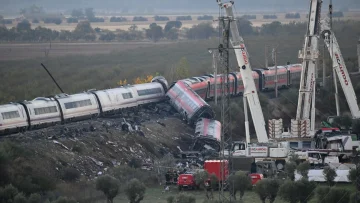
The collision involved a state-owned Renfe train carrying 397 passengers and a stationary train operated by private company Iryo, which had 147 people on board.
According to reports, a fault in the automatic signalling system caused the trains to stop on the section of track where the crash occurred. Audio recordings released by Spanish media appear to show the driver of the Renfe train being told to continue at normal speed despite another train being stopped about 25 kilometres ahead.
In one recording, a control centre employee tells the driver to proceed using a backup signalling system. The driver asks for confirmation of the instruction before moving. Meanwhile, the driver of the Iryo train repeatedly tells dispatchers that technical problems have left the train unable to move.
The recordings indicate that dispatchers were informed about the stationary train before the collision. The exact circumstances of the incident are under investigation.
The crash and Puente’s resignation came weeks before the snap general election scheduled for November 29. Opposition parties have made rail safety a major campaign issue and stepped up criticism of Sánchez’s socialist-led government.
The government is under pressure to explain the circumstances that led to the crash, strengthen safety rules and restore public confidence in the country’s high-speed rail network. For many in Spain, the central question is whether the changes promised by the authorities will prevent another tragedy.