OMM Newsroom

A high-speed Renfe train involved in Wednesday’s deadly rail collision in Spain was travelling at 160–200 kilometres per hour, according to a preliminary investigation report released on Friday. That was well above the 40 km/h limit set out in the safety protocol. At least 74 people were killed in the crash, AnewZ reported.
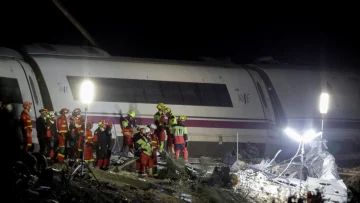
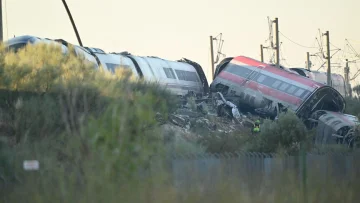
The train operated by Renfe collided with an Iryo train that had stopped near Urda in central Spain.
A failure in the automatic signalling system caused several trains to stop, and operations were taken over by the central dispatch centre in Madrid. Spain’s Transport Minister Óscar Puente said the dispatcher had allowed the Renfe train to resume normal-speed travel, despite a safety protocol requiring trains to be limited to 40 km/h in such circumstances.
Audio recordings obtained by El País showed that the dispatcher allowed the Renfe train to continue along its route, although the stopped Iryo train ahead should have been given permission to move first.
The Renfe train was carrying 379 passengers and seven crew members, while the Iryo train had 147 passengers and five crew members.
According to an assessment by the independent body for the technical investigation of accidents and incidents (AITAT), the Renfe train was travelling at between 160 and 200 km/h when the trains collided. Investigators said the exact speed would be determined after data from the train’s black box had been retrieved.
“The sequence of failures, instructions and actions ultimately led to the collision in the absence of the necessary risk-reduction barriers,” the preliminary report said.
The findings have raised questions about why the train was allowed to travel at normal speed despite the signalling failure and the safety restrictions.
The crash, Spain’s deadliest rail accident since 2013, has renewed concerns about railway safety. A separate fatal collision on the same line in January killed 46 people.
The investigation into Wednesday’s crash is ongoing.