OMM Newsroom

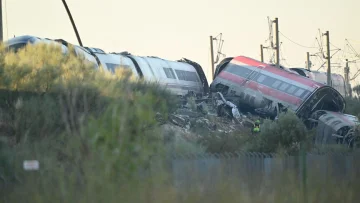
Rescue teams searching the wreckage of two high-speed trains in central Spain on Thursday found that the preliminary death toll had risen to 74, AnewZ reported. It is the country’s second deadly high-speed train crash this year.
Spain’s public broadcaster RTVE reported the updated figure on Thursday. Emergency crews continued searching damaged carriages near the town of Urda in Toledo province, south of Madrid. Several Spanish media outlets also reported the death toll.
Emiliano García-Page, head of the autonomous community of Castile-La Mancha, had earlier put the toll at 69 after human remains were found during overnight recovery operations. Heavy cranes were used to lift derailed carriages as teams checked for further victims.
The collision occurred at about 9 a.m. local time on Wednesday, when a high-speed train struck a stationary train. More than 500 passengers were reportedly on board the two trains. Survivors said they had smashed windows to escape.
The Spanish government declared three days of national mourning for the victims. Pope Leo expressed condolences to the families of those killed, wished the injured a speedy recovery and voiced support for everyone affected by the disaster. He also urged rescuers to continue their efforts, the Vatican said.
Earlier reports said 57 injured people remained in hospital. Regional media later reported that the number had fallen to about 50.
Spain’s Ministry of the Interior said more than 800 military personnel and police officers had been deployed to the emergency response. They were supported by more than 200 vehicles, three helicopters, a mobile command post, drones, mounted units and search dogs.
Rail safety under scrutiny
The crash has reignited debate over rail safety in Spain, which has Europe’s longest high-speed rail network. Just nine months earlier, in January, another fatal collision occurred on the same line and involved the same rail operators.
Transport Minister Óscar Puente said on Wednesday that several trains had stopped automatically after a signalling failure. A high-speed train operated by state-owned Renfe was later cleared to continue at normal speed, while an Iryo train was stationary on the track ahead.
Investigators are examining why the Renfe train was allowed to continue. The circumstances surrounding that clearance remain under investigation, and the final cause of the crash has not been established.
Spain’s train drivers’ union SEMAF urged caution against drawing hasty conclusions. “We want to act cautiously and avoid speculation until we have a precise and detailed understanding of what happened,” the union said in a statement issued late on Wednesday.
SEMAF held a previously scheduled 24-hour strike on Thursday, demanding structural changes to rail safety, and said it was considering further action. In a statement issued on Wednesday, Spain’s CSIF union accused the minister of blaming the official responsible for traffic control at a news conference instead of accepting responsibility, and called for Puente to resign.
Protest held outside ministry
The disaster has fuelled public anger. About 500 people gathered outside Spain’s Ministry of Transport to demand answers.
Some protesters threw bottles and flares at police, while others carried a banner calling the government “criminals in power under the 78 regime”. Police used tear gas as they moved to clear the road. No arrests or injuries were reported.
The crash has also affected campaigning ahead of the snap election scheduled for November 29. The leaders of Spain’s two main political parties suspended campaign events.
Prime Minister Pedro Sánchez travelled to the Toledo area on Thursday to oversee the emergency response. Alberto Núñez Feijóo, leader of the centre-right People’s Party (PP), visited Urda, near the crash site.
Feijóo called for political responsibility over the disaster. Sánchez promised a thorough investigation and stressed the need to restore confidence in Spain’s high-speed rail network.
In a televised address near the crash site, Sánchez said “all of Spain” was in mourning. “It is unacceptable for a country like Spain to have two high-speed train crashes in the same year,” he said.
A judge overseeing the investigation ordered a two-kilometre restricted zone around the site to preserve evidence as investigators examine how the crash happened. Rescue operations are continuing, and the death toll remains preliminary.