OMM Newsroom

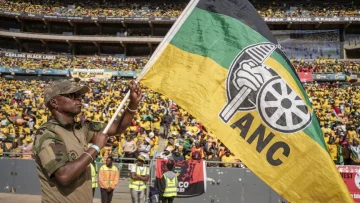
Voting in South Africa’s local government elections ended late Wednesday in a contest seen as a test of support for the African National Congress (ANC), which led the struggle against apartheid but has suffered major electoral setbacks in recent years, Anadolu Agency reported.
Polling stations opened at 7 a.m. local time (0500 GMT) and closed at 9 p.m. (1900 GMT). Counting is expected to begin, with partial results to be announced overnight. The final official results are expected on Thursday or Friday.
More than 29 million people registered to vote at about 23,700 polling stations nationwide, according to the Independent Electoral Commission (IEC). Preliminary figures released by the commission showed that around 12 million people had voted by 5 p.m. local time (1500 GMT).
The IEC said it was encouraged by turnout despite operational challenges during the day.
Many voters told Anadolu Agency they were unhappy with deteriorating basic services in their municipalities and had voted to bring about change.
“I am voting for change. I want to see adequate service delivery in my community,” said Chris Mazibuko, 38, a resident of Soweto.
“We have been suffering with no clean drinking water and leaking sewage pipes in our streets. I hope my vote will bring change,” he added.
Aisha Mohamed, who lives in Mayfair West, said public safety was her main concern. “We want safety for our families and communities. There is too much crime and drug dealing on our streets. I hope my vote counts,” she told Anadolu Agency.
Dozens of parties contest the vote
Dozens of political parties are competing, including the ANC, the main opposition Democratic Alliance (DA), the Economic Freedom Fighters (EFF) and the Inkatha Freedom Party (IFP).
The uMkhonto weSizwe (MK) Party, founded by former President Jacob Zuma, is taking part in local elections for the first time.
ANC has lost its parliamentary majority
The ANC, led to victory by Nelson Mandela in South Africa’s first democratic elections in 1994, governed the country for nearly three decades without sharing power before losing its parliamentary majority.
In the 2021 municipal elections, the party’s nationwide share of the vote fell below 50%. It suffered a further setback in the 2024 general elections, losing its parliamentary majority at national level for the first time. The ANC subsequently formed a government of national unity with the DA and other parties.