OMM Newsroom

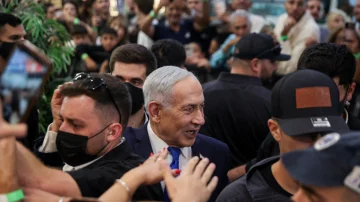
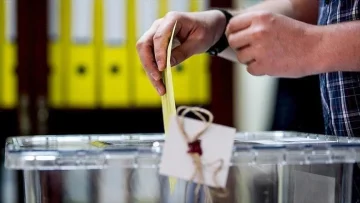
Israel’s parliamentary election on Oct. 27 could shape the country’s political future. Prime Minister Benjamin Netanyahu faces a serious challenge from former military chief Gadi Eisenkot. The struggle to form a coalition after the election could also prove decisive.
AnewZ reports that leadership, security, military service, governance and accountability following the events of Oct. 7, 2023, and subsequent conflicts have emerged as key campaign issues.
Netanyahu, Israel’s longest-serving prime minister, is seeking to return to office. However, he is also facing a rival on national security, an issue where he has traditionally been strong. Eisenkot’s Yashar party has led or matched Netanyahu’s Likud in several recent polls.
Winning the most seats is only one part of the contest. Given Israel’s fragmented political system, coalition negotiations among parties could become the main event after the vote.
The election’s political significance
The vote comes amid war, political division and public debate over Israel’s future direction.
According to the Institute for National Security Studies (INSS), public confidence in the country’s security situation has weakened, while political polarization remains unusually high. The institute’s October assessment said public concerns about security, governance and long-term strategic planning had grown.
For Netanyahu’s supporters, the election is about retaining experienced leadership during a period of regional instability. Many of his rivals see it as an opportunity for political change after Netanyahu’s more than a decade of dominance in Israeli politics.
The electoral system and candidates
Israel’s 120-seat Knesset is elected under a nationwide proportional representation system. Voters cast ballots for parties, not individual candidates. Parties submit ranked lists, and seats are allocated in proportion to the votes they receive. A party must win at least 3.25% of the nationwide vote to enter parliament.
After the election, Israel’s president consults party leaders and tasks the politician considered most likely to form a parliamentary majority with building a government. No party has won an outright Knesset majority on its own, making coalition-building a routine feature of Israeli politics.
Benjamin Netanyahu (Likud)
A profile in The New York Times says that, despite political crises, coalition collapses and repeated elections, Netanyahu remains a central figure on Israel’s right. A strategic analysis by international law and policy firm Steptoe described him as “the country’s most experienced political operator” and noted that prolonged conflict and security concerns have strengthened his position.
Netanyahu’s supporters point to his wartime experience, relationships with international leaders, reputation for security-focused leadership and organizational control over Likud and the governing camp. His critics cite his ongoing corruption trial, public anger over the failures of Oct. 7, fatigue with prolonged political instability and concerns about accountability to democratic institutions.
Analysts at Arab Center Washington, DC, say Netanyahu’s political strength lies in his ability to retain his position even after setbacks. He may not need an outright victory: preventing his rivals from forming a government could be enough to keep him in power.
Gadi Eisenkot (Yashar)
A detailed profile published in The New Yorker describes how the former military chief moved from the security establishment to become Netanyahu’s most serious challenger. Recent polling averages compiled by The Jerusalem Post put Yashar narrowly ahead of Likud, projecting 21-22 seats for Eisenkot’s party and 19-21 for Netanyahu’s.
Eisenkot’s strengths include decades of military experience, credibility on national security, appeal to centrist and moderate right-wing voters, and an image associated more with pragmatism than ideology. His main challenge is not leading the polls but being able to form a government coalition after the election.
Naftali Bennett and Yair Lapid (Together)
Former prime ministers Naftali Bennett and Yair Lapid are running in the election on a joint list called Together. According to Britannica, the alliance aims to prevent parties opposed to Netanyahu from splitting their vote and to recreate the broad coalition model that temporarily removed him from power in 2021.
Although Together currently trails Yashar and Likud in polls, its seats could be crucial to forming an alternative government. Bennett and Lapid are highlighting their experience and ability to overcome political differences, and have pledged to restore public confidence in state institutions.
Yair Golan (The Democrats)
The Democrats leader represents the opposition’s center-left wing. According to The Jerusalem Post, Golan advocates measures against corruption, judicial independence and political accountability, while also emphasizing his security experience as a former deputy military chief.
Middle East Eye notes that Golan’s actions on Oct. 7 raised his profile nationwide and strengthened his standing among many voters. His party is expected to win about nine seats, potentially giving it an important role in an opposition coalition.
Parties that could prove pivotal in coalition talks
Avigdor Lieberman (Yisrael Beiteinu)
Avigdor Lieberman, a former foreign minister, defense minister and deputy prime minister, is a veteran figure in Israeli politics. Polls indicate his party could win about eight seats. Analysts at the Israel Policy Forum consider him a key participant in coalition negotiations because of his hard-line position on mandatory military service for ultra-Orthodox Israelis. He has often played a decisive role in closely contested elections.
Bezalel Smotrich (Religious Zionism Party)
Finance Minister Bezalel Smotrich leads the Religious Zionism Party and is considered one of Netanyahu’s main allies on the religious-nationalist right. Recent polls show the party has weakened compared with the previous election, but its result could affect Netanyahu’s ability to secure a parliamentary majority.
Smotrich is campaigning on security, settlement policy and religious-nationalist issues. He is also competing with Bennett’s alliance and other right-wing parties. With the electoral threshold at 3.25%, entering the Knesset is important both for his political future and for Netanyahu’s hopes of remaining in power.
Arie Deri (Shas)
Arie Deri, the longtime leader of the ultra-Orthodox Sephardic party Shas, has been a prominent figure in Israeli politics for decades. A former interior and economy minister, Deri is an experienced coalition negotiator; his party is expected to win about seven to eight seats.
Deri has said that legislation on military service will be one of the main conditions for joining a future government, The Jerusalem Post reports. The demand could complicate negotiations with parties seeking broader conscription.
Yaakov Asher (United Torah Judaism)
Veteran lawmaker Yaakov Asher is a prominent representative of the ultra-Orthodox alliance United Torah Judaism (UTJ). The party could play a decisive role in forming a new government. UTJ has long been part of Israel’s coalition politics and has exerted influence on religious and social policy negotiations beyond its parliamentary weight.
Like Shas, the alliance considers exemptions from military service for ultra-Orthodox religious students a central political demand. With neither main bloc close to a majority in the polls, Asher and other UTJ leaders could wield significant influence in negotiations over conscription legislation and the terms of a future coalition agreement.
Mansour Abbas (Ra’am)
Mansour Abbas, leader of the Islamist Arab party Ra’am, has been a Knesset member since 2019. In 2021, Ra’am became the first independent Arab party to join an Israeli governing coalition, helping the Bennett-Lapid government remain in office.
An analysis by Arab Center Washington, D.C., says the political landscape for coalition-building suggests Arab parties could once again determine the balance of power. Abbas’s party is expected to win about five seats, while Arab parties together are projected to win about 13. Whether opposition leaders are willing to rely on support from Arab parties remains one of the campaign’s main open questions.
Itamar Ben-Gvir (Otzma Yehudit)
National Security Minister Itamar Ben-Gvir leads the far-right Otzma Yehudit party and is a powerful, though sometimes controversial, ally of Netanyahu. His party is expected to win about eight seats, which could be important in forming a new right-wing government.
Ben-Gvir’s hard-line positions on security and law enforcement have earned him support among right-wing voters, though tensions between him and Likud occasionally arise. He is not expected to run for prime minister, but could become a pivotal figure in Netanyahu’s effort to secure a governing majority.