OMM Newsroom

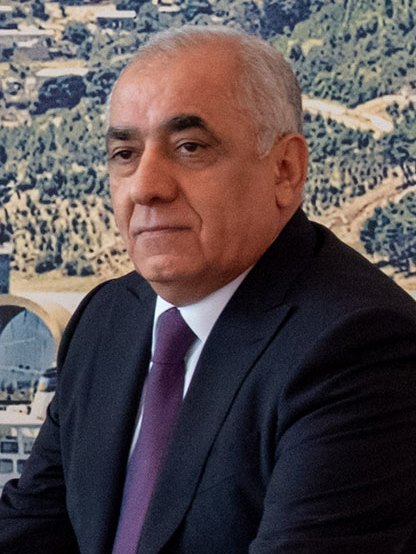
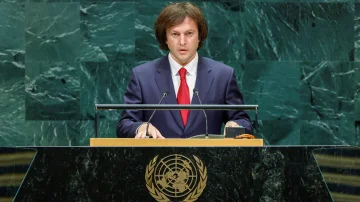
Azerbaijan and Georgia intend to increase trade, strengthen transport links between Asia and Europe and step up efforts to resolve a long-standing border dispute. The priorities were discussed at the 11th meeting of the Intergovernmental Commission on Economic Cooperation in Tbilisi, attended by Azerbaijani Prime Minister Ali Asadov and Georgian Prime Minister Irakli Kobakhidze, AnewZ reported.
The meeting followed several high-level visits in 2026. Azerbaijani President Ilham Aliyev visited Georgia in April, while Kobakhidze travelled to Azerbaijan in May. Both governments say the visits strengthened their strategic partnership, which covers trade, transport, energy and regional security.
Trade turnover exceeds $1 billion
According to Asadov, trade turnover between the two countries exceeded $1 billion in the first nine months of 2026, an increase of more than 40% compared with the same period last year. Asadov also said Azerbaijan had invested about $4 billion in Georgia.
“Georgia is one of Azerbaijan’s main trading partners,” Asadov said, noting that trade and economic ties were developing with “very positive momentum.” Georgia intends to increase exports, diversify trade ties and attract additional investment.
Kobakhidze said his country was seeking to make fuller use of its export potential and increase investment. The commission also discussed cooperation in tourism, agriculture, customs, healthcare and education.
Middle Corridor and energy projects
Transport and energy cooperation are among the partnership’s main areas. The Middle Corridor, which connects Central Asia and the Caspian region with Europe through the South Caucasus, is gaining importance as international trade prompts the exploration of alternative routes. Georgia offers access to the Black Sea, while Azerbaijan provides significant transit opportunities across the Caspian Sea.
The Baku-Tbilisi-Kars railway is a key part of the network linking Azerbaijan and Georgia with Türkiye and markets farther afield. Asadov said work was under way to increase the railway’s freight capacity to 5 million tonnes.
Georgia is developing its East-West Highway and plans to build the Anaklia deep-sea port to expand its transit capacity. The projects will depend on sustained investment, efficient logistics solutions and sufficient freight volumes.
The Baku-Tbilisi-Ceyhan oil pipeline, the Baku-Supsa pipeline and the South Caucasus gas pipeline are important components of energy cooperation. This infrastructure has made Georgia one of the main transit routes for Azerbaijan’s energy exports.
Azerbaijan and Georgia are also working with Romania and Hungary on the Green Energy Corridor project, which is intended to deliver renewable electricity to European markets. “Energy is another important area of strategic relations between Azerbaijan and Georgia,” Kobakhidze said, highlighting the contribution of existing infrastructure to regional and European energy security. Further technical and financial work is needed to advance the electricity interconnection project.
15 sections of border remain unsettled
The two governments agreed to step up efforts to resolve the long-standing border issue. The commission discussed the delimitation and demarcation of the Georgia-Azerbaijan border. Negotiations have made no significant progress in recent years.
Kobakhidze said the sides had agreed to accelerate the process and that 15 sections of the border remained unsettled. “There has been no change in the delimitation and demarcation of the borders for many years,” he said. The sides will intensify work on the unresolved sections, but no timeline for completing the process has been announced.
One of the most sensitive locations is the centuries-old David Gareji monastery complex near the shared border. Disagreements over the location of some parts of the complex have added cultural and religious sensitivities to the territorial issue. Reaching an agreement will require further negotiations.
Both prime ministers stressed the importance of deepening ties. Asadov said expanding bilateral cooperation was one of Azerbaijan’s foreign policy priorities. The governments also reaffirmed their support for each other’s territorial integrity and sovereignty in international organizations.
Growing trade, transport infrastructure development and new energy projects could strengthen the South Caucasus’s role as a link between Asia and Europe. However, the implementation of major infrastructure projects and resolution of the long-running border dispute remain outstanding challenges.