OMM Newsroom

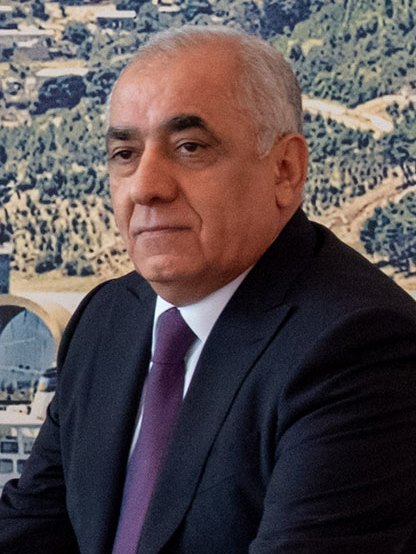
The 11th meeting of the Joint Intergovernmental Commission on Economic Cooperation between the Republic of Azerbaijan and Georgia was held in Sighnaghi, in Georgia’s Kakheti region, under the chairmanship of Prime Ministers Ali Asadov and Irakli Kobakhidze.
"Operative Information Center-OMM" reports that the Cabinet of Ministers issued a statement on the meeting.
The sides exchanged views on the current state and prospects for developing strategic partnership between Azerbaijan and Georgia, and on expanding cooperation in trade and the economy, investment, energy, transport and transit, agriculture, culture and humanitarian affairs, and other areas.
Prime Minister Ali Asadov said high-level political dialogue and reciprocal visits played a decisive role in developing bilateral relations. He noted that agreements reached during President Ilham Aliyev’s state visit to Georgia in April this year and the Georgian prime minister’s visit to Azerbaijan in May had reaffirmed the strategic nature of cooperation between the two countries and provided additional impetus to expanding joint work in various fields.
The sides expressed satisfaction with their effective cooperation within international organizations, particularly their mutual support on issues of state sovereignty and territorial integrity.
They praised the positive momentum in trade and economic cooperation, noting that Georgia is one of Azerbaijan’s main trading partners. Bilateral trade turnover rose 42% in the first nine months of this year, surpassing last year’s total and approaching $1 billion, the meeting was told.
Cooperation on investment was also described as developing successfully, with Azerbaijan identified as one of the largest investors in Georgia’s economy.
The sides noted positive momentum in joint investment projects and cited the opening of a new hotel project in Tbilisi by an Azerbaijani investor as a good example of this cooperation.
Energy was described as one of the main pillars of the Azerbaijan-Georgia strategic partnership. The sides noted that major joint projects, including the Baku-Tbilisi-Ceyhan oil pipeline and the Southern Gas Corridor, play an important role in ensuring the energy security of the region and Europe.
Cooperation in electricity was also said to be continuing successfully. Azerbaijan provided prompt assistance following a request from Georgia in connection with a crisis in the country’s power system in July this year, the meeting was told.
The sides paid particular attention to prospects for cooperation in renewable energy. They stressed the importance of ongoing work to establish a corridor for transmitting green energy to Europe with the participation of Azerbaijan and Georgia.
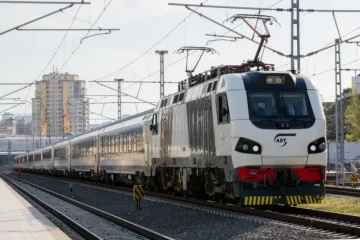
Cooperation in transport and transit was also among the main topics discussed. The sides noted that Azerbaijan and Georgia are important partners in developing international transport corridors, and stressed the importance of joint efforts to boost the competitiveness and transit capacity of the Middle Corridor.
As part of efforts to develop transport infrastructure, the sides also discussed expanding border-crossing capacity. They highlighted the importance of a project to establish a joint crossing on the Azerbaijan-Georgia state border, named “Silk Road (Agstafa) – Abreshumis Gza (Gardabani).” They expressed confidence that a document on the project’s practical implementation, due to be signed during the meeting, would help accelerate the relevant work.
The sides noted significant potential to develop cooperation in agriculture. They expressed confidence that bilateral documents on plant quarantine and protection, as well as veterinary matters, to be signed during the meeting would help simplify relevant control procedures and increase mutual trade in agricultural products.
The meeting also addressed environmental protection and the efficient use of water resources. The sides underlined the strategic importance of the Kura River basin for both countries and the need to step up joint efforts to protect transboundary water resources, prevent pollution and ensure their sustainable management.
Culture and humanitarian affairs were described as an important component of Azerbaijan-Georgia relations. The sides highlighted the special role of cooperation in culture, education and humanitarian fields in preserving and developing the historic bonds of friendship between the two peoples.
Delegation members delivered reports on the items on the agenda.
At the conclusion of the meeting, Prime Ministers Ali Asadov and Irakli Kobakhidze signed the protocol of the 11th meeting of the Joint Intergovernmental Commission on Economic Cooperation between Azerbaijan and Georgia.