OMM Newsroom

Jerusalem — Israel could face weeks or months of political uncertainty after final election results showed that neither of the two main blocs had secured a clear victory.
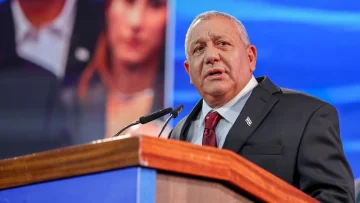
Prime Minister Benjamin Netanyahu’s right-wing Likud-led bloc and the centrist Yashar-led bloc of his main rival, Gadi Eisenkot, both fell short of the 61 seats needed to form a government in the 120-seat parliament, CNN World reported.
Deep political and ideological divisions make a straightforward coalition difficult, though party leaders have 12 weeks to try to form a government. If they fail, another election could follow.
Opposition government or national unity
One possible route for the opposition to replace Netanyahu would rely on cooperation between Jewish and Arab parties. That approach faces resistance from two right-wing opposition leaders, former Prime Minister Naftali Bennett and former Defense Minister Avigdor Liberman, who oppose a government dependent on the Arab parties Joint List and Raam, whether they join a coalition or support a minority government from outside it. Their positions have hardened since the Hamas-led attack of October 7, 2023.
Raam was part of an eight-party coalition that ousted Netanyahu in 2021. It was the only government in Israel’s history to include an Arab party as a full participant, and it collapsed after just over a year.
Even without forming a government, opposition parties could use their parliamentary majority to replace the Knesset speaker and other key officeholders, limiting the influence of Netanyahu’s caretaker government. Forming a coalition to replace him, however, remains politically complicated.
A national unity government could bring together Likud, some of Netanyahu’s current coalition partners and at least one party from the opposition bloc. Netanyahu is believed to be willing to part ways with far-right National Security Minister Ben-Gvir, but not with far-right Finance Minister Bezazel Smotrich or the ultra-Orthodox parties.
Eisenkot has ruled out joining a government with Netanyahu. Changing his position could be seen by many Israelis who want Netanyahu out of office as an act of betrayal.
Defections or another election
Netanyahu could also seek defections from opposition parties or individual lawmakers. But all four opposition bloc leaders — Eisenkot, Bennett, Liberman and Yair Golan — have said they will not join him. Netanyahu’s bloc is eight seats short, meaning he would need to persuade eight lawmakers to defect.
Meanwhile, President Isaac Herzog is expected to hold public consultations with the leaders of parties that entered parliament. After hearing their views, he will task one of them with trying to form a government. Arab parties are expected to support Eisenkot, making him a possible first choice.
The first leader given the mandate will have 28 days, with a possible 14-day extension. If that attempt fails, Herzog will ask a second leader to try, with 28 days to reach an agreement. If that also fails, a majority of Knesset members can ask the president to nominate a third candidate, who would have 14 days to form a coalition.
If none of the attempts succeeds, Israel will hold another election. Netanyahu appears well placed to benefit from the timetable: as caretaker prime minister, he can wait while Eisenkot makes a first attempt. If Eisenkot fails, the mandate could pass to Netanyahu. If Netanyahu also fails, the deadlock could lead to another election while he remains caretaker prime minister.
A repeat election could take place no earlier than next spring. The results could leave Israel politically paralysed and lead to its seventh general election in eight years.