OMM Newsroom
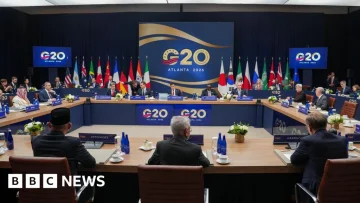
Deep divisions over the Russia-Ukraine war overshadowed a G20 foreign ministers’ meeting in Atlanta on Friday. European officials criticized Moscow’s participation and refused to join Russian Foreign Minister Sergey Lavrov in the traditional group photo.
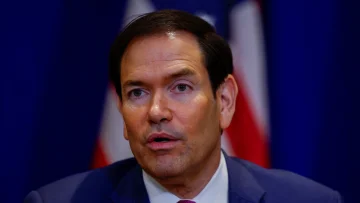
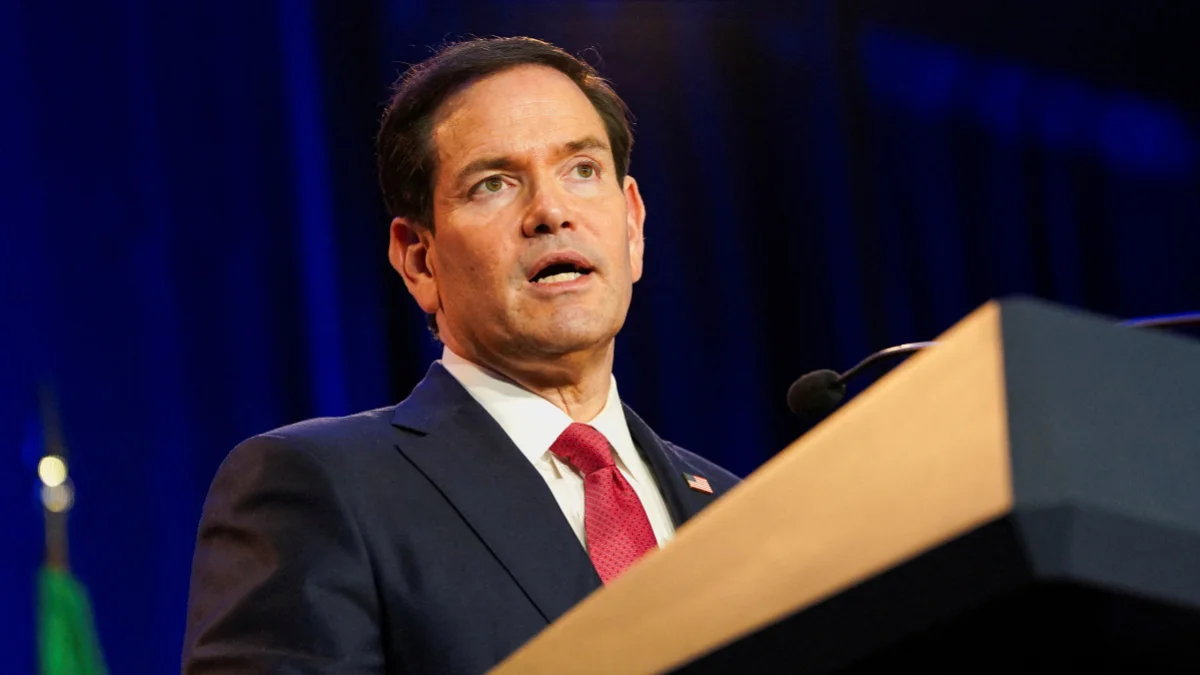
According to AnewZ, the two-day meeting organized by U.S. Secretary of State Marco Rubio exposed widening disagreements among G20 members over the conflicts in Ukraine and the Middle East. The divisions raised questions about the countries’ ability to reach common positions on major global challenges.
Lavrov attended the meeting at Rubio’s invitation, drawing objections from several Western countries. British Foreign Secretary Ed Miliband directly criticized his Russian counterpart, accusing Moscow of continuing to kill Ukrainian civilians.
“Just yesterday your drones attacked and killed 15 people. There are countless such examples throughout this war of you killing innocent civilians. We all know that you are the aggressor,” Miliband said.
Lavrov later told journalists that Moscow’s position on the Ukraine conflict had not changed. Russia could not accept Ukraine as “a military threat to the legitimate security interests of the Russian Federation,” Russian news agencies reported.
The tensions also disrupted a longstanding G20 tradition. U.S. officials said the customary “G20 family photo” was not taken after European representatives refused to pose with Lavrov.
A U.S. official said Washington wanted to avoid a “spectacle” that could overshadow the meeting’s agenda. A Western diplomat said one-third of the members objected, including Australia and Canada.
German Foreign Minister Johann Wadephul told journalists that a joint photo with Lavrov was unacceptable. “There is no normality in relations with Russia,” he said. According to a meeting participant, Lavrov also acknowledged concerns about the photograph during the meeting.
Rubio calls for cooperation amid crises
Despite the diplomatic divisions, Rubio urged G20 ministers to cooperate in tackling mounting economic and geopolitical challenges. He said interconnected crises were threatening global energy and food supplies, international trade and freedom of navigation on maritime routes.
Rubio called on his counterparts to identify areas where they could reach agreement ahead of the G20 leaders’ summit, scheduled for December 14-16 in Miami, Florida. Officials expect the Atlanta meeting to conclude with a chair’s statement rather than a joint declaration requiring the consent of all members.
Western officials said efforts would focus on securing a joint declaration at the December summit. It remains unclear whether Russian President Vladimir Putin will attend.
The war in the Middle East also added to the challenges facing G20 discussions. Ministers expressed concern about the conflict’s impact on the global economy.
Two Western officials said G20 members broadly agreed that the war in the Middle East was worsening economic difficulties faced by almost every country. Many participants were concerned that further U.S. strikes on Iran could sharply increase oil prices and intensify economic pressure, they said.
“The prospect of new military action in Iran is on everyone’s mind. Everyone is under serious pressure,” one official said, asking not to be named because they were not authorized to speak publicly.
G20 divisions hinder common position
The disagreements in Atlanta highlighted broader challenges facing the G20 amid competition between the United States and China and conflicts in Ukraine and the Middle East.
Heidi Crebo-Rediker, who served as chief economist at the U.S. State Department during the Barack Obama administration, said middle powers such as Brazil and India, along with Russia and China, were trying to define their positions amid U.S.-China strategic competition. “There is more fragmentation than before,” she said.
Crebo-Rediker added that for about a decade, G7 countries had agreed on at least a coordinated platform before arriving at G20 meetings, “and now we don’t even have that.”
Countries including Russia, China, Brazil and India are trying to balance competing strategic and economic interests, making agreement on major international issues increasingly difficult.
The G20 has struggled to adopt joint declarations since Russia launched its full-scale invasion of Ukraine in 2022; decisions require consensus among members.
Recent decisions by U.S. President Donald Trump concerning Russia have further complicated the diplomatic situation. Participants cited Washington’s agreement to buy Russian diesel and its waivers of some sanctions, as well as Ukraine’s difficulties with Starshield satellite services.
Ukraine was not invited to the G20 foreign ministers’ meeting. However, Washington announced late Friday a multibillion-dollar sale to Ukraine of interceptors used to shoot down missiles, including those targeting Patriot systems.
Before the meeting, EU foreign policy chief Kaja Kallas said she would call for increased support for Ukraine and seek progress on accountability through a Special Tribunal and Claims Commission.
“Russia’s deadly attack on Dnipro railway station is another brutal assault on Ukrainian civilians. It clearly shows that Moscow is not interested in peace. I extend my deepest condolences to the victims and their families. At the EU-Canada summit and the G20 foreign ministers’ meeting in Atlanta, I will urge partners to further strengthen our support for Ukraine, including by advancing accountability through a Special Tribunal and Claims Commission. Russia must be held accountable,” Kallas wrote on social media platform X.