OMM Newsroom

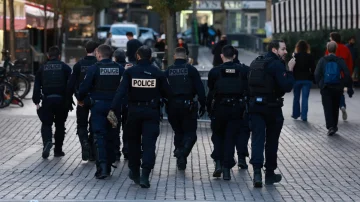
French Interior Minister Laurent Nuñez said on Friday that 70,000 security personnel would be deployed nationwide on Saturday to maintain public order. According to AnewZ, the minister said far-left groups had called for looting and violence.
Nuñez told journalists that calls to target public buildings had been circulating on social media. He said authorities were ready to take a firm approach on Saturday and would tolerate no breaches of the law.
French President Emmanuel Macron blamed “insurrectionary” far-left groups and vandals for last weekend’s riots and looting. According to Reuters, after meeting intelligence chiefs and senior ministers, he said political and insurrectionary actions aimed at overthrowing the republic had taken place last Saturday.
Macron said demonstrations organized by groups such as trade unions would be allowed, but their routes could be changed to protect businesses. The president was also expected to chair a defense council meeting on Friday to discuss additional measures.
More than 2,700 people detained
Justice Minister Gérald Darmanin said on Thursday that about 2,700 people had been detained since Saturday, and more than 1,000 had been brought before a court. Following expedited trials, 217 people received prison sentences. The minister said the number was continuing to rise rapidly.
Darmanin told journalists outside Fleury-Mérogis prison near Paris that half of those sentenced had no previous criminal convictions and that most were men aged 18 to 25.
Some lawyers have criticized the expedited hearings, accusing the government of pressuring judges to impose harsher sentences.
French officials and media outlets said two people had been detained over an arson attack on Limoges city hall.
Protests banned in several cities
In Lyon, France’s second-largest city, local authorities banned all protests planned for Saturday. Some 200 to 300 shops were looted in the city last weekend. Restrictions on protests in central areas have also been imposed in several cities, including Grenoble, Rouen, Le Havre and Toulon.
A student protest planned for Thursday in Paris was banned, but an emergency court later overturned the ban, according to AFP. Transport authorities closed metro stations in the city center to prevent unauthorized gatherings.
UNEF, the main student union, has called for rallies on Saturday, while the Yellow Vests movement has applied to hold a march through central Paris. AFP reports that organizers will be allowed to set off from Bastille in the east of the city but will be barred from entering the center. The Interior Ministry plans to deploy 20% more police officers than last weekend.
Stores in central Paris have begun boarding up their windows, while Hermès has stepped up security at its stores in France, Reuters reports. The third consecutive night under a local curfew passed without serious incident.
Trade unions are also planning a nationwide strike on November 5 to protest the rising cost of living and cuts to public-service spending. Talks with Prime Minister Sébastien Lecornu ended without agreement.
The unrest is also affecting financial markets. The yield on France’s 10-year government bonds rose above that of equivalent U.S. bonds on Thursday, the first such occurrence since 2013, according to Reuters.
More than half a million people took part in protests in France on October 17. Violence on the sidelines of the demonstrations has become one of the country’s most serious episodes of urban unrest in recent years, raising questions about security forces’ ability to maintain public order.
The protests began last month over staff shortages in schools, then developed into a broader movement against a sharp rise in energy costs, pressure on household budgets and deteriorating public services.