OMM Newsroom

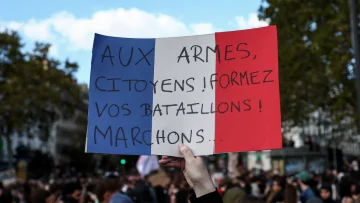
France is preparing for a new wave of nationwide protests this weekend. Rising living costs, concerns about education and political tensions are converging in demonstrations that could become one of the country’s largest protest movements in recent years.
Authorities expect hundreds of demonstrations across the country. Protests are planned not only in major cities but also on ring roads, at fuel stations and in commercial areas. The tactics recall those used by the “Yellow Vests” movement, which began in 2018.
A broad coalition of activists, trade unions, political parties, students and civil society organizations is joining the protests. The mobilization reflects growing discontent with the economic situation and government policies.
Cost of living among the main drivers of protests
Organizers say concerns about household finances are fueling the demonstrations. Key issues include rising fuel and everyday goods prices, as well as opposition to budget measures that critics say will leave public-sector workers and vulnerable groups struggling to cope with inflation.
Several prominent figures from the “Yellow Vests” movement have openly backed the demonstrations. They are seeking to revive a movement that once brought hundreds of thousands of people onto the streets and posed a serious challenge to the government.
Labor organizations, left-wing political groups and social movements have also supported the protests, extending the mobilization beyond traditional protest networks.
French authorities have warned that some demonstrations could turn tense. Security forces are preparing for possible unrest in Paris and other major cities. Officials fear that radical and violent groups could exploit the protests.
Student demonstrations add momentum to discontent
The weekend protests come amid weeks of tension in French schools and universities. Student demonstrations over education conditions have quickly developed into a broader movement addressing inequality, public services and opportunities for young people.
Thousands of school pupils and university students have taken part in demonstrations. They cite overcrowded classrooms, staff shortages, deteriorating conditions at educational institutions and dissatisfaction with the higher education admissions system.
The protests have spread from the Paris region to cities and towns across the country, affecting hundreds of educational institutions. Clashes between students and police have increased. Protesters have erected barricades outside schools, while security forces have used tear gas and other means to disperse demonstrations blocking access to educational institutions.
Police have said hundreds of officers were injured during recent unrest and thousands of people were detained in connection with the protests.
Mass demonstrations have long played a significant role in French political life. From the student movement of 1968 and the suburban unrest of 2005 to the 2023 pension protests and the “Yellow Vests” movement, street demonstrations have been one of the country’s main expressions of political discontent.
The current protests come as the election campaign intensifies. Candidates from across the political spectrum are seeking to capitalize on public discontent. As a result, the demonstrations are becoming not only a social issue but also an important arena for political contest.
Left-wing politicians have voiced support for student protesters, criticized police tactics and said young people are raising legitimate concerns about education, social mobility and public investment. Conservative and right-wing politicians, meanwhile, have condemned violence and vandalism linked to some demonstrations and called for tougher law-enforcement measures.
French President Emmanuel Macron, who cannot seek another consecutive term under the country’s constitution, has also joined the debate. He has defended the right to peaceful protest while criticizing violence and warning against using students for political purposes.
The demonstrations have also brought deeper concerns about France’s future into focus. Recent international education assessment results have highlighted declining performance in core subjects such as mathematics and reading. Concerns also remain about disparities among students from different economic backgrounds.
These problems coincide with broader economic pressures, including inflation, budget constraints and concerns over public debt. For many protesters, the demonstrations are no longer only about education or fuel prices; they express wider discontent over economic security, public services and trust in political institutions.
As France enters an important election period, the scale of Saturday’s protests could indicate whether a new protest movement will become a long-term challenge for the government and the country’s political establishment.