OMM Newsroom

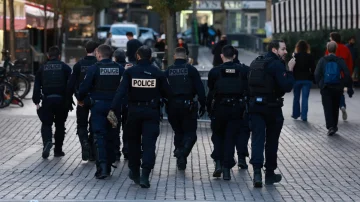
France imposed curfews in parts of Paris, Lille and Nice on Monday following weekend unrest and looting linked to nationwide protests against the government. Criticism of the government over security failures has also intensified.
Prime Minister Sebastien Lecornu said a citywide curfew would not be imposed in Paris for now, but did not rule out declaring a state of emergency. He said local restrictions were a more appropriate response, AnewZ reports.
“I am absolutely determined to restore public order,” Lecornu told reporters.
Paris police banned demonstrations in parts of the capital from 8 p.m. A curfew will be in force around Place de la Republique and Les Halles from 11 p.m. Tuesday until 6 a.m.
According to a source in the prime minister’s office, a curfew for minors has been imposed in Lille, Douai, Wattignies and Denain for two days, from 8 p.m. to 6 a.m. Nice Mayor Eric Ciotti also announced an overnight curfew for minors in the city center. Gatherings and demonstrations have been banned in Marseille.
Interior Minister Laurent Nunez said Tuesday evening’s Champions League match between Paris Saint-Germain and Barcelona would go ahead as planned.
About 2,400 people were detained and nearly 1,000 police officers injured in clashes between demonstrators and police over the weekend, according to the Interior Ministry. One protester who suffered a heart attack died.
Bishops condemn violence
France’s bishops condemned the violence that swept the country over the weekend, leading to destruction and looting, calling it “unacceptable.”
In a joint statement issued on Oct. 19, the bishops called for restraint and expressed support for those attacked and affected by the unrest. “We urge everyone not to be swept up in this deadly spiral of violence: our country deserves better,” the statement said.
Other church leaders in the country also joined calls for a peaceful resolution to the crisis.
Lecornu blamed far-left groups for some of the worst unrest in France in recent years and accused them of trying to destabilize the country ahead of the presidential election. Far-left presidential candidate Jean-Luc Melenchon demanded that the prime minister provide evidence for the allegations, saying he should apologize if he could not.
President Emmanuel Macron rejected Nunez’s offer to resign. He tasked the minister with clearing barricades and preventing looting, as well as ensuring transparency over what Macron described as intelligence and preparedness failures.
Nunez told France Inter radio that 60,000 police officers and other security personnel had been deployed on Saturday. He acknowledged that this was not enough to control the violent crowds.
The mayors of Paris, Marseille and Lyon wrote in an opinion piece published in Libération that they had experience managing demonstrations but believed some parts of their cities had been left unprotected.
Looting affects about 3,000 stores
Looting affected about 3,000 stores, according to a federation representing retailers. Lecornu said the government would introduce measures from Tuesday to support affected businesses, including allowing employees to be placed on temporary leave.
Many luxury hotels and shops in Place Vendôme in central Paris remained closed on Monday. The entrance to a Dior store was smashed, while the windows of Rolex, Louis Vuitton, Ralph Lauren and Gucci stores were damaged.
The official store of Olympique de Marseille was looted, the club said. In the city of Limoges, the historic town hall was set on fire.
Gerard Nouchi, who runs two clothing stores in Marseille, said police had been unable to stop the looting. “They wrecked everything, smashed things and insulted us. It was like a real tornado,” he said.
Junior Digital Affairs Minister Anne Le Hénanff said the government had instructed online platforms to remove listings for looted goods and cooperate with authorities in prosecuting those reselling them.
The violence followed weeks of student demonstrations over the decline of public services, the cost of living and the state of the economy. Students also held gatherings and organized blockades at various locations in Paris on Monday, including the Louvre museum and Sciences Po university. Trade unions have called for new strikes and rallies on Nov. 5.
The unrest comes six months before France’s presidential election and increases pressure on Macron’s fragile government, which is trying to pass a budget aimed at controlling public finances.
As crews began clearing damaged streets, Macron traveled to Kuwait as part of a trip to Gulf countries to secure additional supplies of petrol and diesel that could help lower fuel prices.
Protests over the cost of living have also taken place in Italy, Belgium and Albania. Several European governments have advised their citizens in France to avoid crowded places.