OMM Redaksiyası

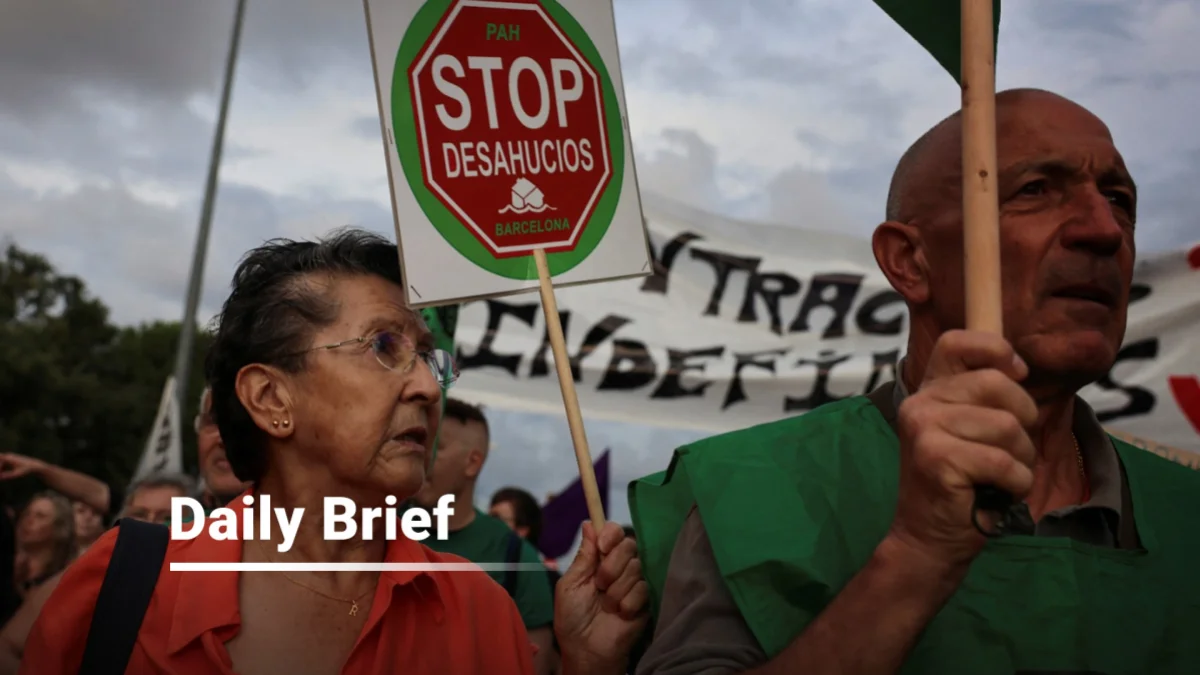
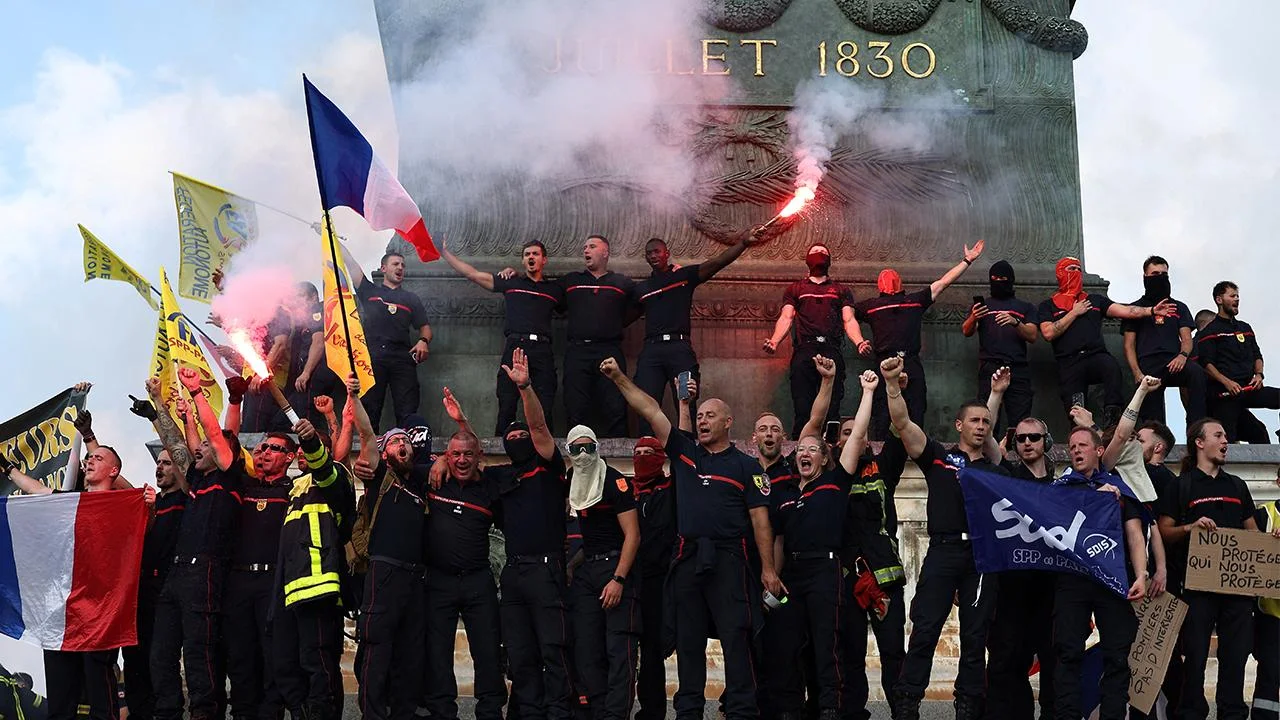
Students, teachers and parents took to the streets across France on the largest day of protests over teacher shortages and deteriorating school buildings. On Tuesday, police used tear gas against protesters who blockaded high schools in several cities.
Demonstrations in Marseille and Nantes were largely peaceful. Protesters held signs reading “The state has killed national education.” In Toulouse, parents linked arms at the front of a march.
Violence was reported at demonstrations in Strasbourg, Lyon and Rennes: police used tear gas, while protesters set fires in the streets and threw various objects.
Hugo Wetzel, a recent high school graduate living in Strasbourg, said there was “a huge divide between the elites and us.”
The protests began in September in low-income suburbs of Paris before spreading across the country. The demonstrations have become a serious test for the government of President Emmanuel Macron, which is facing economic difficulties.
According to the High School Students’ Union, more than half of France’s high schools were blockaded or had to suspend operations that day. Some local education authorities tried to move classes online. A union representative said schools faced a range of problems, from water leaks to rat infestations.
Thousands detained during protests
The government has responded to the demonstrations by deploying riot police. Rights groups, students and parent groups have accused the authorities of using disproportionate force against minors. The government, meanwhile, says the protest movement has been hijacked by outsiders and turned into urban violence.
France’s Ministry of the Interior said 6,100 people had been detained since the protests began, the vast majority of them minors. The Ministry of Justice said proceedings had been launched against more than 1,800 people, including 1,483 minors, without specifying the nature of the alleged offenses.
At least 715 police officers and 215 teenagers have been injured in clashes, according to Lecornu’s office. A teenager lost a hand in a confrontation in northern France on Monday. Regional newspaper “La Voix du Nord” reported that the 15-year-old lost a hand and part of his forearm after picking up a grenade used by police to disperse crowds.
Omar Slaouti, a high school teacher in Argenteuil near Paris, said the authorities wanted to divide young people into “good and bad protesters.”
Six months before France’s next presidential election, the government and Marine Le Pen’s National Rally party have accused lawmakers and mayors from the left-wing France Unbowed (LFI) party of stoking the protests. LFI denies the accusation.
Lecornu vows government action
Prime Minister Sébastien Lecornu has instructed ministers to prepare measures addressing students’ main demands. These include providing substitute teachers when regular teachers are absent, reviewing the school day, which runs from 8 a.m. to 6 p.m., and extending the lunch break.
Lecornu said the government would also review renovation needs in aging school buildings and asked ministers to submit their initial proposals by the end of October.
Emilie Lomme, a parent who took part in a protest outside the Hélène Boucher school in Paris, said the government’s announcements were not enough: “It all sounds good, but this is not what will change our children’s daily lives.”
The government is under pressure to limit the widening budget deficit. Investor concerns over France’s rising debt, weak economic growth and reluctance to cut spending have pushed bond yields higher. Last week, yields on French 10-year bonds briefly topped 5%, reaching their highest level in 24 years.
Rising borrowing costs in France have begun to affect the eurozone as well. The euro’s decline has added to policymakers’ concerns. Finance Minister Roland Lescure said on Tuesday that intervention by the European Central Bank was not necessary.