OMM Newsroom

The C5+1 ministerial meeting in Samarkand has given fresh impetus to efforts to strengthen economic ties between the United States and Central Asian countries. During the meeting, Uzbekistan reached agreement with US companies and institutions on 54 deals and initiatives worth $12 billion.
Established in Samarkand in 2015, the C5+1 format brings together the United States and the five Central Asian countries: Kazakhstan, Kyrgyzstan, Tajikistan, Turkmenistan and Uzbekistan. Initially focused on diplomacy and security, the initiative has since expanded to cover trade, investment, energy and regional connectivity.
At the meeting on October 19, participants discussed turning political commitments into commercial projects. The United States and the five Central Asian countries agreed to strengthen the Trans-Caspian trade route, improve transport and customs links, expand industrial cooperation and increase the processing of critical minerals into higher-value products.
Washington is seeking to deepen economic ties with Central Asia and views the C5+1 format as a key platform for coordinating regional projects, rather than relying primarily on separate negotiations with individual countries.
Uzbekistan reaches agreement on 54 deals and initiatives with US
The largest commercial agreements were announced at the second meeting of the US-Uzbekistan Business and Investment Council, held alongside the C5+1 ministerial meeting.
According to Uzbekistan’s Ministry of Investment, Industry and Trade, 54 agreements and proposed initiatives worth about $12 billion were signed or agreed. They cover transport and energy infrastructure, industry, critical minerals, finance, digital technologies, agriculture, healthcare and education.
Companies involved in the projects include Wabtec, which is expected to support the localization of railway equipment and components. Major financial institutions including Franklin Templeton, Oppenheimer & Co., Citigroup and BlackRock are also among the participants.
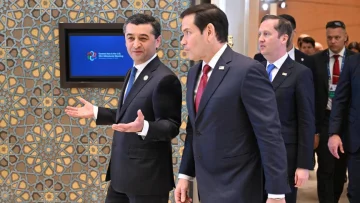
The Samarkand C5+1 meeting aimed to expand economic cooperation between the United States and Central Asian countries, AnewZ reports.