OMM Newsroom

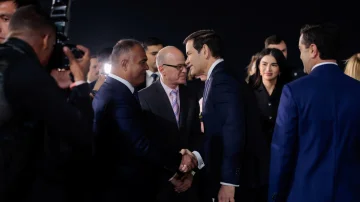
The United States and five Central Asian countries held high-level talks in Samarkand on Oct. 19, 2026. The discussions focused on trade, investment and regional security as Washington seeks to strengthen its position in the strategically important region, AnewZ reported.
US Secretary of State Marco Rubio attended the meeting alongside the foreign ministers of Uzbekistan, Kazakhstan, Kyrgyzstan, Tajikistan and Turkmenistan. Critical minerals, infrastructure and economic cooperation were also on the agenda.
C5+1 format expands from Samarkand to the White House
The C5+1 diplomatic format was established in Samarkand in November 2015, when then-US Secretary of State John Kerry met with the foreign ministers of the five Central Asian republics.
The dialogue was later elevated to the presidential level. The leaders’ first summit was held in New York in 2023, and the second took place at the White House in November 2025, hosted by US President Donald Trump.
The initiative has become one of Washington’s main platforms for strengthening ties with Central Asia, a region rich in natural resources and situated along key international trade routes. Rubio arrived in Samarkand accompanied by more than 200 US business representatives, underscoring the commercial focus of the visit.
US officials identified opportunities to increase investment, expand energy cooperation and strengthen supply chains for critical minerals. At C5+1 meetings in Washington in 2025, more than $25 billion in commercial agreements and commitments were announced, covering aviation, agricultural machinery, railway infrastructure and mineral development.
Transport and energy infrastructure discussed in Samarkand
The C5+1 agenda initially covered three main areas: economic development, security and environmental challenges. Energy, digital infrastructure, cultural exchanges and stronger people-to-people ties were later added to the cooperation agenda.
Trade and investment remain key priorities, with participating countries seeking to develop industrial partnerships and attract new business opportunities. Cooperation on energy and the environment includes energy security, infrastructure development and the sustainable management of natural resources.
Security discussions address counterterrorism, border protection and regional threats. Education and cultural exchanges are aimed at building closer ties between the countries.
At the Samarkand meeting, Uzbekistan proposed closer and more regular coordination between the C5+1 and B5+1 business formats. The approach could give companies a greater role in identifying and developing priority projects.
The foreign ministers discussed improving transport links, expanding energy and digital infrastructure, and strengthening cooperation on critical minerals. The meeting was held in Samarkand on Oct. 19, 2026.
Kazakhstan is the United States’ largest trading partner in Central Asia. Bilateral trade in goods and services totaled about $7.1 billion in 2025. Trade with Uzbekistan amounted to $1.7 billion, with Kyrgyzstan to $447.1 million, with Turkmenistan to $233.5 million and with Tajikistan to $125.7 million.
The figures highlight differences in Washington’s economic ties with the countries of the region as well as potential for future growth. Stronger ties with the United States could help Central Asian governments expand access to investment, advanced technologies and international markets while diversifying partnerships alongside existing economic relations with Russia and China.
The talks also reflect a broader shift in regional diplomacy: Central Asian countries are seeking to expand their range of international partners, while Washington is working to establish a lasting economic and strategic presence in the region.