OMM Newsroom

UN investigators say the continued flow of weapons, military technology and fighters from abroad is prolonging and intensifying the war in Sudan. They warned that the conflict is spreading geographically and becoming more dangerous for civilians.
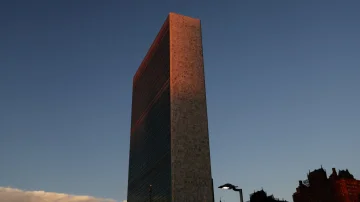
According to AnewZ, members of the UN Independent International Fact-Finding Mission for Sudan presented their findings at UN headquarters in New York on Wednesday and called for stronger international action, including an expansion of the arms embargo.
Mission Chair Mohamed Chande Othman said the investigation had found grounds to believe that the transfer of weapons, military technology, logistical support and foreign personnel was sustaining and intensifying the conflict.
He said foreign actors had supplied both sides, helping them continue military operations. The consequences, he added, are becoming increasingly clear on the battlefield.
Asked who was arming the Sudanese army and the paramilitary Rapid Support Forces (RSF), Othman said investigators had identified a cross-border network that supplies weapons and trains foreign fighters. The network includes individuals and entities in Chad, southeastern Libya, Somalia’s Puntland region and the United Arab Emirates.
Othman said the mission had called on these states to strengthen oversight of compliance with their respective obligations, given the direct impact on civilians. He stressed that, at this stage, the investigation was not accusing the governments of those states: the evidence did not link neighboring states as governments to the matter, but concerned individuals and entities within those countries.
The mission is in contact with the UAE and Chad, while its investigation into the possible role of other states is ongoing. Chad denies that its territory is being used to transfer weapons to the parties to the war. The UAE has also repeatedly denied allegations that it is arming the RSF.
Mission member Mona Rishmawi said both sides and their supporters had “essentially destroyed a country of 56 million people.” She also noted that the failure to hold perpetrators accountable in previous conflicts had contributed to the current violence.
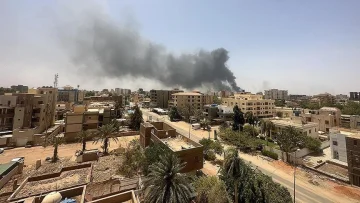
The mission’s report says civilians face serious danger in the strategically important city of El Obeid in central Sudan. RSF forces continue to besiege part of the city.
Othman said the situation in El Obeid and surrounding areas was severe and the risk of atrocities remained high. According to the report, drone attacks attributed to the RSF have damaged schools and areas housing displaced people, while restricting access to health care, electricity and water.
The mission also found that security forces linked to the Sudanese Armed Forces had increased surveillance and arbitrary arrests, further limiting civil liberties.
Othman said recent fighting showed the conflict was entering a more dangerous phase. Attacks reported in Blue Nile State, Abyei and near the Sudan-Egypt border, he said, confirmed warnings that the conflict was expanding geographically, becoming more technologically sophisticated and increasingly dangerous for civilians.
The UN Security Council has imposed an arms embargo on Darfur since 2004, but the restrictions do not cover the rest of Sudan. The Council rejected proposals to extend the embargo in September and earlier this month.
Mission member Joy Ngozi Ezeilo said the report documented surveillance and arbitrary arrests that left civil society vulnerable. She said the mission’s mandate was to ensure Sudanese civilians—including women, children and displaced families—were not overlooked.
Ezeilo said the war was exceptionally brutal but was not receiving the attention it deserved, and that the international community had not responded adequately. She said the mission supported expanding the arms embargo.
The mission also supports extending the jurisdiction of the International Criminal Court to all of Sudan. The court’s current authority is based on a 2005 Security Council decision concerning Darfur alone.
The war between the Sudanese army and the RSF began in April 2023, after disagreements over a plan to merge the two forces escalated into open fighting. Tens of thousands of people have been killed and about 13 million displaced from their homes, creating one of the world’s largest displacement crises. Famine conditions have spread, and aid organizations say the humanitarian situation continues to deteriorate.
The mission’s findings increase pressure on the Security Council, whose members are divided over whether to expand the embargo. Investigators say their inquiries into foreign involvement are continuing. Further findings could assess whether the states named in the report take steps to prevent weapons and fighters from crossing their territories into Sudan.