 OMM Newsroom

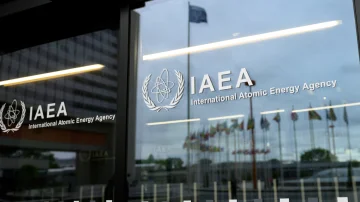
Iran has rejected a decision by the International Atomic Energy Agency (IAEA), the UN’s nuclear watchdog, to refer the country’s nuclear issue to the UN Security Council.
Iranian Foreign Ministry spokesman Esmail Baghaei called the decision “fundamentally unfounded.” He said Iran’s peaceful nuclear activities comply with the IAEA’s rules and requirements.
Baghaei criticized the United States, Britain, France and Germany for putting forward the draft resolution. He said allegations that Iran had failed to meet its obligations resulted from US and Israeli attacks on Iran’s nuclear facilities.
“The referral of Iran’s nuclear issue to the Security Council is fundamentally unfounded because Iran has violated none of its obligations,” Baghaei said.
The Iranian official also criticized Japan and Saudi Arabia for voting in favor of the decision. Baghaei described the positions of Japan, a victim of nuclear weapons, and Saudi Arabia, which he said had witnessed the consequences of US and Israeli actions against Iran in the region, as regrettable.
Kazem Gharibabadi, Iran’s deputy foreign minister for legal and international affairs, also strongly rejected the decision. He said nuclear facilities covered by Iran’s safeguards agreements with the IAEA had been attacked and that the normal inspection process had been disrupted.
Gharibabadi wrote on the “X” platform that the situation created by the attacks was subsequently used as a pretext for adopting a decision by the IAEA Board of Governors.
Iran’s parliament suspended cooperation with the IAEA on inspections at bombed sites following the strikes and barred the agency’s director general from visiting Iran.
Iran’s ambassador to international organizations in Vienna, Reza Najafi, called the IAEA decision a “politically motivated” and “distorted” document. He said the draft resolution distorted legal standards and had become a tool of political pressure.
Tehran maintains that its nuclear program serves exclusively peaceful purposes. Iran is demanding that inspections at bombed facilities be conducted under a separate protocol designed to monitor activities during wartime conditions.