Expanding climate finance for developing countries was one of the main priorities of Azerbaijan’s COP29 presidency, held in Baku in November 2024.
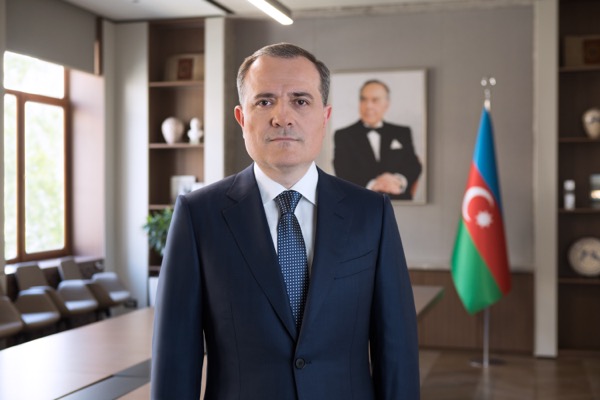
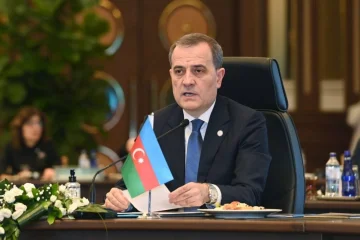
Operative Information Center-OMM reports that Foreign Minister Jeyhun Bayramov made the remarks at a conference titled “Strengthening global solidarity through humanitarian assistance and cooperation for development.”
The conference was dedicated to the 15th anniversary of the Azerbaijan International Development Agency (AIDA).
The minister recalled that COP29 established the New Collective Quantified Goal on Climate Finance (NCQG), which calls for at least $300 billion in annual funding by 2035.
In addition, the “Baku to Belem Roadmap” was adopted with the aim of increasing annual climate finance flows to $1.3 trillion by 2035.
“For developing countries, climate change is not merely an environmental challenge. It is also a development, financial and humanitarian problem. Addressing it requires combining financial resources with technical expertise, institutional capacity-building and investment in human capital,” Bayramov said.
According to him, an important part of the legacy of Azerbaijan’s COP29 presidency is the Baku Climate and Peace Action Hub. It was established to promote practical cooperation in the interests of states vulnerable to climate change and affected by conflicts.
The minister said the Baku Hub brings together governments, international organizations and financial institutions to mobilize support, strengthen national capacities and develop concrete pilot projects tailored to the needs of vulnerable countries.
COP29, the UN climate conference hosted by Baku, placed climate finance and the needs of developing countries at the center of international negotiations. Its outcomes are intended to support climate action, particularly in countries facing limited financial and institutional resources.