OMM Newsroom

Russia committed war crimes and crimes against humanity by deliberately attacking civilian infrastructure in Ukraine, including vital energy systems, an independent UN commission said in a report published on Monday. The report, shared with “CNN”, says the attacks were intended to deprive civilians of essential energy supplies and cause suffering.
Russian forces have targeted Ukrainian power infrastructure since the early months of the full-scale invasion in 2022, with attacks increasing sharply at the start of last winter, according to the report. Millions of Ukrainians were left without heat or electricity. “CNN” reported on the findings.
The commission said the attacks “were carried out with intent” and were consistent with a Russian “state policy to deprive the civilian population from essential energy supplies and cause suffering.” The report, which is being submitted to the UN General Assembly, said commanders knew the heating facilities they targeted were indispensable to civilians, particularly in winter.
According to Kyiv, large-scale Russian drone and missile attacks last winter cut thermal power generation capacity by 70 per cent in the areas most affected. The impact was worsened by an unusually cold winter, with temperatures falling as low as -30 degrees Celsius (-22 F) on several occasions.
The commission said medical authorities in Ukraine had documented deaths caused by low temperatures in homes and hospitals. Hospital staff reported treating patients for cold-related injuries, including frostbite and hypothermia, after exposure to unheated homes; some required hospitalization.
A woman in Dnipro, Ukraine’s fourth-largest city, described the effects of the attacks: “Cold—it paralyzes you; there’s simply no way to get warm, and terrifying thoughts come into your mind.”
The report also describes Polish volunteers cooking soup in a Kyiv neighbourhood left without electricity and heating after Russian attacks during freezing temperatures in February 2026. It refers to an attack on September 30 in which a 14-year-old was killed; electricians were working to restore the power grid near a destroyed private home in Kyiv region.
Putin and senior officials named in report
The commission, established by the UN Human Rights Council days after Russia launched its full-scale invasion in February 2022, named several senior Russian officials as most responsible for what it describes as war crimes and crimes against humanity.
It said President Vladimir Putin had made statements concerning instructions to attack Ukraine’s energy infrastructure. The report also alleges that evidence gathered over several years implicates former Defence Minister Sergei Shoigu, his successor Andrey Belousov and Chief of the General Staff Valery Gerasimov in planning and overseeing attacks.
The International Criminal Court has previously issued arrest warrants for Putin, Shoigu and Gerasimov over alleged war crimes and crimes against humanity. The commission’s report also cites an August statement by Russia’s Defence Ministry announcing attacks on Ukraine’s energy infrastructure and saying: “In winter you will freeze.”
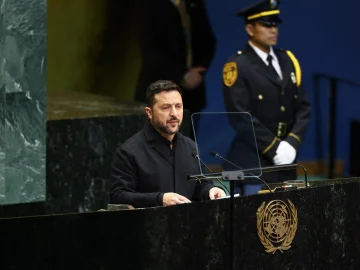
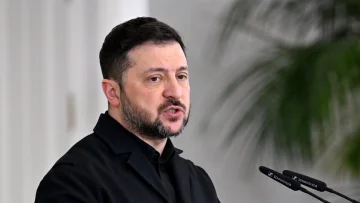
Ukraine is increasingly struggling to defend itself against large-scale attacks because of a critical shortage of air defence missiles. President Volodymyr Zelensky has repeatedly asked Kyiv’s Western allies for more ammunition, citing the approaching winter as a major concern.
Kyiv had been targeting Russian oil and gas infrastructure in an effort to reduce Kremlin revenues from energy exports, but eased those attacks after criticism from US President Donald Trump, who blamed Ukraine for rising gas prices.
Report alleges recruitment trafficking
The report also examined Russia’s recruitment of foreign nationals into its armed forces, concluding that the methods involved human rights violations and trafficking. People from countries in Africa, India and Latin America have told “CNN” they were promised jobs in Russia before being sent to the front lines.
The commission said it had found “compelling evidence” that Russian authorities, working with agents, trafficked people from 29 countries through deception or coercion to recruit them into the Russian armed forces. It said the use of similar methods across multiple countries indicated a high degree of coordination between agents and Russian authorities.
According to the report, promised payments and bonuses were often diverted by recruiting agents and military commanders. Passports and phones were frequently confiscated, and contact between recruits’ families and agents was cut off after the recruits were deployed.
The commission concluded that Russia violated recruits’ fundamental rights, including their rights to life, freedom and health, and to be treated humanely.
The commission also examined Ukraine’s recruitment of foreign nationals. Testimonies it gathered indicated that those who joined the Ukrainian armed forces did so knowingly and voluntarily, understood the contracts they signed and received salaries.