OMM Newsroom

Reactions in Turkey to the introduction of a standard school uniform in Azerbaijani secondary schools have brought a number of issues to light.
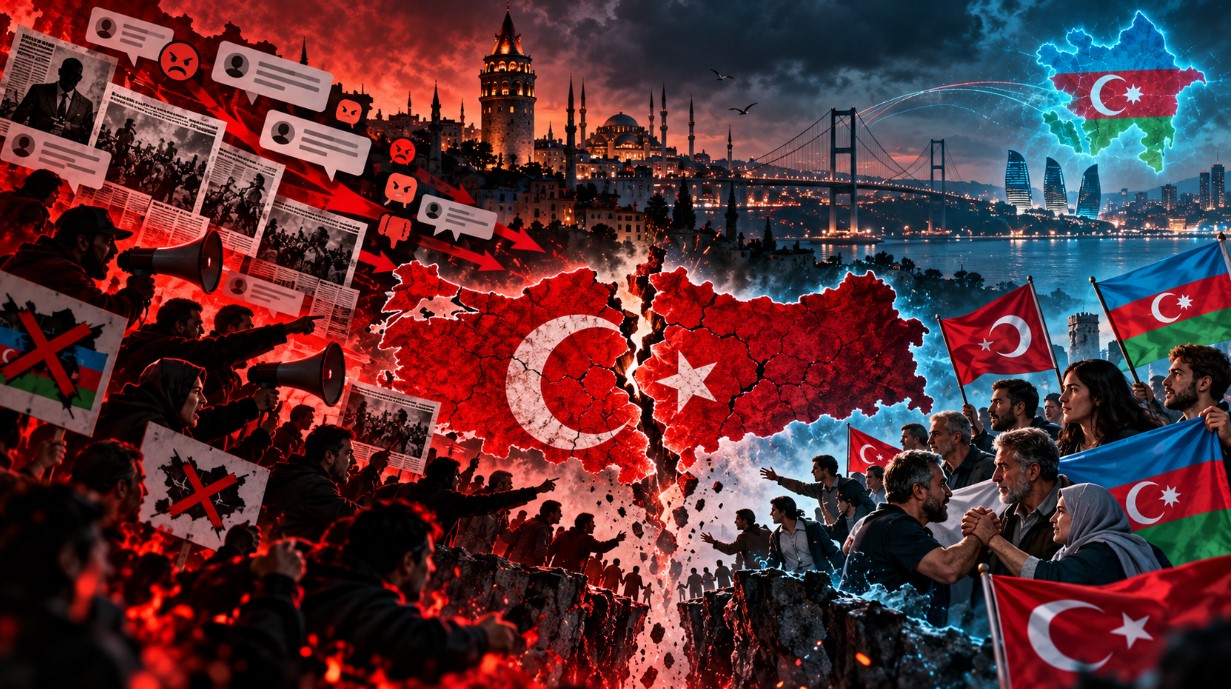
Campaign against Azerbaijan divided Turkish society
Those behind a smear campaign against Azerbaijan in Turkey, using standard school uniforms as a pretext, believed they could influence Azerbaijani public opinion and the resolve of its government.
It is no longer a secret that the campaign, which has continued for three years and has repeatedly resurfaced with renewed force despite occasional lulls, was organized deliberately and artificially.
The latest campaign intensified when an Azerbaijani representative remained in the hall during Israeli Prime Minister Benjamin Netanyahu’s address at a session of the UN General Assembly. It escalated further as the requirement to wear standard uniforms began to be enforced in Azerbaijani secondary schools following a Cabinet of Ministers decision. The campaign exhausted the patience of the Azerbaijani state and society.
Its organizers believed they were dealing with a weak Azerbaijan facing problems, and that they could unsettle society and impose their will. They made a serious mistake.
They failed to take into account President Ilham Aliyev’s strong standing in Azerbaijan, public support for him, and the respect he commands in the Islamic world, including Turkey, and internationally. They also overlooked the reality that Azerbaijani society unites closely around its Leader in the face of any external threat and mobilizes all its strength toward a common goal.
What was the result?
- They were unable to influence events in Azerbaijan or public opinion. Azerbaijani society supported the decision and clearly demonstrated its view that it was the right one;
- They saw clearly how Azerbaijani society consolidates in the face of an external threat and demonstrates an unshakable position, national unity and solidarity;
- They saw that it is impossible to address Azerbaijan in the language of threats or force it to abandon its course;
- The issue divided Turkish society, pitting the religious segment supportive of the AKP against nationalist and secular groups. Nationalists and supporters of the republic took a firm stand against the AKP’s Nurcu-Islamist current.
Russia, the West and Iran saw and understood this in time. It is now time for Turkey, too, to recognize this reality and take it into account in its relations with Azerbaijan.
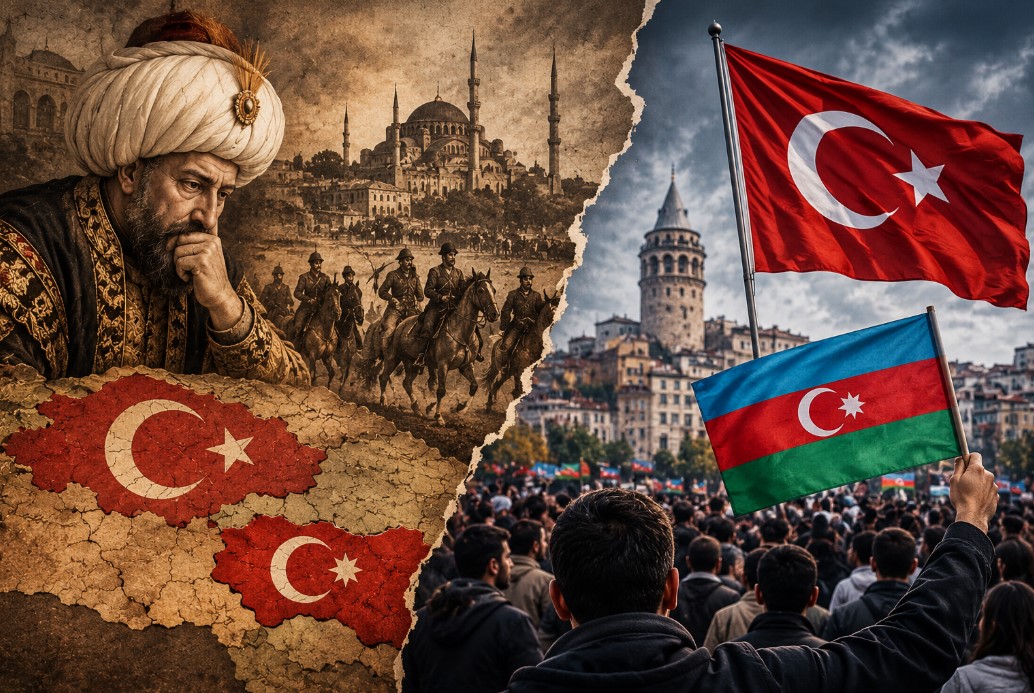
The Ottoman Empire’s mistakes are being repeated in modern Turkey
The process, which began within the AKP in Turkey, turned against the government. This should not be seen merely as a division in Turkish society, since the unity of the Turkic world is also at stake. Central Asian countries, Russia and Turkic peoples in other countries have now drawn lessons from what happened. It can therefore be said with confidence that this network, which has established a position within the AKP, dealt a major blow to the unity of the Turkic world as well. Mistakes made by the Ottoman Empire are being repeated in modern Turkey.
Those in Turkey who spoke out against Azerbaijan not only said that this approach was harmful and unacceptable; they also stressed that a country facing serious domestic problems should resolve them at home before interfering in the affairs of others:
Turkey has a considerable number of domestic problems today: bribery, corruption, monopolies, the “fund scandal,” early marriage, gross violations of women’s rights and more. The list could go on.
The Islamist mobs that lecture Azerbaijan and claim to be defending religion should first address issues such as the debauchery, nightclubs and hedonism rife in major cities, including Istanbul.
It is no secret that the Turkish government has adopted a double standard toward Israel.
The government stokes public opinion against Israel and claims to take an uncompromising stance, while trade ties with Israel continue.
Another problem is the rapid decline in living standards in Turkey and the lagging development of rural areas and cities. Turkey’s cities are no longer being modernized, while infrastructure is aging and falling into disrepair. The government’s slogans about various construction projects amount to little more than an attempt to distract the public.
Rationality in bilateral relations
Another reality is that, despite occasional problems, disagreements and tensions in bilateral relations, no other country has subjected Azerbaijan to such disrespect and insults. This once again demonstrates that Turkish society is being driven toward ignorance and superstition and is regressing.
Turkish society is facing serious structural problems and polarization, and is effectively living through a period of internal confrontation. To achieve its goals, the government is encouraging radical religiosity and creating a new reality that could undermine the foundations of the state.
Another reality Turkey needs to understand is the emergence of a modern, strong Azerbaijan. This is no longer a country with 20 percent of its territory under occupation; it is a new Azerbaijan capable of defending itself and resolving its own problems. Azerbaijan cannot be addressed in the language of threats. Russia, the United States, Iran and other countries have learned this from experience, and Turkey should draw its own conclusions.
Of course, Turkey’s problems concern Azerbaijan and its people more than anyone. But Azerbaijan does not interfere in the internal affairs of any country.
Some in Turkey are now holding up the support given to Azerbaijan during the 44-day war as a banner. Was that goodwill one-sided? Let us set history aside and look at recent times. Azerbaijan has not forgotten Turkey’s efforts to restore ties with Armenia, the Zurich protocols, football diplomacy, or the mass marches in Istanbul and Ankara after the killing of Armenian journalist Hrant Dink, where demonstrators chanted, “We are all Hrant Dink, we are all Armenians.” Azerbaijan did not hesitate to confront the European Union, Greece and the Greek lobby — the second-largest diaspora in the United States — over Northern Cyprus, and maintained a firm position. It did not recognize Greek Cyprus; a representative office of Northern Cyprus opened in Baku; official visits and contacts were arranged; and the leader of Northern Cyprus was invited to major international events, among other steps. The list could go on.
Is the filth now being poured out against Azerbaijan from Turkey an answer to all this?
That is why the phase of romanticism in bilateral relations has ended. Azerbaijani society has seen the true face and intentions of certain circles in Turkey and has had to change its position accordingly. Bilateral relations are now based on rationality. Friendship and brotherhood continue, but each side has its own state and interests. (APA)