OMM Redaksiyası

Saudi Arabia has restored operations on the East-West oil pipeline, bringing its daily throughput to 5.8 million barrels. However, a growing number of attacks on the country’s energy facilities, airports and transport infrastructure have raised questions about the continuity of oil exports.
The pipeline, considered an alternative route to the Strait of Hormuz, was temporarily shut down after an attack in September. Saudi Energy Minister Prince Abdulaziz bin Salman said it resumed operations five to six days after the attack, with daily flows reaching 5.8 million barrels by Tuesday.
The 1,200-kilometer pipeline links oil fields in eastern Saudi Arabia with the port of Yanbu on the Red Sea coast. It has a maximum capacity of about 7 million barrels a day. Saudi Arabia sends about 4 million barrels of oil a day toward Yanbu, equivalent to roughly 4% of global oil supplies.
Attacks on Saudi infrastructure
The pipeline’s operations were suspended in September after a drone attack that Saudi Arabia said originated from Iraq. Operations were temporarily halted while the facility was inspected and secured. Reuters reported that the pipeline had been transporting 4 million to 5 million barrels of oil a day before the shutdown.
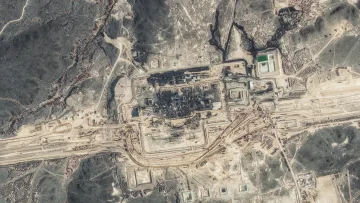
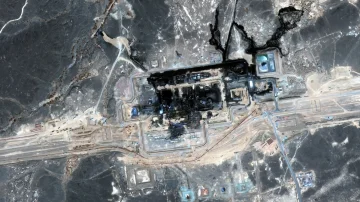
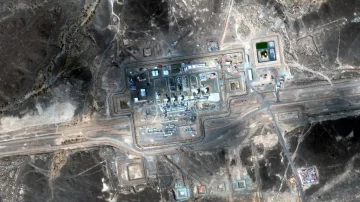
Satellite images taken by AFP on Sept. 13 showed signs of a fire at a pumping station southeast of Medina. The agency described the incident as a Houthi attack. In late September, Houthi military spokesman Yahya Saree said the group had attacked an Aramco facility in Yanbu and the Khamis Mushait air base with missiles and drones.
Saudi Arabia said it had intercepted six ballistic missiles targeting the Taif and Yanbu areas and that Aramco facilities had not been damaged. On Sept. 29, the Saudi-led coalition reported a Houthi attack on a power plant in Medina.
On Oct. 3, smoke and flames were seen near an Aramco refinery south of Riyadh. The Houthis claimed they had struck the facility with ballistic missiles and drones in response to Saudi airstrikes on Yemen. Saudi authorities did not immediately confirm the attack, while a coalition spokesman called the Houthi claims “misleading.”
Airports and Red Sea route at risk
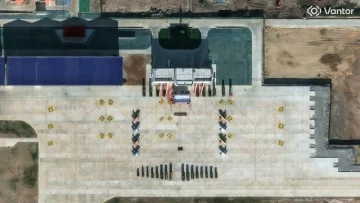
The attacks have also affected Saudi Arabia’s aviation sector. According to Time, three people were killed and 36 injured in Houthi strikes on the country’s airports on Wednesday. The National reported that, following one strike, flights at King Khalid International Airport in Riyadh were suspended for about two hours.
By Thursday, Saudi airports were reported to have come under attack for three consecutive days. One strike damaged a Saudia aircraft. Some office workers stayed home after explosions were heard in Riyadh. Houthi military spokesman Yahya Saree issued what he called a “final” warning to airlines to stop flying through Saudi airspace, describing the area as a “theater” for Houthi operations.
Saudi Arabia has not confirmed reports of the latest attack on Riyadh airport. Lufthansa and Air India suspended flights to the Saudi capital. The U.S. mission in Saudi Arabia warned that the conflict “could escalate.”
Houthi leader Abdul-Malik al-Houthi called on Riyadh to prepare for a prolonged conflict in a televised address on Thursday. The Saudi-led coalition said the attacks “will not go unpunished” and announced that 82 Houthi military sites had been destroyed in Saada, Hodeidah, Al Jawf and Marib. The Houthis, meanwhile, claimed that Saudi aircraft had carried out 59 strikes on Sanaa and several provinces within 24 hours.
The United Nations says the escalation of violence has worsened Yemen’s humanitarian crisis and displaced at least 150,000 people.
Yemeni government forces backed by Saudi Arabia have launched an operation called “Dawn of Yemen” to retake areas around the Bab al-Mandab Strait. The strategic waterway, which connects the Red Sea to the Gulf of Aden, is under Houthi control and is one of the conflict’s main flashpoints.
Pakistan has confirmed that its military personnel are in Saudi Arabia. Türkiye said it was considering possible assistance under a defense agreement. While the East-West pipeline allows oil to bypass the Strait of Hormuz, shipments from Yanbu must still pass through the Red Sea. The conflict in the region therefore poses a risk to the security of maritime transport.
Oil market supply concerns
The increase in attacks has heightened concern in global energy markets. Strikes in the Gulf region and reduced traffic through the Strait of Hormuz have raised the prospect of tighter supplies. According to the Financial Times, Brent crude exceeded $105 a barrel on Thursday.
The East-West pipeline is currently transporting about 6 million barrels of oil a day. Its restoration shows that Saudi Arabia has been able to bring its energy infrastructure back online after the attack. However, if the attacks continue, it remains unclear how long the country can maintain oil flows through its pipelines, ports and export routes.