OMM Newsroom
Men in Russia are increasingly being pressured or forced to sign military contracts, according to accounts from individuals and human rights groups reported by CNN. The accounts suggest a gradual change in Russia’s recruitment system as the war enters its fifth year. People who spoke about their experiences were not identified because they feared reprisals.
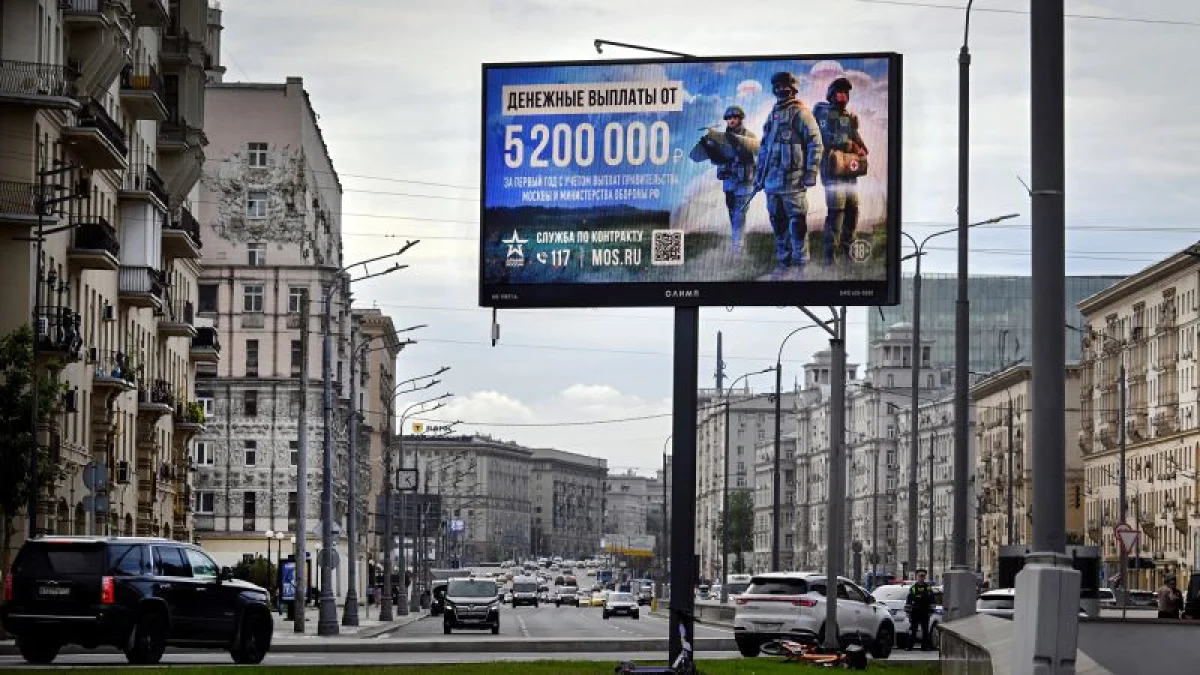
After a mass mobilization drive in 2022 triggered a panicked exodus from Russia, the country relied largely on substantial financial incentives to recruit soldiers. That approach may now be giving way to coercion and deception, even as Russia has repeatedly dismissed Ukrainian claims that it is preparing a new mass mobilization drive.
As Russia steps up attacks, the emerging pattern — described by some as a “creeping mobilization” — could undermine public acceptance of the war, at a time when the Kremlin needs it most. Frontline casualties have risen while recruitment numbers have fallen.
Vulnerable men among those targeted
One person told CNN that their uncle was an ill man in his late 50s with vascular problems and alcoholism who could barely walk. The uncle worked for a state defence company. In July, several men in civilian clothes approached him outside his apartment building and took him away by car.
The relative said the men gave him a document to sign, presenting it as a notification that they had been there. It turned out to be a military contract. The uncle returned home, but disappeared a week later. A few days after that, he called to say he was at a training ground in Luhansk, in Russian-controlled eastern Ukraine. In late September, his family was told he was missing in action.
“I have trouble falling asleep, sometimes I have nightmares that they catch me,” the relative said.
Artem Klyga, a Russian military lawyer based in Berlin who advises Russians on their rights related to military service, said the account matched a pattern he had seen. Since the beginning of summer, he said, more people had contacted him about similar incidents. “Now it’s a day-to-day practice,” he said, adding that many cases involved men who were vulnerable because of debt, health conditions or alcohol problems. “They simply do not have a chance to say no, simply do not know their rights.”
The lawyers’ coalition “Call to Conscience”, which advises Russian conscripts and reservists on conscientious objection, also reported a rise in forced-recruitment accounts in July and August, saying the tactics were “getting harsher by the day.”
Another person told CNN that their brother was detained in mid-July while intoxicated by people they assumed worked for the local military recruitment office. The relative said they had seen the military contract he signed and a video that appeared to show his tearful mother saying goodbye before he entered a white van.
The family also shared a written response from the local military prosecutor’s office to its request for the man’s release. It said he had appeared at the recruitment office “of his own free will, without any coercion”, adding that the contrary “has neither been proven nor documented.” Less than a month later, the family learned that he was missing in action.
“He had a very difficult life, problems with alcohol,” the relative said.
Russia’s Penza region, about 375 miles south of Moscow, emerged as a particular hotspot for forced recruitment in June, according to social media accounts and human rights groups. Videos and reports circulated online of people being taken from the streets.
In one video, which CNN geolocated to a military recruitment centre in Penza, women gathered around a bus and demanded that the men inside be released. One woman pointed into the bus and asked whether the men had signed voluntarily. A man inside appeared to shake his head. Another woman shouted: “They forced you, they beat you.” Russia’s Ministry of Defence dismissed reports of forced mobilization in Penza as fake.
Accounts of forced recruitment commonly describe violence and disregard for medical exemptions. One relative said their uncle was taken in August despite having a broken rib, and wrote that “the contract was signed under physical and moral pressure.”
Payments offered for recruiting soldiers
In many accounts, the people taking men away are not clearly identified and are often dressed in civilian clothes. This has raised concerns that some may be trying to claim bonuses offered for helping recruit soldiers. One relative described them as “bounty hunters.”
CNN was unable to verify whether this was the case in particular incidents, but regional authorities have publicly acknowledged that payments are available. Pavel Malkov, governor of Russia’s Ryazan region, said at a regional parliament session last August that the authorities would encourage people who helped persuade citizens to sign military contracts.
“We will provide a financial payment for each contract soldier. The bonus sum will vary from 50,000 to 300,000 rubles ($590 to $3,500), this is after tax,” Malkov said.
There is evidence of official payments in multiple regions, as well as dozens of job advertisements offering recruiters large sums for each person who signs a military contract. The amounts vary by region.
“It’s literally a ‘bring a friend’ kind of promotion, where you just find someone — anyone, in any state; in other words, it could be a drunk, a homeless person, or just about anyone — you drag them to the enlistment office, force them to sign a contract, and get your money,” said the founders of “New Alternative Route”, an anti-war group established this spring.
The group was founded by Russian IT professionals living in exile. It gathers information on forced mobilization and advises people trying to leave Russia. Its representatives spoke anonymously because they feared for family members still in the country.
Russia has sought to distinguish its recruitment system from Ukraine’s, where military service is compulsory for fit men aged 25 to 60. Reports have also emerged of violent or coercive recruitment in Ukraine.
“We see every day on the television and on the internet how in Ukraine they catch people, like homeless dogs, and drag them forcefully to the front,” Russian President Vladimir Putin said in early September. “Here people go voluntarily, as you know, and sign contracts.”
Janis Kluge, head of the Eastern Europe and Eurasia Division at the German Institute for International and Security Affairs, said recruitment in Russia was managed regionally through quotas and that the rise in coercive tactics was unlikely to be directed by the Kremlin. However, he said, it could be seen as a convenient response to the country’s manpower needs.
“The system where essentially the recruiters are doing the dirty work… is at least tolerated” by senior officials, Kluge said. “It could be, in the eyes of the authorities, part of the solution.” Russia’s Ministry of Defence did not respond to a request for comment.
Human rights groups said inquiries about emigration were increasing. Igor, a 21-year-old from central Russia whose name was changed because of concerns for his family’s safety, left the country three months ago after years of planning to escape what he called “totalitarian madness.”
In the year before leaving, he said, he was twice pressured to sign military contracts: first by his university and later during a visit to his local recruitment office to update his medical exemption.
“I panicked a bit,” he said. “I worried that someone might sign on my behalf. I wouldn’t have been able to do anything about it.”
He said he was also afraid that a new mass mobilization could lead to the border being closed and prevent him from leaving.
“I don’t think we’re going to see a scenario where we suddenly recruit 300,000 people tomorrow,” the founders of “New Alternative Route” said. Instead, they predicted “a quiet, creeping mobilization driven by coercive measures. In other words, what happened in Penza… it’s all preparation.”