 Afət Ziyadqızı

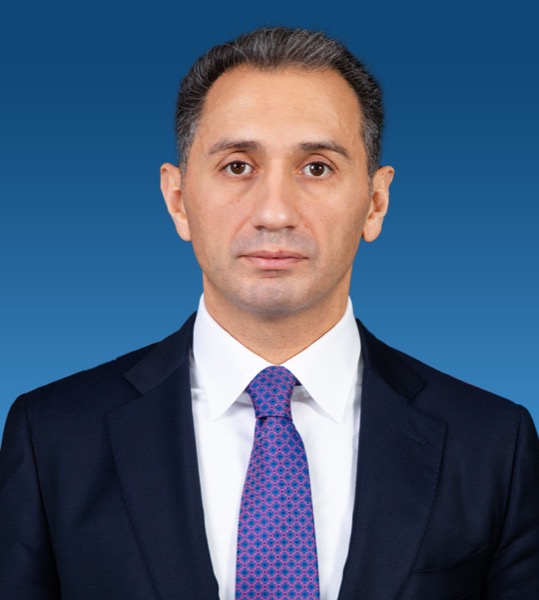
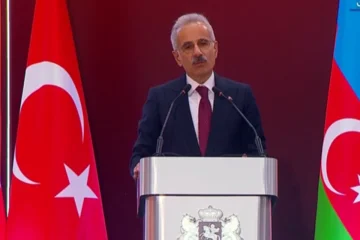
Azerbaijan's Minister of Digital Development and Transport, Rashad Nabiyev, emphasized the strategic significance of the Baku-Tbilisi-Kars (BTQ) railway project during its official opening ceremony.
According to the "Operative Information Center-OMM", the minister stated that this day holds immense importance for Azerbaijan, Georgia, and Turkey.
Rashad Nabiyev noted that the foundation of the Baku-Tbilisi-Kars project was not laid merely at the 2017 opening ceremony, but rather through the initiative of Azerbaijan's National Leader, Heydar Aliyev. According to the minister, Heydar Aliyev foresaw years ago that Azerbaijan, Georgia, and Turkey would become strategic partners and supported the implementation of the Baku-Tbilisi-Kars railway line as a continuation of the Baku-Tbilisi-Ceyhan pipeline project.
The minister emphasized that the accuracy of this vision has been confirmed over the last 30 years, with the project evolving into one of the region's most vital transport corridors. Rashad Nabiyev stated that as a result of work carried out since 2017, the Baku-Tbilisi-Kars line has achieved the status of a competitive international transit corridor.
He further noted that the direct support of President Ilham Aliyev of Azerbaijan, Prime Minister Irakli Kobakhidze of Georgia, and President Recep Tayyip Erdogan of Turkey played a crucial role in the successful realization of the project. Concluding his speech, the minister thanked everyone involved in the project's implementation, expressing his belief that the Baku-Tbilisi-Kars railway will further strengthen ties between the nations in the future.
The Baku-Tbilisi-Kars railway serves as a key component of the Middle Corridor, a multimodal transport route connecting China and Central Asia to Europe via the Caspian Sea, the South Caucasus, and Turkey. By bypassing traditional northern routes, the BTQ line significantly reduces transit times and enhances regional connectivity, solidifying Azerbaijan's role as a pivotal logistics hub in the Eurasian transport network.