 Afət Ziyadqızı

The Baku-Tbilisi-Kars (BTK) railway line is being upgraded to reach an annual freight capacity of 5 million tons, significantly expanding the region's logistics capabilities, according to Georgian Prime Minister Irakli Kobakhidze.
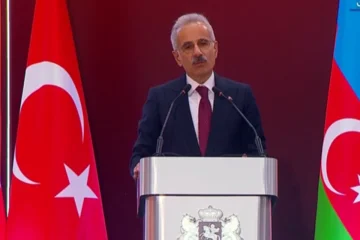
Operative Information Center-OMM reports that the Prime Minister made these remarks during the official opening ceremony of the upgraded BTK railway line.
Prime Minister Kobakhidze noted that this route strengthens the region's strategic role in global trade and logistics networks by further bridging Europe and Asia. According to the Prime Minister, the full operational capacity of the line will reach 5 million tons annually, which will substantially increase the region's transit potential and enhance the competitiveness of the Middle Corridor.
Kobakhidze emphasized that the Baku-Tbilisi-Kars project serves as a prime example of the strategic partnership between Georgia, Azerbaijan, and Turkey. He highlighted that the section of the BTK passing through Georgia is one of the largest infrastructure projects in the region. Specifically, 153 kilometers of the 180-kilometer route from Marabda to the Turkish border have been reconstructed, while a 27-kilometer section was built to entirely new standards.
It was noted that since operating in test mode in 2017, the line has transported approximately 1.8 million tons of cargo and nearly 90,000 containers, demonstrating steady growth in freight traffic along the route. The Prime Minister added that against the backdrop of global challenges and shifting international trade routes, the Baku-Tbilisi-Kars railway line has gained even greater strategic significance.
The Baku-Tbilisi-Kars railway, inaugurated in 2017, is a critical component of the Middle Corridor, a multimodal transport route connecting China and Central Asia to Europe via the Caspian Sea, Azerbaijan, Georgia, and Turkey. By bypassing traditional northern routes, the BTK significantly reduces transit times for goods moving between East and West, positioning Azerbaijan and its partners as vital hubs in the global supply chain.