OMM Newsroom

An Austrian and a Swiss citizen who had been held hostage in Niger for an extended period have been freed. Extensive diplomatic efforts were made to secure their release, which comes amid growing concern over a rise in kidnappings in the Sahel region.
AnewZ reported that Austrian Foreign Minister Beate Meinl-Reisinger said on Thursday that the Austrian aid worker, identified only as Eva G., had been received by the country’s crisis team. Switzerland’s foreign ministry also confirmed the release of its citizen.
Officials have not disclosed who held the women hostage or how their release was secured.
Women taken to Libya’s Benghazi
Two officials who spoke to Reuters on condition of anonymity said the women were taken to Benghazi in eastern Libya after their release and handed over there to representatives of their countries.
The officials said the operation was led by Saddam Haftar, deputy commander of the forces that control eastern Libya. The forces are headed by his father, Khalifa Haftar. They control much of southern Libya, including areas bordering Niger.
The Austrian and Swiss governments have not publicly commented on reports of Libya’s involvement in the operation. On Oct. 21, 2026, Eva G. and the unidentified Swiss citizen underwent medical examinations in Benghazi.
Women kidnapped in Niger’s Agadez
Meinl-Reisinger said Austria had worked closely with Switzerland to secure the women’s safe release. She said there was a sense of relief that Eva G. had been freed after more than 21 months, a period she described as an unimaginable burden for the woman and her family.
Austria’s Foreign Ministry described the work to secure her release as a “long, complex and extremely sensitive diplomatic process.”
Swiss Foreign Minister Ignazio Cassis said in a post on the social media platform X that his citizen had been freed and was returning home, but did not identify her. According to the ministry, a special group involving police and intelligence services was set up after the woman was kidnapped and maintained regular contact with Austrian officials. The ministry declined to provide further details, citing privacy concerns.
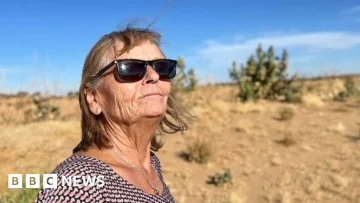
Eva G., who is in her 70s, was kidnapped in Agadez in January 2025. According to Nigerien media, she had lived in the city for more than 20 years and worked as an aid worker. The Swiss citizen, a long-term resident of Niger, was abducted in the same city in April 2025.
Agadez, in central Niger, is hundreds of kilometres from the capital, Niamey. The historic trading hub on the edge of the Sahara has long served as a crossroads for migrants, traders and smugglers travelling north toward Libya and Algeria.
Little is known about the groups responsible for the kidnappings or whether any demands were made.
Security crisis deepens in Niger
Niger has been fighting jihadist groups linked to al-Qaida and the Islamic State for more than a decade. Conflict that spread after a Tuareg uprising in northern Mali in 2012 has affected large parts of the central Sahel, including Burkina Faso. Years of violence have killed thousands and displaced millions across the region.
Analysts say the security situation in Niger worsened after soldiers overthrew the elected government of President Mohamed Bazoum in July 2023. The military junta that took power pledged to restore stability, but intensifying attacks have raised questions about the effectiveness of its campaign against armed groups.
After the coup, Niger demanded that French and U.S. troops leave the country and strengthened ties with Russia. Niger also formed the Alliance of Sahel States with Mali and Burkina Faso, which are under military rule.
Kidnappings appear to have increased in Niger in 2025, with foreign nationals, aid workers and local residents among those targeted. Armed groups operating in the Sahel often demand ransom for hostages or use them as leverage. Governments rarely disclose whether money was paid or concessions made to secure a release.
Both women are expected to reach their home countries in the coming days and reunite with their families. Austrian and Swiss officials have not said whether they will release further information about the operation.