Afət Ziyadqızı

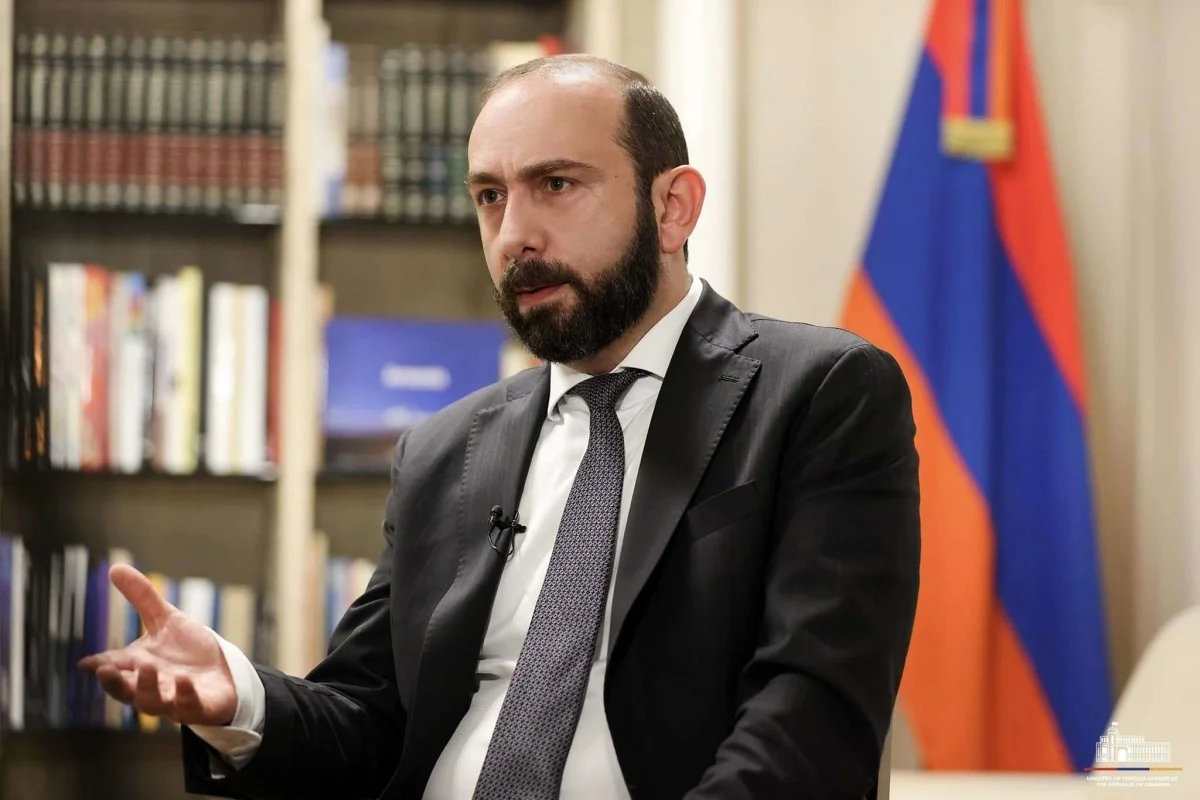
Armenian Foreign Minister Ararat Mirzoyan said the TRIPP (Trump Route for International Peace and Prosperity) project agreement will ban the transport of weapons and ammunition along the route. He made the statement while presenting the draft agreement at a meeting of parliament’s Foreign Relations Committee.
Operative Information Center-OMM reports that, according to the Sputnik Armenia news agency, Mirzoyan said a special list of cargo that cannot be transported through the transit route was being prepared.
The Armenian foreign minister said such restrictive lists are widely used in international transit. He stressed that there was also a mutual understanding with Azerbaijan that prohibited cargo — including weapons, military ammunition and hazardous chemicals — would not be transported along the route. A prior official approval mechanism will apply to the transit of certain special categories of cargo.
The draft agreement was approved in a committee vote and added to the agenda of the next plenary session of the Armenian parliament.
TRIPP, or the Trump Route for International Peace and Prosperity, envisages creating a strategic transport and logistics corridor in the direction of the Zangezur corridor, passing through Armenia’s Western Zangezur (Syunik) region. Under the project’s legal framework, the route will operate under Armenian jurisdiction.
The Republic of Azerbaijan plans to use this strategic route to ensure uninterrupted and secure land access to the Nakhchivan Autonomous Republic, an integral part of Azerbaijan.
Under the agreement, Armenia grants the United States exclusive rights for up to 99 years to develop and manage the route’s infrastructure. The plan calls for a joint operating company in which the United States will hold a controlling stake. Initially, 74% of the shares are to belong to the United States and 26% to Armenia; if the agreement is extended, Yerevan’s share is set to rise to 49%.
The framework agreement was initialled during US Secretary of State Marco Rubio’s visit to Yerevan on May 26 this year and formally signed in early June.