Afət Ziyadqızı

At least 68 people have been killed and more than 100 injured in a collision between two high-speed trains in Spain. Officials said the disaster was caused by both a technical system failure and human error.
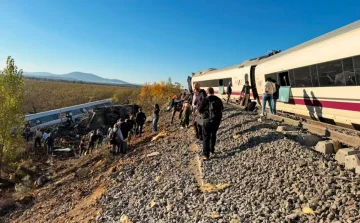
Operative Information Center-OMM reports that the crash occurred near the town of Urda in Toledo province, on the Madrid–Seville high-speed railway line. A train operated by Spain’s national railway company, Renfe, rear-ended a train belonging to private company Iryo that had stopped on the tracks because of a problem with the LZB safety system.
This is Spain’s third major rail accident this year, following a disaster in Córdoba in January that killed more than 40 people and a crash in Barcelona that resulted in the death of a train driver. Spanish Prime Minister Pedro Sánchez, who visited the scene, said the country had declared a period of mourning and offered condolences to the families of those killed.
Spain’s Transport Minister Óscar Puente said a computer system failure disabled the safety system along a 63-kilometre stretch, causing all trains to stop automatically. The dispatcher for state-owned rail infrastructure manager ADIF then began operating the system manually. Despite a red signal, the controller instructed the Renfe train to continue without imposing a speed limit.
As a result, the train, travelling at 200 kilometres per hour, crashed into the other train, which was stationary on the line. The minister called the decision inexplicable and said a comprehensive investigation would be conducted. Those responsible for negligence will be held accountable under the law, officials said.
Passengers said the impact caused chaos inside the carriages. Some derailed and tipped onto their sides, while one carriage caught fire. Officials said 24 of those killed were on the Renfe train and 44 on the Iryo train.
More than 500 emergency workers, three helicopters and drones were sent to the scene. A sports hall in Urda was turned into a temporary medical centre for the injured, and the local government urged residents to donate blood urgently.
According to the latest Eurostat figures, Spain has one of the European Union’s strongest records for rail safety. However, a series of serious accidents within a year has raised significant concerns in the country about infrastructure and management systems.