OMM Newsroom

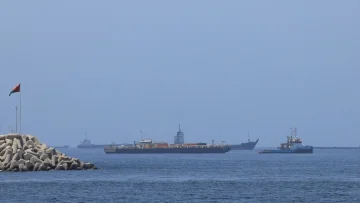
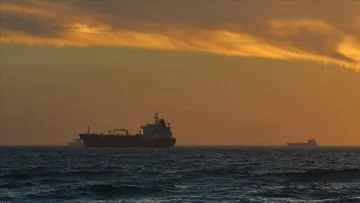
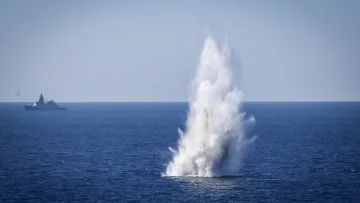
A Singapore-flagged container ship sank after being struck by an unknown projectile while travelling through the Strait of Hormuz, Singapore’s Maritime and Port Authority said, according to AFP.
The “GFS Pride” was hit on Tuesday, causing damage and a fire. All 21 crew members were evacuated, and no injuries were reported, the authority said.
A second Singapore-flagged container vessel, the “GFS Giselle”, was struck by a projectile on Wednesday and sustained hull damage. It reached a safe anchorage with all 22 crew members aboard.
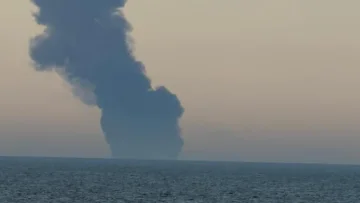
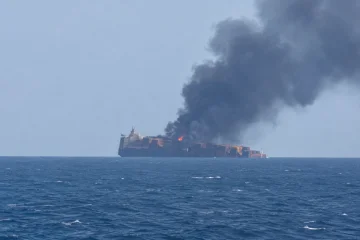
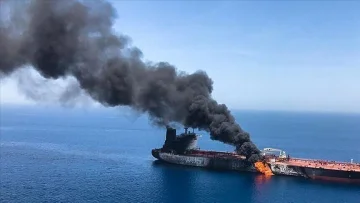
Iran’s Revolutionary Guards said a ship had struck naval mines and sunk while travelling along what they described as an “unauthorised” route through the strait. Images released by the Guards appeared to show black smoke rising from a container ship that was still afloat but low in the stern; other images showed containers and cargo floating in the water.
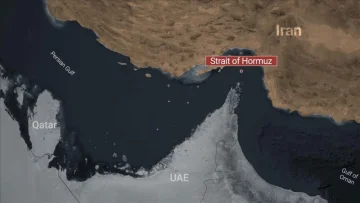
Pakistan’s Hydrographer warned mariners that the “GFS Pride” had sunk 4 nautical miles (7.4km) north-west of Ras al-Sheikh Masud, on Oman’s Musandam Peninsula.
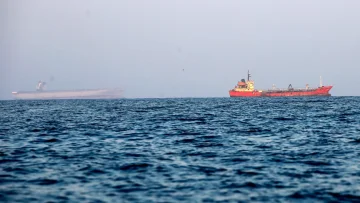
The United Kingdom Maritime Trade Operations agency said two unnamed container ships reported being hit by unknown projectiles while transiting the strait between 16:40 and 17:00 GMT on Tuesday. Both sustained minor damage and continued their journeys.
Attacks reported on vessels in the region
Merchant ships have faced repeated attacks in the Strait of Hormuz and elsewhere in the Middle East since the US-Israeli war with Iran began in February. The strait connects the Gulf with the Gulf of Oman and the Arabian Sea.
At least 24 seafarers have been killed in 106 confirmed incidents, according to the UN’s International Maritime Organization. The Malta-flagged container ship “Safeen Prestige”, attacked near Oman on 4 March, was the only other vessel reported to have sunk during that period.
Maritime risk management group Vanguard said on Wednesday that the Antigua and Barbuda-flagged bulk carrier “Cape Dao” was reported to be sinking after an unsuccessful rescue attempt, Reuters reported. One seafarer was killed when an unknown projectile hit the ship’s bridge and accommodation area on 23 September as it passed north-east of Khasab, Oman.
Strait closed after start of Iran war
The Strait of Hormuz, which normally carries a fifth of global oil and gas shipments, was effectively closed after the war began, amid Iranian missile and drone attacks on commercial vessels and a US naval blockade of Iranian ports.
The US and Iran reached a preliminary agreement in June to end the war and reopen the strait, but it collapsed within weeks after attacks on shipping resumed and the US reinstated its blockade.
Iran said it would retain some measure of control over the waterway and began targeting vessels using a southern route through Omani waters, rather than its preferred route through Iranian waters.
The US military has been protecting tankers transporting oil through the strait to keep exports from Gulf Arab states moving. Last month, crude exports through the waterway rose to around 80% of the pre-war average of 16 million barrels per day (bpd), according to analysts at shipping data company Kpler, despite an increase in attacks on shipping.