OMM Newsroom

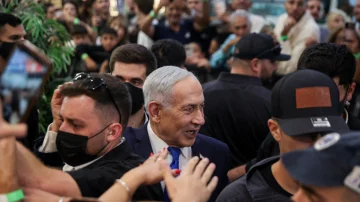
Allies and opponents of Benjamin Netanyahu are seeking influence over the formation of Israel’s next government in the October 27 election. The vote is widely seen as a referendum on his wartime leadership, while smaller parties could determine the balance of power.
According to AnewZ, the election is viewed as a judgment on how Netanyahu handled the October 7, 2023, attack and the three years of war that followed. The attack was the deadliest in Israel since the country was founded.
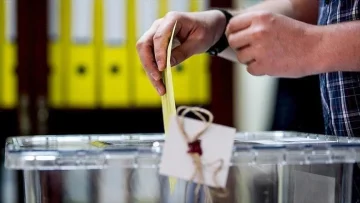
Voters cast ballots for parties, not individual candidates. The parties then negotiate alliances to form a governing coalition. In Israel’s 78-year history, no party has won an outright majority in the 120-seat parliament, the Knesset.
A majority requires at least 61 seats, giving smaller parties significant influence in coalition negotiations. To enter parliament, parties must win at least 3.25% of the vote.
Netanyahu, Israel’s longest-serving prime minister, has held office for more than 18 years across three separate terms. There is no limit on how long a prime minister can remain in office. His opponents are urging voters not to give him another term, arguing that his failures led to the October 7 attack and accusing him of evading responsibility.
Netanyahu’s Likud party and allies
Likud. The name Likud means “Unity.” It is Israel’s main right-wing party. It appeals to working-class voters and Jews with traditional religious views, combining nationalism with liberal economic policies.
Likud won about a quarter of the vote in the 2022 election. Netanyahu later formed a coalition with far-right and ultra-Orthodox parties, creating one of the most right-wing governments Israel has had in recent decades.
Otzma Yehudit. The far-right Otzma Yehudit, meaning “Jewish Power,” ran in the previous election in an alliance with the Religious Zionist Party and the far-right Noam faction. Together, they won 14 seats.
The party’s leader, Itamar Ben-Gvir, served as national security minister and was responsible for overseeing the police. The ultranationalist politician has been arrested several times on allegations of incitement and supporting terrorism.
Shas. Shas, an acronym for the Sephardic Guardians, is an ultra-Orthodox party supported mainly by Jews of North African and Middle Eastern heritage. These communities have long faced discrimination in Israeli society.
The party supports normalising relations with Arab countries and won 11 seats in 2022. In 2023, the Supreme Court barred party leader Aryeh Deri, who had been convicted of tax offenses, from holding government office.
United Torah Judaism. The alliance brings together two ultra-Orthodox parties that consider the community’s social services a top priority.
Like Shas, members of United Torah Judaism are dissatisfied with Netanyahu because he has failed to pass legislation exempting ultra-Orthodox men from military service.
Religious Zionist Party. The far-right Religious Zionist Party advocates a hard-line security policy, settlement expansion and stronger Israeli control over the occupied West Bank.
The party’s leader, Finance Minister Bezalel Smotrich, has overseen significant government funding for settlement projects. The party is allied with the more right-wing Zehut, meaning “Identity,” but is struggling to clear the electoral threshold.
Amcha Yisrael. Amcha Yisrael, meaning “Your people, Israel,” was founded in August by retired general Ofer Winter and initially emerged as an unexpected contender on the right.
The party is seeking to attract Netanyahu supporters unhappy with the handling of the wars. But an early surge in support has faded, and the party is now struggling to win enough votes to enter the Knesset.
Parties opposing Netanyahu
Yashar! The new centrist party Yashar!, meaning “Straight,” has gained noticeable support. It is led by Gadi Eisenkot, Netanyahu’s main rival and a former military chief. His son was killed during fighting in Gaza.
The party advocates equal military service obligations for everyone and focuses on domestic issues such as the cost of living and education. It also wants a state commission to investigate the October 7 attack.
Beyachad. Beyachad, meaning “Together,” brings together the parties of Naftali Bennett and Yair Lapid.
Bennett, who leads the alliance, presents himself as a representative of a “new right” seeking to restore trust in Israeli institutions. He observes religious rituals but holds liberal views on social issues.
Lapid’s Yesh Atid, meaning “There Is a Future,” won 24 seats in 2022, making it the largest opposition party.
The Democrats. Founded in 2024 to revive Israel’s declining left, the Democrats bring together the centre-left Labor Party and the far-left Meretz party.
The Labor Party governed Israel during the first two decades of the country’s existence. The Democrats’ leader, Yair Golan, supports including Arab parties in a governing coalition.
Yisrael Beyteinu. Yisrael Beyteinu, meaning “Israel Our Home,” was founded mainly to attract support from immigrants from the former Soviet Union.
The party takes right-wing positions on foreign policy, security and the economy, and more left-wing positions on social issues.
The party previously ran in elections together with Likud, but its leader, Avigdor Lieberman, has said he will not join a new coalition with Netanyahu. He said he would not do so “even if the world turned upside down.”
Reservists – The Economy Party. The new centre-right party advocates ending exemptions from military service for ultra-Orthodox men and reducing the cost of living. Its support is around the minimum required to enter the Knesset.
Leader Yoaz Hendel calls his party a “third bloc.” He advocates a unity government led by Netanyahu and Eisenkot without the participation of ultra-Orthodox or Arab parties.
Arab parties
Palestinian citizens of Israel make up about 20% of the population. Discrimination and declining trust in politics have contributed to low voter turnout.
Netanyahu and his main rivals have said they will not form coalitions with Arab partners, fearing they could alienate right-wing voters.
However, if the election result is close, compromise may be possible, and Arab parties could play a decisive role in determining who becomes the next prime minister.
Ra’am. An acronym for the United Arab List, Ra’am is led by Mansour Abbas. It is considered relatively moderate among Israel’s Arab parties.
The party supports the creation of a Palestinian state with Jerusalem as its capital, while prioritising local issues such as crime and the economy.
Ra’am won five seats in 2021, becoming the first Arab party to join a governing coalition.
Abbas separately declined to join the Joint List of Arab parties. He appointed Jewish politician and former police commissioner Yoav Segalovitz as his deputy.
Joint List. The Joint List brings together three main Arab parties: Ta’al, an acronym for the Arab Renewal Movement; Hadash, meaning “New”; and Balad, an acronym for the National Democratic Alliance.
Hadash is a Jewish-Arab party that has been active since 1977. In the previous election, the Hadash-Ta’al alliance won five seats.
The Joint List opposes the war in Gaza and Israel’s occupation of the West Bank. It also rejects laws defining the country’s national character as Jewish. This position reduces its chances of joining a governing coalition.