OMM Newsroom
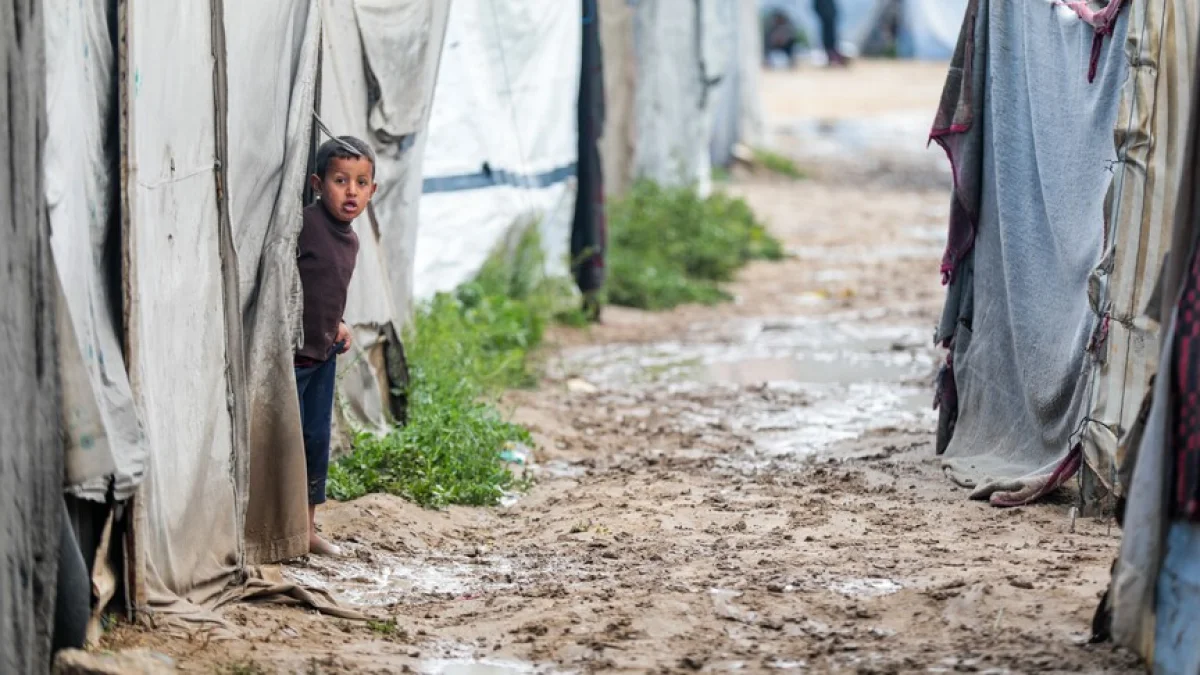
Gaza’s Civil Defense warned Thursday that heavy rain and strong winds expected Friday could put displaced Palestinians living in tents and temporary shelters, as well as families in damaged buildings at risk of collapse, in danger, according to Anadolu Agency.
Nearly 950,000 displaced Palestinians are living in areas exposed to moderate or high flood risks, according to UN figures.
In a statement, the Palestinian Civil Defense Directorate urged residents to take precautions against potential dangers from the weather system expected to affect the enclave on Friday.
The directorate warned that heavy rain and strong winds could cause partial collapses in homes damaged by Israeli bombardment. It also cautioned people living in tents and temporary shelters about the risks.
Residents were advised to secure plastic coverings and tent pegs, build earthen barriers around tents, dig channels to drain rainwater and keep belongings above ground level.
The directorate urged residents not to stay in structurally damaged buildings or pitch tents nearby, and to move to safer locations. It also appealed to humanitarian and community organizations to urgently provide safe shelter for displaced families and improve protection against severe weather.
The warning comes amid a worsening shelter crisis following widespread destruction of residential neighborhoods during Israel’s military offensive, which has forced Palestinians into tents, temporary shelters and damaged buildings.
Figures released by Gaza’s government media office in August 2026 put the number of displaced Palestinians across the enclave at more than 2.15 million. Approximately 867,000 were living in deteriorating tents and more than 1 million in shelter centers.
On Oct. 15, the UN Office for the Coordination of Humanitarian Affairs (OCHA) reported that approximately 950,000 displaced Palestinians were staying in locations exposed to moderate or high flood risks. More than 400,000 face high flood risks, while approximately 44,000 Palestinians are living in more than 2,300 structurally unsafe buildings, the agency said.
OCHA also said 294,250 families need shelter assistance ahead of the rainy season.
Displaced Palestinians risk having rainwater flood their tents or strong winds tear them apart. Low-lying areas remain vulnerable to flash floods amid damaged drainage systems and shortages of emergency response equipment.
The humanitarian crisis has been compounded by widespread destruction caused by Israel’s military offensive in Gaza since October 2023. Israeli restrictions on the entry of shelter materials and equipment needed to rehabilitate damaged infrastructure also remain in place despite a ceasefire agreement that took effect on Oct. 10, 2025.