OMM Newsroom

EU leaders agreed on Friday at the end of the Dublin summit to send a group of diplomats, rather than a single envoy, to peace talks on Ukraine. European Council President Antonio Costa said Europe would be represented by EU institutions and five members of the “coalition of the willing” supporting Ukraine — the United Kingdom, France, Germany, Italy and Poland, AnewZ reported.
The decision followed weeks of discussion over who should represent Europe in the talks. With the United States mediating between Moscow and Kyiv, Costa was considered the most acceptable single candidate; the leaders of Estonia, Luxembourg and Poland also supported his candidacy.
EU foreign policy chief Kaja Kallas had also put herself forward. German Chancellor Friedrich Merz had advocated retaining the existing five-country format.
After meeting in Dublin late on Thursday, U.S. representative Jared Kushner and Ukrainian President Volodymyr Zelenskyy said Europe would take part in the next round of talks. The Kremlin had earlier said Europe should first choose its representative.
EU leaders also said Europe’s security architecture should not be a subject of Ukraine-Russia peace talks. The Kremlin said on Friday it would be open to European countries joining the talks if it saw they were ready to contribute to the process. Merz called the remarks “the same old game”.
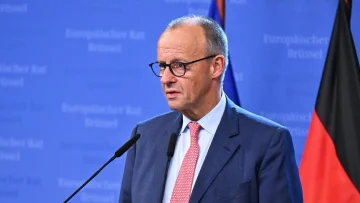
“There will be no discussion about Ukraine without Ukraine, or about Europe without Europe. Besides, there is no need to discuss Europe’s security architecture. We already have one,” Merz told reporters in Dublin.
Russian officials have demanded a broad agreement on Europe’s security architecture before addressing specific issues in the war. Before Russia invaded Ukraine in 2022, it demanded that NATO withdraw forces from countries that joined the alliance after 1997. NATO rejected the demand.
Kallas warned that Russia’s calls to discuss Europe’s security architecture could divert attention from the need for a ceasefire. Latvian Prime Minister Andris Kulbergs called such discussions a “trap”.
On Thursday, 43 European countries signed a declaration at the European Political Community summit in Dublin stating that any issue affecting Europe’s security should be resolved with European participation.
Representatives of the United Kingdom, France, Germany, Italy and the EU also took part in Russia-Ukraine talks in Abu Dhabi earlier this week. Moscow and Kyiv reported some progress, but there was no indication of an agreement on key issues such as territory.
Swedish Prime Minister Ulf Kristersson backed a format involving the five countries and EU institutions. “I am quite flexible on this. I think what we actually say is more important than the precise composition of the people in the room,” he said.