OMM Newsroom

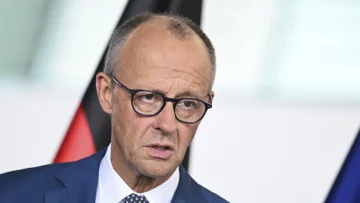
German Chancellor Friedrich Merz said Friday that European countries would join Ukraine-Russia peace talks in the coming weeks, while rejecting Moscow’s proposal for negotiations on a new European security architecture, according to Anadolu Agency.
Speaking to reporters in Dublin after an informal summit of European Union leaders, Merz pointed to progress in diplomatic efforts. He said US envoys Steve Witkoff and Jared Kushner had briefed European officials after meeting Russian President Vladimir Putin in Moscow.
“In the coming weeks, concrete peace talks are set to take place for the first time, with Europe represented,” Merz said. He added that the talks would likely involve the group of European nations that had been in Abu Dhabi that week, and said Germany would be part of them.
Kushner said late Thursday that Ukraine and Russia had agreed to expand the next round of negotiations to include European countries.
Kushner and Witkoff traveled to Dublin after their meetings in Moscow to attend the European gathering and consult with European representatives.
Merz welcomed the reported diplomatic progress but rejected Russia’s push for broader talks with European countries on reshaping the continent’s security arrangements.
“Russia wants to discuss issues concerning a European security architecture. There is no need for us to discuss that; it already exists — namely, NATO, and specifically the European component of NATO,” he said.
“As Europeans gathered here in Dublin, we are in agreement: it was Moscow — and only Moscow — that destroyed the Helsinki peace order,” Merz said, referring to the 1975 Helsinki Accords, which established principles of sovereignty and non-intervention.
“Europe’s security will therefore continue to be guaranteed primarily by a strong, united, and also European NATO,” he said.