Afət Ziyadqızı

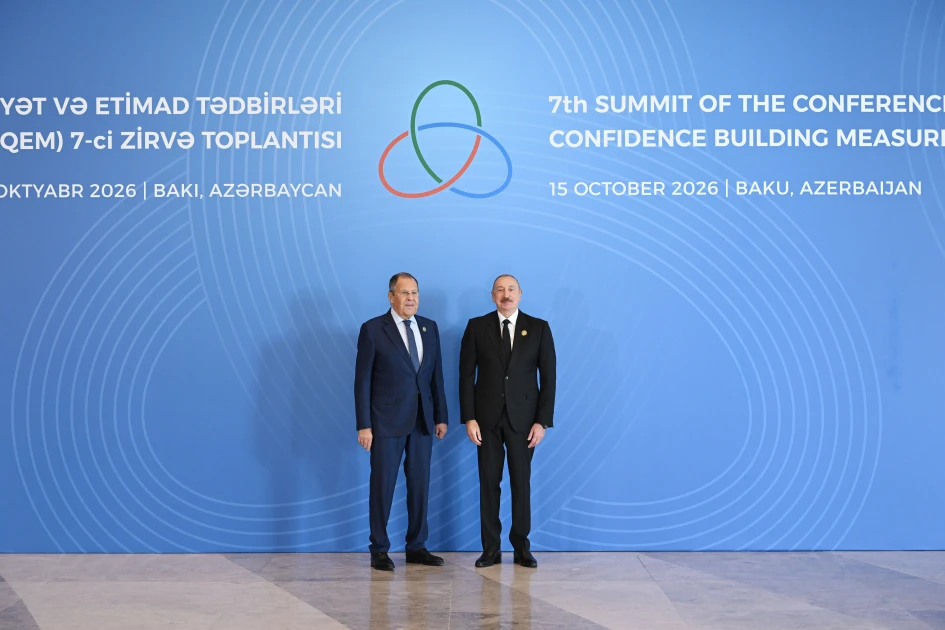
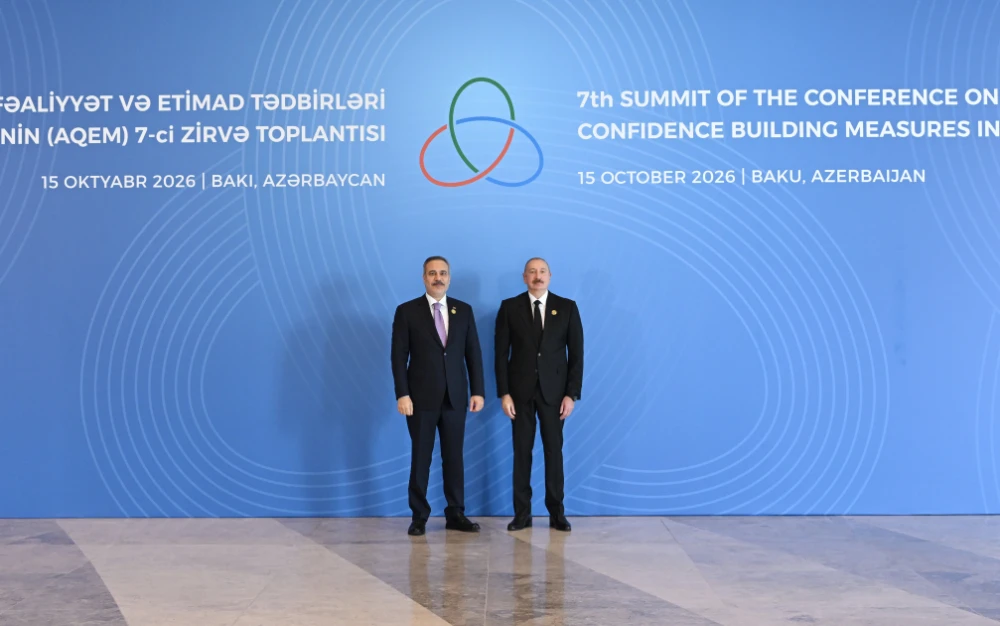
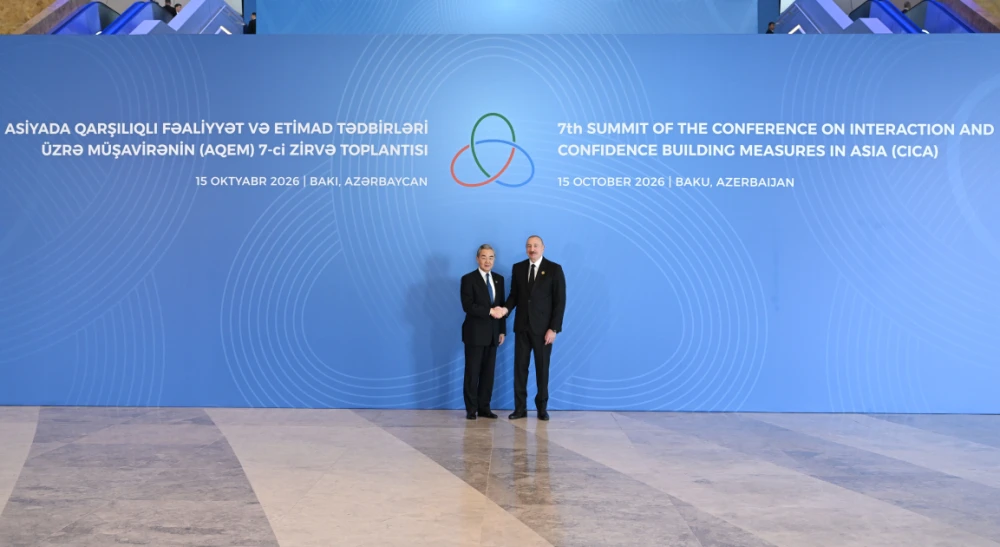
Baku hosted the seventh Summit of the Conference on Interaction and Confidence Building Measures in Asia (CICA) on October 15.
“Operative Information Center-OMM” reported that President of the Republic of Azerbaijan Ilham Aliyev welcomed the heads of state and government attending the event.
President Ilham Aliyev opened the summit, saying:
“Distinguished heads of state and government,
Heads of delegations,
Ladies and gentlemen,
I am pleased to welcome you to the seventh CICA Summit in Baku. I would like to thank you all for accepting our invitation. I hereby declare open the seventh Summit of the heads of state and government of CICA.
First, we need to approve the agenda. If there are no proposals regarding the agenda, it is approved.
One of the items on the agenda is the decision on the accession of the Lao People’s Democratic Republic to CICA as a member state. This is the third item on our agenda, and I propose that we adopt the decision to admit the Lao People’s Democratic Republic as a CICA member state.
If there are no objections, the decision to admit the Lao People’s Democratic Republic as a CICA member state is adopted. Congratulations.
The admission of the Lao People’s Democratic Republic as a new CICA member state is an important development that reflects the growing significance and evolution of the Conference as a more inclusive platform for dialogue in Asia. We highly appreciate that this has taken place at the Baku Summit during Azerbaijan’s chairmanship of CICA.
I congratulate His Excellency President Thongloun Sisoulith and all of us on the decision.
The next item on the agenda is statements by heads of delegations. With your permission, I will speak first as the current chair of CICA.”
“Distinguished heads of state and government, ladies and gentlemen, welcome to Azerbaijan.
First of all, I would like to thank all CICA member states for their unanimous support for Azerbaijan’s chairmanship in 2024. We regard this as a sign of respect and confidence, as well as a demonstration of support for our chairmanship in a number of international platforms.
Located geographically at the crossroads of Asia and Europe, Azerbaijan is playing an increasingly important role as a connecting hub in Eurasia. Our country’s cooperation with many states in political, economic, transport, energy and humanitarian fields, through bilateral and multilateral formats, in turn strengthens the security system in our region.
Azerbaijan consistently pursues an independent foreign policy based on equality, non-interference in internal affairs, and the primacy of countries’ territorial integrity and sovereignty.
Azerbaijan actively and firmly opposes the harmful practice of applying double standards and selective approaches to resolving interstate conflicts.
Since restoring its independence 35 years ago, our country has consistently faced double standards. Approximately 20 percent of Azerbaijan’s internationally recognized territory was occupied by Armenia for 30 years. Armenia committed military aggression against Azerbaijan and carried out ethnic cleansing, expelling one million Azerbaijanis from their ancestral historical lands in Garabagh and Eastern Zangazur, as well as in what is now Armenia.
In 1993, the UN Security Council adopted four resolutions demanding the immediate, complete and unconditional withdrawal of Armenian forces from the occupied territories, but they remained on paper for 30 years. The work of the OSCE Minsk Group, established in 1992 to resolve the issue, was an imitation of meaningful action.
Armenia’s previous leadership — all three former presidents of Armenia and their supporters, these war criminals and child killers — have still not received the punishment they deserve. Since 2018, Armenia’s current leadership has continued the criminal policies of its predecessors.
In 2019, Armenia’s current prime minister declared in Khankendi, Garabagh, which was then under occupation, that “Garabagh is Armenia, and that’s it.” At the time, Armenia’s defense minister was threatening Azerbaijan with a new war for new territories. The international, so-called international community turned a blind eye to all this brazen behavior. No one condemned Armenia for occupation, war crimes, ethnic cleansing and massacre, or for desecrating the religious sites sacred to the Azerbaijani people. The UN Security Council did not insist on the implementation of its resolutions, and the OSCE remained indifferent.
The European Parliament and the Council of Europe, two examples of anachronism and atavism in international relations, targeted Azerbaijan, a victim of continued aggression, and encouraged the aggressor, Armenia.
The OSCE Minsk Group, established to resolve the conflict, monopolized the issue and was paralyzed by its co-chairs, whose activities were directed at freezing the conflict.
In July and August 2020, Armenia carried out two military provocations, resulting in the deaths of Azerbaijani servicemen. The Azerbaijani people’s patience ran out, and the time had come to settle accounts.
The 2020 Patriotic War lasted 44 days. During that period, Azerbaijan drove Armenian occupiers from the seized lands and liberated more than 300 cities and villages on the battlefield. On November 10, 2020, Armenia signed an act of capitulation. The war stopped, but part of Azerbaijan’s territories remained under occupation.
For three years, Azerbaijan sought to resolve the issue of fully restoring its sovereignty by peaceful means. Armenia, however, used the ceasefire as an opportunity to rebuild its military forces and attack Azerbaijan again, this time with the help of new patrons in the West. That is exactly what happened in September 2023, when the “Iron Fist” of the Azerbaijani soldier spoke once again.
In less than a day, Armenia’s occupying army in Garabagh was completely routed. Azerbaijan fully restored its sovereignty and territorial integrity and put an end to separatism. The leaders of the separatists, war criminals and child killers were brought before an Azerbaijani court.
In substance and form, this was analogous to the Nuremberg Tribunal. But this time, Armenian fascists sat in the dock. Those who threatened us by saying they would come in tanks, occupy Baku and drink tea here are now drinking Azerbaijani tea in our prisons. Their tanks are on display in the Military Trophies Park. By the way, to fully understand the nature and character of the occupation, as well as the historic victory of the Azerbaijani people, our guests can visit Victory Park, the Victory Museum and the Military Trophies Park.
I have dwelt at length on this issue because it is of global significance. Wars and conflicts will continue, and new ones will emerge, until mechanisms are developed to ensure the implementation of decisions and resolutions adopted by the UN Security Council and other international organizations.
If sanctions had been imposed on Armenia in a timely manner for occupation, genocide and ethnic cleansing, Azerbaijan would not have been forced to break the back of Armenian fascism on the battlefield. The aggressor’s impunity only encouraged it to become more brazen.
War was not our choice. Armenia forced us into war. Its patrons apparently did not think that Azerbaijan would restore its sovereignty and international law by force. But they were all wrong; perhaps they did not know the character of our proud, freedom-loving people, who live by their traditions and moral values.
We won the war and drove the occupiers from our lands. But we did not take revenge for 30 years of suffering, genocide, or the destruction of our cities and villages. We took revenge on the battlefield and offered peace to Armenia. Here, too, the moral qualities of our people were once again evident. We did not strike those who were already defeated. We did not descend to the level of the barbarians and child killers who had caused our people so much suffering. We offered peace, and we have lived in peace for a little over a year. This peace remains fragile and must be protected and strengthened.
Distinguished ladies and gentlemen, during its two-year chairmanship of CICA, Azerbaijan has prioritized strengthening the organization and actively promoted cooperation in transport, connectivity, digitalization, environmental protection, tourism, education, science and other fields.
Thanks to various initiatives carried out with the unanimous support of all member states, CICA is now stronger institutionally and legally. Its membership has expanded, and its capacity to develop dialogue and cooperation in support of security, economic prosperity and mutual understanding in its geographical area has been significantly strengthened.
I would also like to take this opportunity to thank all member states for supporting the proposal to extend Azerbaijan’s CICA chairmanship for another two years.
Thank you for your attention.”
x x x
Officials from other member states then delivered their statements.
**
The seventh Summit of the Conference on Interaction and Confidence Building Measures in Asia (CICA) is being held in Baku.
“Operative Information Center-OMM” reported that President of Azerbaijan Ilham Aliyev welcomed the heads of state and government attending the event.
President Ilham Aliyev opened the summit, saying:
“Distinguished heads of state and government,
Heads of delegations,
Ladies and gentlemen,
I am pleased to welcome you to the seventh CICA Summit in Baku. I would like to thank you all for accepting our invitation. I hereby declare open the seventh Summit of the heads of state and government of CICA.
First, we need to approve the agenda. If there are no proposals regarding the agenda, it is approved.
One of the items on the agenda is the decision on the accession of the Lao People’s Democratic Republic to CICA as a member state. This is the third item on our agenda, and I propose that we adopt the decision to admit the Lao People’s Democratic Republic as a CICA member state.
If there are no objections, the decision to admit the Lao People’s Democratic Republic as a CICA member state is adopted. Congratulations.
The admission of the Lao People’s Democratic Republic as a new CICA member state is an important development that reflects the growing significance and evolution of the Conference as a more inclusive platform for dialogue in Asia. We highly appreciate that this has taken place at the Baku Summit during Azerbaijan’s chairmanship of CICA.
I congratulate His Excellency President Thongloun Sisoulith and all of us on the decision.
The next item on the agenda is statements by heads of delegations. With your permission, I will speak first as the current chair of CICA.
Address by President Ilham Aliyev
“Distinguished heads of state and government, ladies and gentlemen, welcome to Azerbaijan.
First of all, I would like to thank all CICA member states for their unanimous support for Azerbaijan’s chairmanship in 2024. We regard this as a sign of respect and confidence, as well as a demonstration of support for our chairmanship in a number of international platforms.
Located geographically at the crossroads of Asia and Europe, Azerbaijan is playing an increasingly important role as a connecting hub in Eurasia. Our country’s cooperation with many states in political, economic, transport, energy and humanitarian fields, through bilateral and multilateral formats, in turn strengthens the security system in our region.
Azerbaijan consistently pursues an independent foreign policy based on equality, non-interference in internal affairs, and the primacy of countries’ territorial integrity and sovereignty.
Azerbaijan actively and firmly opposes the harmful practice of applying double standards and selective approaches to resolving interstate conflicts.
Since restoring its independence 35 years ago, our country has consistently faced double standards. Approximately 20 percent of Azerbaijan’s internationally recognized territory was occupied by Armenia for 30 years. Armenia committed military aggression against Azerbaijan and carried out ethnic cleansing, expelling one million Azerbaijanis from their ancestral historical lands in Garabagh and Eastern Zangazur, as well as in what is now Armenia.
In 1993, the UN Security Council adopted four resolutions demanding the immediate, complete and unconditional withdrawal of Armenian forces from the occupied territories, but they remained on paper for 30 years. The work of the OSCE Minsk Group, established in 1992 to resolve the issue, was an imitation of meaningful action.
Armenia’s previous leadership — all three former presidents of Armenia and their supporters, these war criminals and child killers — have still not received the punishment they deserve. Since 2018, Armenia’s current leadership has continued the criminal policies of its predecessors.
In 2019, Armenia’s current prime minister declared in Khankendi, Garabagh, which was then under occupation, that “Garabagh is Armenia, and that’s it.” At the time, Armenia’s defense minister was threatening Azerbaijan with a new war for new territories. The international, so-called international community turned a blind eye to all this brazen behavior. No one condemned Armenia for occupation, war crimes, ethnic cleansing and massacre, or for desecrating the religious sites sacred to the Azerbaijani people. The UN Security Council did not insist on the implementation of its resolutions, and the OSCE remained indifferent.
The European Parliament and the Council of Europe, two examples of anachronism and atavism in international relations, targeted Azerbaijan, a victim of continued aggression, and encouraged the aggressor, Armenia.
The OSCE Minsk Group, established to resolve the conflict, monopolized the issue and was paralyzed by its co-chairs, whose activities were directed at freezing the conflict.
In July and August 2020, Armenia carried out two military provocations, resulting in the deaths of Azerbaijani servicemen. The Azerbaijani people’s patience ran out, and the time had come to settle accounts.
The 2020 Patriotic War lasted 44 days. During that period, Azerbaijan drove Armenian occupiers from the seized lands and liberated more than 300 cities and villages on the battlefield. On November 10, 2020, Armenia signed an act of capitulation. The war stopped, but part of Azerbaijan’s territories remained under occupation.
For three years, Azerbaijan sought to resolve the issue of fully restoring its sovereignty by peaceful means. Armenia, however, used the ceasefire as an opportunity to rebuild its military forces and attack Azerbaijan again, this time with the help of new patrons in the West. That is exactly what happened in September 2023, when the “Iron Fist” of the Azerbaijani soldier spoke once again.
In less than a day, Armenia’s occupying army in Garabagh was completely routed. Azerbaijan fully restored its sovereignty and territorial integrity and put an end to separatism. The leaders of the separatists, war criminals and child killers were brought before an Azerbaijani court.
In substance and form, this was analogous to the Nuremberg Tribunal. But this time, Armenian fascists sat in the dock. Those who threatened us by saying they would come in tanks, occupy Baku and drink tea here are now drinking Azerbaijani tea in our prisons. Their tanks are on display in the Military Trophies Park. By the way, to fully understand the nature and character of the occupation, as well as the historic victory of the Azerbaijani people, our guests can visit Victory Park, the Victory Museum and the Military Trophies Park.
I have dwelt at length on this issue because it is of global significance. Wars and conflicts will continue, and new ones will emerge, until mechanisms are developed to ensure the implementation of decisions and resolutions adopted by the UN Security Council and other international organizations.
If sanctions had been imposed on Armenia in a timely manner for occupation, genocide and ethnic cleansing, Azerbaijan would not have been forced to break the back of Armenian fascism on the battlefield. The aggressor’s impunity only encouraged it to become more brazen.
War was not our choice. Armenia forced us into war. Its patrons apparently did not think that Azerbaijan would restore its sovereignty and international law by force. But they were all wrong; perhaps they did not know the character of our proud, freedom-loving people, who live by their traditions and moral values.
We won the war and drove the occupiers from our lands. But we did not take revenge for 30 years of suffering, genocide, or the destruction of our cities and villages. We took revenge on the battlefield and offered peace to Armenia. Here, too, the moral qualities of our people were once again evident. We did not strike those who were already defeated. We did not descend to the level of the barbarians and child killers who had caused our people so much suffering. We offered peace, and we have lived in peace for a little over a year. This peace remains fragile and must be protected and strengthened.
Distinguished ladies and gentlemen, during its two-year chairmanship of CICA, Azerbaijan has prioritized strengthening the organization and actively promoted cooperation in transport, connectivity, digitalization, environmental protection, tourism, education, science and other fields.
Thanks to various initiatives carried out with the unanimous support of all member states, CICA is now stronger institutionally and legally. Its membership has expanded, and its capacity to develop dialogue and cooperation in support of security, economic prosperity and mutual understanding in its geographical area has been significantly strengthened.
I would also like to take this opportunity to thank all member states for supporting the proposal to extend Azerbaijan’s CICA chairmanship for another two years.
Thank you for your attention.
x x x
Officials from other member states then delivered their statements.
The seventh Summit of the Conference on Interaction and Confidence Building Measures in Asia (CICA) is being held in Baku.
“Operative Information Center-OMM” reported that President of the Republic of Azerbaijan Ilham Aliyev welcomed the heads of state and government attending the event.
The head of state addressed the summit.
The seventh Summit of the Conference on Interaction and Confidence Building Measures in Asia (CICA) is being held in Baku.
“Operative Information Center-OMM” reported that President of Azerbaijan Ilham Aliyev welcomed the heads of state and government attending the event.
The head of state is addressing the summit.
The seventh Summit of the Conference on Interaction and Confidence Building Measures in Asia (CICA) is being held in Baku.
“Operative Information Center-OMM” reported that President of the Republic of Azerbaijan Ilham Aliyev is welcoming the heads of state and government attending the event.