The Cabinet of Ministers has approved a revised version of the Rules for Paid Water Use.
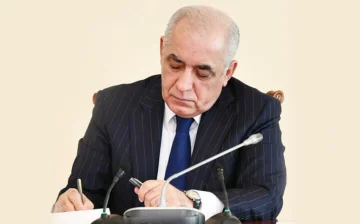
“Operative Information Center-OMM” reports that Prime Minister Ali Asadov signed the relevant decision.
Under the decision, fees are charged for the use of water bodies for specific purposes, including the withdrawal of water using technical facilities and equipment. The payments are transferred to the treasury account of the Azerbaijan State Water Resources Agency (ADSEA).
Payments are calculated based on approved tariffs and the volume of water used. Under the rules, the volume of water withdrawn from water bodies is determined primarily by water meter readings. If meters have not been installed, alternative methods are used to calculate the volume.
If water is withdrawn using electrically powered equipment, the volume is calculated by dividing monthly electricity consumption by the amount of electricity the equipment uses to withdraw one cubic meter of water.
If no electricity is used and there is no water meter, the volume is determined according to the purpose of the withdrawal and the capacity of the equipment used. In this case, the volume of surface water withdrawn for industrial purposes is calculated as 50% of the equipment’s maximum annual withdrawal capacity. For surface water withdrawn for other purposes and for groundwater, the figure is 10%. The volume of water withdrawn for hydropower is determined according to the amount of electricity generated.
The volume of water taken by water tankers is established in an act signed by the relevant water supply body and the legal entity or individual concerned. Water users are responsible for installing water meters. Alternative calculation methods apply until the meters are installed.
The rules also provide for exemptions from payment. No fee is charged for water taken from natural sources to supply untreated water to the Regional Water Reclamation and Irrigation Joint Stock Company, for drinking water supplied by the Regional Water Reclamation and Irrigation Joint Stock Company and the Large Cities Water Supply Joint Stock Company, or for water used by AzerEnergy OJSC to generate electricity.
Fees for discharging wastewater into water bodies are calculated based on the actual volume discharged. The State Service for Control over the Use and Protection of Waters under ADSEA is responsible for keeping records of water resources, collecting payments and overseeing water use.
The cost of raw water must be paid by the 10th of the following month
The Regional Water Reclamation and Irrigation Joint Stock Company supplies raw water to consumers on a paid basis. Charges are calculated according to approved tariffs and the volume of water supplied.
Those required to pay for raw water include Water User Associations (WUAs), agricultural producers who receive irrigation water directly, users of winter pastures and grazing land, fish farms, households, industrial enterprises, energy companies, the Large Cities Water Supply Joint Stock Company, and other legal entities and individuals.
Except for WUAs, consumers receive raw water under contracts between the parties that set out a monthly water-use schedule. The volume supplied is determined by a water meter. If there is no meter, a monthly report on water supply and use is approved and a relevant act is drawn up.
Consumers must pay by the 10th of the following month for the raw water they received during the current month.
Supply may be reduced in the event of water shortages
Raw water supply is determined in light of the capacity of water sources and irrigation systems. Water withdrawals from transboundary rivers must remain within the limits set by agreements with neighboring states; withdrawals from rivers within Azerbaijan must stay within 75% of the guaranteed annual flow; and withdrawals from other sources must comply with approved use limits.
If water shortages arise at the sources, the Regional Water Reclamation and Irrigation Joint Stock Company may proportionally reduce the volume of raw water supplied, except in cases of force majeure, by giving consumers 30 calendar days’ notice. The drinking water needs of the population must be taken into account, and water must be distributed in accordance with the principle of equal provision.
Water consumers must submit proposals to the relevant body regarding changes to the volume of water to be supplied at least 30 calendar days before supply begins.
Drinking water charges will be calculated according to consumer groups
Centralized drinking water supply is provided on a paid basis by the Large Cities Water Supply Joint Stock Company and the Regional Water Reclamation and Irrigation Joint Stock Company. The volume consumed is determined in accordance with relevant legislation and water-use rules.
Consumers are divided into three groups: households, non-household consumers, and consumers that use drinking water as a raw material.
The household group includes consumers who use water for domestic needs, including irrigation, in residential houses, apartments, garages, yards and garden plots. Legal entities and individuals conducting business without establishing a legal entity are excluded from this group.
The non-household group includes other consumers. The group that uses drinking water as a raw material comprises non-service-sector businesses that produce beverages industrially using drinking water. Water charges are calculated according to approved tariffs. For beverage producers, the tariff for water use also includes the charge for wastewater discharge services.
WUA may set the price of irrigation water
Water User Associations supply irrigation water to cultivated land on a paid basis. Supply is organized under contracts with association members and other agricultural producers, setting out a monthly water-use schedule.
WUAs may set irrigation water prices independently, provided they do not exceed the upper limit of the approved water-use tariff. They must also keep records of irrigation water, determine the list of consumers, and monitor compliance with water-use schedules and payment requirements.
The volume of water supplied to cultivated land is measured by water meters. If a meter has not been installed, the irrigation standards set for the relevant plots are used.
Overall, the rules aim to strengthen accounting for the use of water resources, establish a consistent approach to measuring water volumes and regulate payments for water supply services.