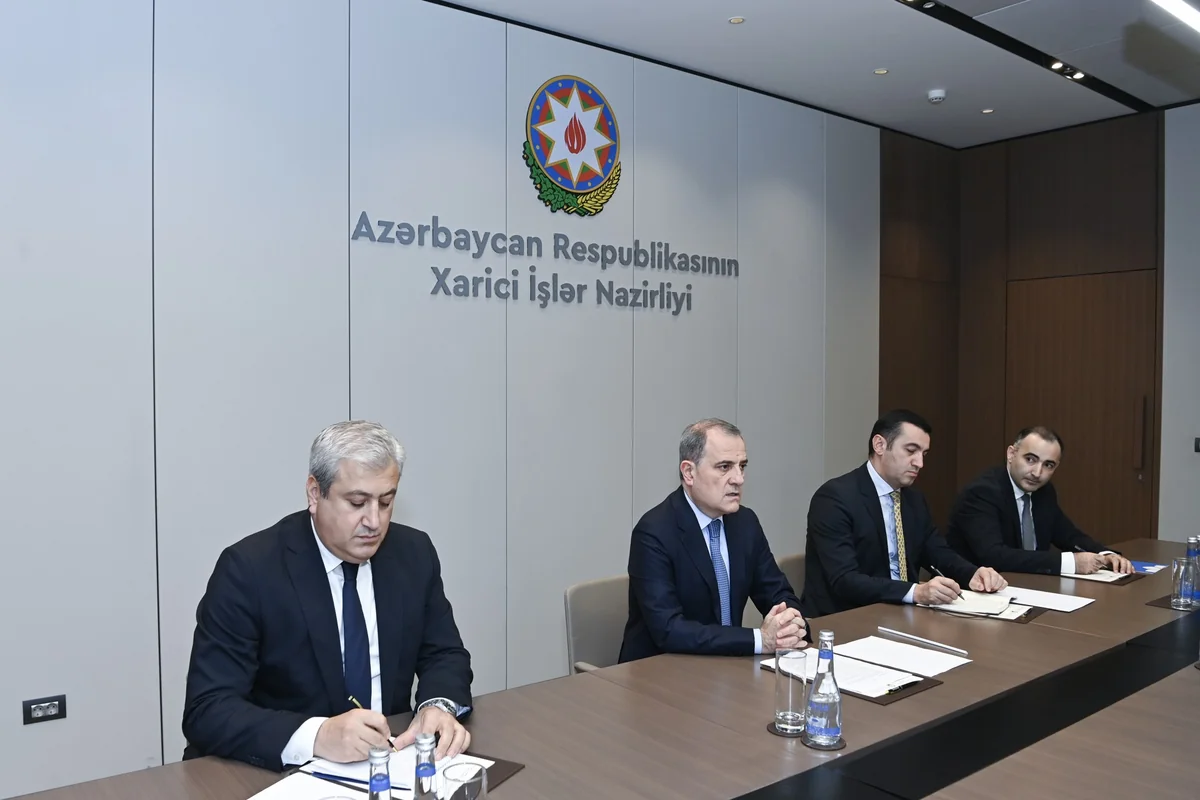
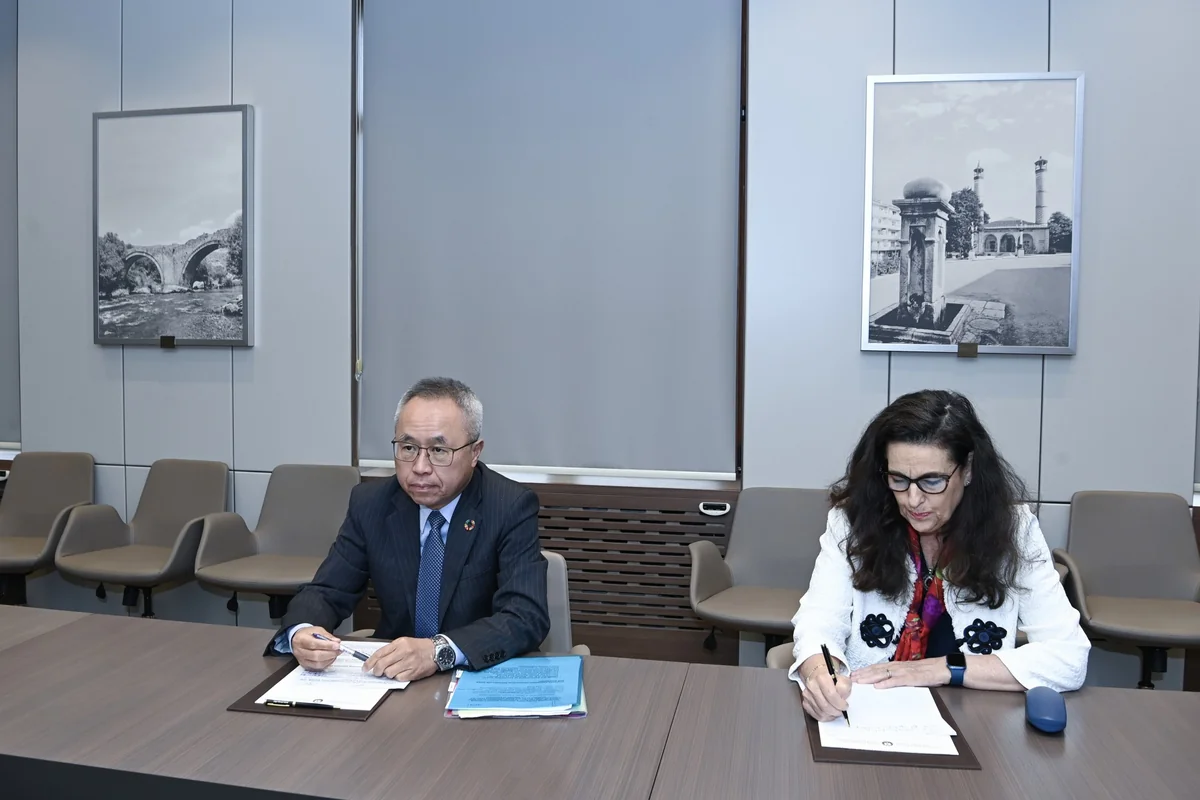
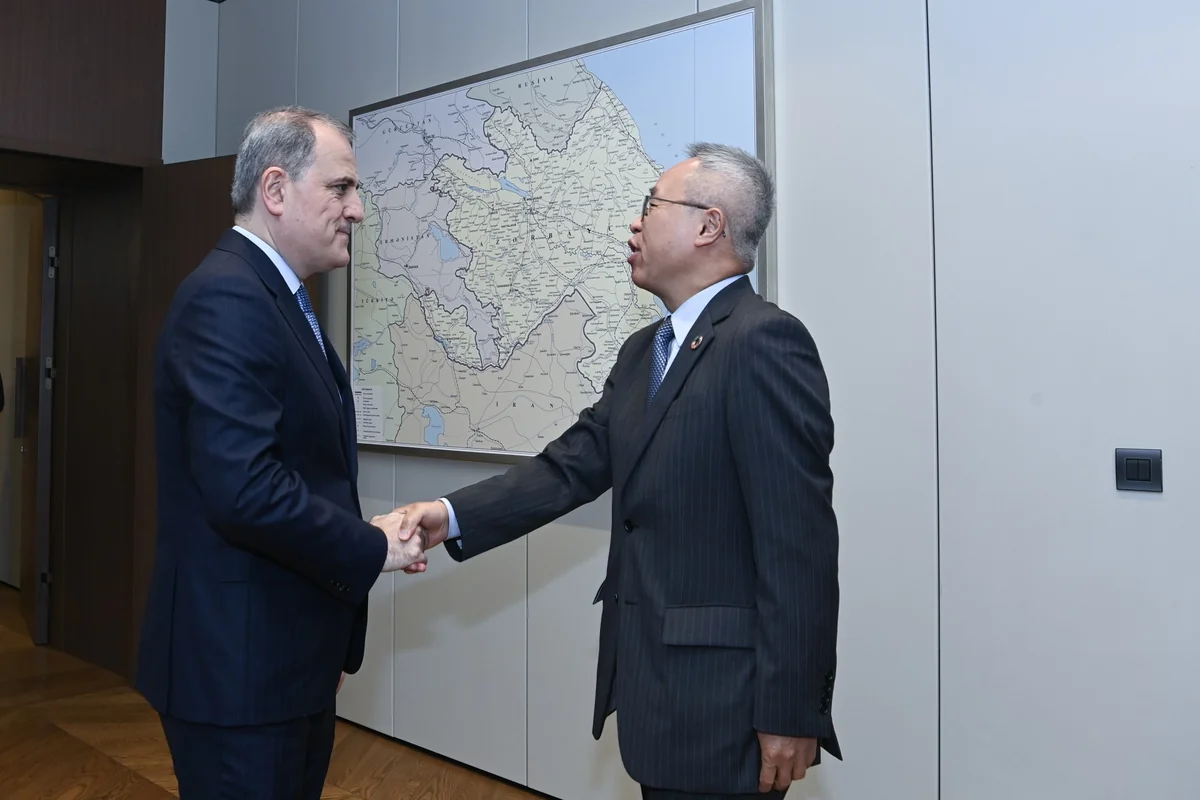
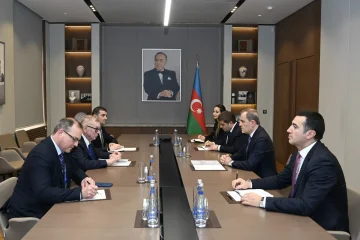
Foreign Minister Jeyhun Bayramov and Li Junhua, the UN deputy secretary-general for economic and social affairs, discussed cooperation between Azerbaijan and the United Nations on November 6, during Li’s visit to Azerbaijan.
The Ministry of Foreign Affairs provided the information to “Operative Information Center-OMM.”
The meeting covered the current state and prospects of Azerbaijan-UN cooperation, Azerbaijan’s contributions to multilateral diplomacy, and issues on the global and regional agenda.
The sides welcomed Azerbaijan’s active role in cooperation with the United Nations and its efforts to help address global challenges. They highlighted Azerbaijan’s chairmanships, initiatives, high-level events and outcomes within the Non-Aligned Movement, COP29, the UN Economic and Social Commission for Asia and the Pacific (ESCAP), the Conference on Interaction and Confidence-Building Measures in Asia (CICA), the World Urban Forum (WUF) and other international platforms.
The sides underscored the successful holding of the UN Public Service Innovation Summit in Azerbaijan on November 5-6. They also noted efforts to promote Azerbaijan’s experience in innovative public administration internationally, particularly the ASAN service model, and to expand its use in different countries.
Bayramov outlined Azerbaijan’s contribution to implementing the UN Sustainable Development Goals by 2030, measures taken at the national level, and the country’s donor and humanitarian activities in support of the international development agenda.
The meeting emphasized the importance of expanding regional cooperation between Azerbaijan and Central Asian countries, including through the C6 format. The sides discussed strengthening transport and logistics links, making effective use of the potential of the Middle Corridor, expanding trade and investment ties, energy security, green energy, digital transformation and developing regional transit opportunities.
Bayramov briefed his counterpart on large-scale reconstruction and development work in Azerbaijan’s liberated territories, measures to enable former internally displaced persons to return to their ancestral lands, the construction of modern infrastructure and the economic reintegration of the territories. He also drew attention to the serious obstacles posed by mines and unexploded ordnance left from Armenia’s occupation, including risks to reconstruction, public safety and sustainable development.
The sides also exchanged views on existing global and regional threats, challenges affecting international peace and security, the promotion of economic and social development, and other issues of mutual interest within the United Nations.