OMM Newsroom

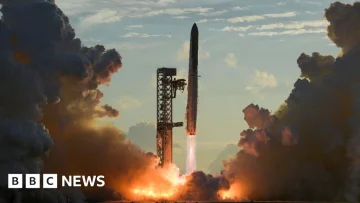
United Launch Alliance’s (ULA) Vulcan rocket suffered a malfunction about 10 minutes after launching on Sunday, November 15, from Cape Canaveral Space Force Station in Florida, AnewZ reported. The mission, conducted by ULA, a joint venture between Boeing and Lockheed Martin, resulted in the loss of 40 satellites for Amazon’s Leo internet network. It was the company’s first unsuccessful mission.
The cause of the malfunction was not immediately determined. The incident is a major setback for ULA’s new flagship rocket as the company sought to begin regular launches for Amazon’s satellite internet network.
“Based on the information received by our launch director, we confirm that the Vulcan launched from Space Launch Complex 41 experienced a malfunction in the 10th minute of flight and could not deliver the Amazon mission into orbit,” ULA said in a statement.
The company added that each flight provides information and experience. As the malfunction had just occurred, there was no specific information yet about what happened that day.
Investigation into malfunction could take months
The failure is expected to trigger a lengthy technical investigation and could keep the rocket grounded for months. This could deepen concerns about U.S. launch capacity amid problems and difficulties affecting other rockets, as well as the approaching retirement of SpaceX’s Falcon 9, the world’s busiest rocket. SpaceX is no longer accepting new orders for Falcon 9 launches.
Referring to Sunday’s mission, Amazon said in a statement: “Every launch carries risk, and that is especially true for first missions such as LV-01. ULA has been a trusted partner to Amazon, and we believe it will learn from this mission and carry out its long-term plans for Vulcan.”
Sunday’s flight was Vulcan’s fifth since its first flight in 2024 and its first launch in nine months. The hiatus was extended by separate technical investigations into the solid rocket boosters and the BE-4 main engines supplied by Amazon founder Jeff Bezos’ space company, Blue Origin.
A person familiar with the matter, speaking on condition of anonymity, said Blue Origin was working with ULA to investigate Sunday’s malfunction.
The boosters had been under review following problems on Vulcan’s previous two flights. One of those missions, in February, was conducted for the U.S. Space Force. Although both flights successfully delivered their payloads into orbit, the Pentagon had not authorized the rocket to carry national security payloads again until the outcome of the Amazon mission was known.
Earlier investigation into BE-4 engine
In May, an explosion occurred on the launch pad involving Blue Origin’s New Glenn rocket, which uses the BE-4 engine. An investigation determined that the engine was the cause. Reuters reported in August, citing ULA spokeswoman Jessica Rye, that Blue Origin subsequently modified the engines it supplied to ULA for Vulcan.
It is not known whether the BE-4 engines played a role in Sunday’s malfunction. The problem appears to have occurred after Vulcan’s second stage — the section carrying Amazon’s satellites — separated from the first-stage booster, which is powered by BE-4 engines.
ULA was formed in 2006 through the merger of Boeing’s Delta rocket program and Lockheed Martin’s Atlas rocket program. The company has maintained a 100% mission success rate since then. In the decades before the merger, Delta and Atlas rockets experienced only a few failures.
The failure is another setback to Amazon’s plans to put its satellites into orbit using third-party launch services. Several companies providing those services have also faced flight suspensions and malfunctions. The May explosion involving New Glenn occurred just days before Amazon Leo satellites were due to launch.
Rocket failures have repeatedly delayed Amazon’s plans to build a rival to SpaceX’s Starlink internet network, which has more than 11,000 satellites and millions of customers worldwide.
One reason for SpaceX’s major advantage over satellite competitors is that it has its own rockets to launch its satellites into orbit. Other companies spend billions of dollars on outside launch services.
Since 2025, 398 Leo satellites have been placed in orbit across 14 launches. That is about 12% of the 3,236 satellites Amazon needs for global service coverage. The company had hoped to launch its initial internet service this year.