OMM Newsroom

Serbian leader Aleksandar Vucic conceded defeat on Sunday in a parliamentary election that pitted his right-wing Serbian Progressive Party against a diverse, student-led opposition movement, CNN reported.
Vucic said his party’s projections gave the Students’ List between 135 and 140 seats, while his SNS party was expected to win around 105. “The Students’ List has won,” he told supporters at his party’s election-night event.
He attributed the loss to Serbia’s independent media and alleged interference by unnamed European countries and an “American deep state”. Vucic said his party received around 1.7 million votes, compared with around 2.2 million for the Students’ List.
Celebrations and heightened tensions in Belgrade
Supporters of the Students’ List took to the streets of Belgrade and other cities, honking car horns and chanting, “Aleksandar is gone”. Vucic announced the result about an hour and a half after polls closed, following a day of rising tensions.
Police in anti-riot gear cordoned off an area around the election commission headquarters in central Belgrade. Special police vehicles were seen near a park where Vucic supporters had been camping for more than a year, while groups of men dressed in black gathered at several points around the city.
Serbia’s 6.4 million voters were choosing members of the 250-seat parliament. Vucic had sought to become prime minister after serving nearly two full terms as president; he resigned from the presidency last month to lead the campaign.
Student movement grew after Novi Sad station collapse
Support for Vucic had declined since 16 people were killed in 2024 when a concrete canopy collapsed at a train station in Novi Sad. The disaster prompted youth protests, with demonstrators blaming the collapse on high-level corruption, cronyism and widespread graft during renovation work.
Despite the protests, Vucic retained considerable support. His admirers saw him as a capable leader able to guide Serbia through global uncertainty, an image cultivated by mainstream media, according to the report.
The leaderless Students’ List was formed around university students, although none appeared on its election list. Its candidates were little-known experts, athletes, farmers and artists. The approach was intended to challenge one-man rule and promote community and solidarity. Its campaign focused on a non-partisan effort to rebuild the economy and restore democracy.
The students travelled by bicycle and on foot to reach voters in rural areas, traditionally strongholds for Vucic, despite being vilified by pro-government media. Their victory echoed the recent defeat of a Vucic ally in Hungary, where youth participation helped oust Viktor Orbán after 16 years and bring in a new pro-European government. The result was likely to resonate beyond Serbia amid youth and student protests across Europe.
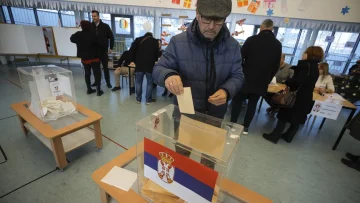
The election drew close attention from the European Union, as Serbia is a candidate for membership. Monitors expected turnout to reach around 70%, a level unseen in Serbia since 2000. Long queues formed at polling stations in Serbia and in cities around the world; some members of the Serbian diaspora had to vote in the middle of the night because polling hours followed local Serbian time.
Independent election monitors reported dozens of irregularities, including the photographing of ballots, which they said suggested pressure on voters, and attempted vote buying. International and local monitors had also raised concerns about the safety and fairness of a campaign marked by detentions, near-total government control over the media, and reports of surveillance and cyberattacks against activists.
Local elections earlier this year in 10 Serbian municipalities saw violent attacks on journalists and activists. The previous parliamentary election, in 2023, was followed by opposition protests alleging fraud.