OMM Newsroom

Uzbekistan summoned Iran’s ambassador to the country, Mohammad Ali Eskandari, to the Foreign Ministry over social media posts attributing Samarkand’s historical and architectural heritage to Iran or Iranian-Islamic civilization. AnewZ reported the information, citing local media, which said several Iranian diplomatic missions had published posts on the subject.
Uzbekistan’s Foreign Ministry said it handed Eskandari a note of protest over Iranian missions’ posts on their “X” accounts, which it said interpreted Samarkand’s historical and cultural heritage for political purposes.
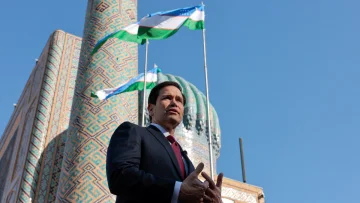
The protest followed statements by Iranian diplomatic missions concerning U.S. Secretary of State Marco Rubio’s visit to Samarkand on October 19. Rubio had highlighted the city’s historical importance as a trade center.
Posts by Iranian missions
On October 20, Iran’s embassy in Zimbabwe posted a video of Rubio in front of Registan Square on “X,” saying the arches were a hallmark of Iranian-Islamic civilization. The post included the phrases “Iran’s heritage is everywhere” and “Culture lives on, while those who destroy it do not.”
On October 21, Iran’s embassy in South Africa shared a photo of Rubio at the Tilla-Kari madrasah in Samarkand, saying he had the “opportunity to become familiar with the rich culture and ancient heritage of Persia.” The embassy urged Rubio to choose his words more carefully when speaking about Iran and its people.
In a post on October 20, Iran’s embassy in Bulgaria accused Rubio of attacking Iranian civilization and said he had posed for a photo in Samarkand “with Persian heritage standing before him.”
According to Uzbekistan’s Daryo news agency, Iran’s embassy in Armenia also said the place where Rubio stood in Samarkand was part of Persian civilization and architecture. The link to the post was not working on October 25, and it is thought to have been deleted from the embassy’s “X” account. Posts by the embassies in Bulgaria, South Africa and Zimbabwe remained on their accounts as of that date.
Uzbekistan’s Foreign Ministry said it demanded the removal of posts from Iranian diplomatic missions’ social media pages during a meeting with Eskandari on October 23.
Tashkent highlights Samarkand’s layered history
In a statement, Uzbekistan’s Foreign Ministry said Samarkand, like Bukhara and Khiva, had a rich and multifaceted history. The ministry said: “Samarkand’s historical and cultural character reflects the Uzbek people’s centuries-old history, statehood traditions and cultural development.”
Samarkand was considered a center of the ancient Sogdian civilization, which served as a trade and cultural hub on the Silk Road from the sixth century B.C. to the 11th century A.D. Turkish and Turco-Mongol dynasties ruled the city in later periods, while its culture and literary language remained Persian.
In 1924, as a result of the Soviet Union’s national-territorial delimitation, Samarkand Region became part of the newly established Uzbek Soviet Socialist Republic. Some Tajik commentators regard the decision as arbitrary, arguing that Persian-speaking people formed a majority in Samarkand and Bukhara. Uzbek is now Uzbekistan’s official language, while a significant share of the city’s population speaks Tajik.