 Afət Ziyadqızı

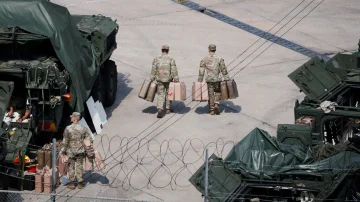
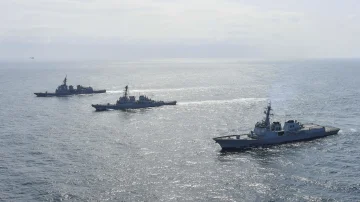
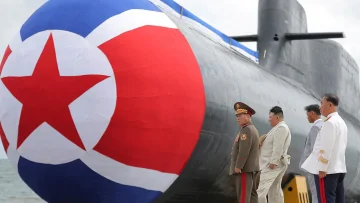
South Korea, Japan, and the United States are set to conduct joint military exercises from September 9 to 11, aimed at countering missile and nuclear threats from North Korea.
According to the Operative Information Center-OMM, Seoul confirmed that the trilateral drills are being organized at a time of heightened security tensions in the region.
South Korea's National Security Advisor Wi Sung-lac stated that Seoul supports the efforts of US President Donald Trump to resume dialogue with North Korea. However, he emphasized the importance of maintaining South Korea's security posture and ensuring that Seoul remains central to the negotiation process.
According to Wi Sung-lac, the resumption of dialogue between the US and North Korea should lead to concrete progress on the nuclear issue, alongside ensuring peace on the Korean Peninsula.
The advisor also noted that US President Donald Trump's decision earlier this month to reduce the scale of large-scale military exercises between the US and South Korea signals his readiness to re-engage with North Korean leader Kim Jong Un.
For his part, US President Donald Trump partially linked the reduction in the scale of the exercises to South Korea's refusal to assist the US in the Iran conflict, noting that shortening the drills could send the wrong message to Pyongyang.
Meanwhile, Seoul remains interested in expanding economic and military cooperation with Washington. The agenda includes trade agreements, issues related to the company "Coupang," and the exchange of intelligence data. Discussions are also underway regarding the transfer of wartime operational control from the US to South Korea.
The upcoming trilateral exercises between Japan, South Korea, and the US are expected to test joint response capabilities against North Korea's evolving missile arsenal. Such trilateral cooperation is a cornerstone of regional security architecture, designed to deter aggression and maintain stability in the Indo-Pacific region.