OMM Newsroom

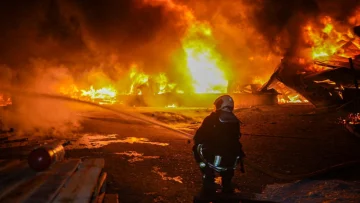
A Russian nighttime attack killed two people and injured 22 in the southeastern Ukrainian city of Zaporizhzhia. Ivan Fedorov, co-chair of the Zaporizhzhia Regional Defense Council, said on Tuesday, Nov. 24, that two of the wounded were children.
One woman was in serious condition, and people may still be trapped under the rubble, AnewZ reported. The attack damaged residential buildings, transport infrastructure and cars. Semikin reported the incident on Telegram.
Before the strikes, Poland said a drone briefly entered its airspace during a Russian nighttime attack on western Ukraine. The incident heightened security concerns on NATO’s eastern flank.
Russia’s Defense Ministry said it had struck drone command posts, Starlink satellite terminals and other military facilities in Ukraine’s northeastern Sumy region. According to Interfax, the ministry also claimed that Ukrainian service members were killed in the strikes but did not give a number.
Russian airstrikes have continued to target Ukrainian cities. A strike on a central district of Kyiv on Monday injured five people, while an attack on a city near the capital on Sunday killed 11.
The Ukrainian military said it struck a Lukoil oil refinery in Russia’s Perm region overnight on Monday, damaging three processing units. Ukraine’s General Staff also said the Kaleykino oil pumping station in Tatarstan had been attacked, marking the second strike on the facility in four days. Four oil storage tanks were reportedly damaged.
A Russian drone briefly entered Polish airspace during Russia’s nighttime attack on western Ukraine, according to Poland’s Armed Forces. The military said it had authorization to intercept the drone but decided against using weapons after assessing the potential risks to civilians.
Russia’s Foreign Ministry on Monday accused NATO member Estonia of taking hostile actions that could “lead to open war.” Moscow summoned Estonia’s chargé d’affaires after Tallinn decided to close its land border crossings with Russia from Dec. 1 for at least six months.
Estonia had announced the closures after accusing Russian security services of organizing an attempted arson attack against a defense company. Moscow rejected the allegation. Russia has also accused Estonia of allowing Ukraine to use its airspace to strike Russian targets. Tallinn denied that claim.
Estonia’s Foreign Ministry said the country had never allowed its territory to be used by another state for military operations. Kyiv has previously linked Ukrainian drones entering NATO airspace to Russia disrupting communications signals. NATO members have denied deliberately facilitating Ukrainian drone operations.
Ukrainian President Volodymyr Zelenskyy said in a video address late Monday that intelligence indicated Russia was preparing new strikes. He did not say when the attacks could take place, but urged Washington and other partners to strengthen Ukraine’s air defenses, particularly its ability to intercept ballistic missiles.
“Our intelligence has information that the Russians are preparing new strikes,” Zelenskyy said. He urged people to heed missile threat alerts and follow safety measures, stressing that Ukraine needs missiles for Patriot systems to protect its cities and infrastructure.
Zelenskyy also reiterated Ukraine’s aspiration to join NATO, pointing to support expressed at a NATO Parliamentary Assembly meeting on Monday. Moscow opposes Ukraine’s membership in the alliance. Although trilateral peace talks involving Russia, Ukraine and the United States have resumed, Moscow has not changed its position.
U.S. President Donald Trump will meet NATO Secretary-General Mark Rutte in Palm Beach, Florida, on Wednesday, Nov. 25, the White House said. The meeting will follow Trump’s talks last week in Asia with Russian President Vladimir Putin and Chinese President Xi Jinping.
European leaders are seeking a more active role in U.S.-backed negotiations to end the war, while Kyiv is calling for long-term security guarantees. U.S. special envoy Jared Kushner said last week that Trump was open to security guarantees for Ukraine similar to the collective defense clause in Article 5 of the NATO treaty.
Diplomatic efforts are taking place as Russia and Ukraine continue military operations, tensions rise on NATO’s eastern flank and disagreements persist over Ukraine’s future security guarantees.