OMM Newsroom

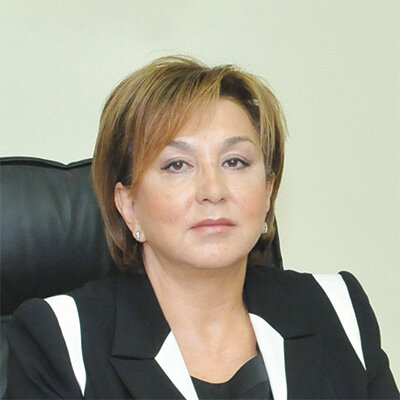
Melek Abbaszadeh has been dismissed as chair of the State Examination Center’s Board and appointed rector of Baku State University.
President Ilham Aliyev signed the relevant orders.
“Operative Information Center-OMM” presents a profile of Melek Abbaszadeh:
Abbaszadeh (Mustafayeva) Melek Mehdi gizi was born in 1953 in Baku to a family of civil servants. After graduating from secondary school in Baku in 1970, she enrolled that year in the Faculty of Computational Mathematics and Cybernetics at Moscow State University, named after M.V. Lomonosov. She graduated in 1975 and was appointed senior laboratory assistant at the Institute of Cybernetics of the Azerbaijan Academy of Sciences. From 1975 to 1977, she worked as a research trainee in Academician N.N. Moiseyev’s department at the Computing Center of the USSR Academy of Sciences in Moscow. From 1977 to 1987, she worked as a researcher at the Institute of Cybernetics of the Azerbaijan Academy of Sciences. In 1988, she defended her candidate’s dissertation at the V.M. Glushkov Institute of Cybernetics of the Ukrainian Academy of Sciences in Kyiv, earning a degree in technical sciences. From 1987 to 1989, she headed the Department of Computer Technology and Methods of Teaching Informatics at the Baku Institute for Teacher Development. From 1989, she worked as a leading researcher at the M. Azizbayov Azerbaijan Institute of Oil and Chemistry. In 1990, she was elected first deputy chair of the Azerbaijan “Istedad” Association and held the post until August 1994. During that period, the association established the scientific and methodological foundations needed to identify talented children and young people in Azerbaijan and organized the development of new teaching methods to apply the latest international practices in the field. The Baku European Lyceum was established at the association’s initiative and through its efforts.
From 1994 to 2000, Abbaszadeh served as first deputy chair of the State Commission for Student Admission of the Republic of Azerbaijan, and from 2000 to 2016 she chaired the State Student Admission Commission. On April 12, 2016, she was appointed by presidential order to head the newly established State Examination Center, a public legal entity. By an order dated July 23, 2024, President Ilham Aliyev appointed her chair of the Center’s Board.
Under Abbaszadeh’s leadership, the student admission process began operating as an open socio-technical system. Transparency was ensured at every stage, from the preparation and review of examination materials to the administration of exams. Under her leadership and with her direct participation, permanent subject-based scientific and methodological seminars, open to the entire teaching community, were established at the Commission in 1994. The following year, expert councils and test banks were set up for all subjects. Scientific and statistical analysis of student admissions, publication and public dissemination of its findings, and discussions of exam results with teaching staff at conferences held in different regions became regular practice. Preparatory courses were also organized under the State Student Admission Commission to help applicants.
The State Student Admission Commission was the first organization in Azerbaijan to apply information and communication technologies to managing a mass process such as student admission. At Abbaszadeh’s initiative, it created closed technological cycles using specialized software and hardware to minimize the human factor, automated all internal processes and established an intelligent security system designed to prevent external interference. In 1996, the processes of managing the test bank, selecting tests from it and preparing examinations were automated. The Commission was also the first government body to begin using the internet for processes affecting a wide audience, including application submission and access to examination-related information.
Under Abbaszadeh’s leadership, the “Abituriyent” journal, now one of the country’s most widely circulated publications, was launched. Many of the scientific and methodological materials published in the journal, whose editorial board she serves on, were prepared with her direct involvement. Beginning in 1994, she authored a series of articles on the scientific and methodological analysis of entrance-exam results, published in the journal’s annual 12th issue, and co-authored nearly 100 different textbooks and methodological guides published as supplements to the journal.
To make services more convenient for the public, applicants and parents, Abbaszadeh initiated the opening of the State Student Admission Commission’s regional centers in eight areas of Azerbaijan. Entrance exams also began to be held in 11 regional centers across the country.
During Abbaszadeh’s tenure as head of the State Student Admission Commission, it was the implementing organization for a number of important projects of national significance.
In 1999-2000, the Commission under Abbaszadeh was granted the status of a national body tasked with addressing the “Year 2000 problem,” which it successfully resolved.
In 2000, the “Elections” State Automated Information System was created under a joint project of the United Nations Development Programme (UNDP) and the Azerbaijani government, “Support for the Creation of a Network for Transmitting Election Information,” for which Abbaszadeh was national coordinator. The system was used in the November 2000 elections to Azerbaijan’s Milli Majlis (National Assembly) and has continued to operate in elections held in the country.
Abbaszadeh was national coordinator of a joint UNDP and Azerbaijani government project signed in 2002 to develop and launch an initial phase of a strategy for advancing information and communication technologies in the Republic of Azerbaijan. Under the project, a national ICT strategy was prepared and approved, along with a national action plan for 2004-2012 to implement the strategy. Several projects under the plan were successfully carried out.
Abbaszadeh took part in nearly 25 regional and international conferences, including the 2003 World Summit on the Information Society, held in Geneva at the level of heads of state. In November 2003, she organized an international forum in Baku on the development of information and communication technologies and e-government.
In 2005, she was included in the list of international experts in educational assessment jointly published by the International Association for Educational Assessment (IAEA) and UNESCO.
From September 16 to 21, 2007, Abbaszadeh organized the IAEA’s 33rd annual international conference in Baku, on “The Interdependence of National Assessment Systems and Educational Standards.” She also organized the association’s 45th annual international conference, held from September 22 to 27, 2019, on “Assessment and Decision-Making: Individual and Institutional Solutions.” In 2008, she was elected to the IAEA Executive Committee.
By an order dated February 25, 2013, the President of the Republic of Azerbaijan awarded Melek Abbaszadeh the “Shohrat” Order for the effective application of modern technologies in education assessment. By an order dated February 21, 2023, she received the “Sharaf” Order for her long-standing effective work in education.
In 2019, Abbaszadeh was appointed by presidential order to the organizing committee of the “Yukselish” competition.
Abbaszadeh has authored nearly 60 academic articles and two textbooks for higher education institutions.
She has two children and five grandchildren.