OMM Redaksiyası

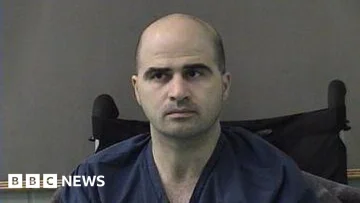
The Pentagon intends to livestream the execution of former U.S. Army psychiatrist Nidal Hasan, who killed 13 people and wounded more than 30 others at Fort Hood, a military base in Texas, in 2009. The plan has prompted debate over the legality of broadcasting executions and the authority of the military justice system.
The Pentagon said on Thursday that Hasan’s execution by firing squad would be livestreamed. It is scheduled for Dec. 3. President Donald Trump approved the plan on Oct. 5.
Firing squads and broadcasting executions
In its 1879 ruling in “Wilkerson v. Utah,” the U.S. Supreme Court found that execution by firing squad did not constitute cruel and unusual punishment prohibited by the Constitution.
Five states — Idaho, Mississippi, Oklahoma, South Carolina and Utah — currently allow the method. The Trump administration has said it would also enable the use of firing squads in the federal prison system.
The U.S. military has historically executed service members convicted of crimes such as desertion by firing squad. Under the Uniform Code of Military Justice, only the president has the authority to approve a death sentence for a member of the armed forces.
A military court convicted Hasan of premeditated murder in 2013. He represented himself at the trial and presented little, if any, of a defense case.
Federal rules prohibit recording or broadcasting executions in the federal prison system. Military rules, however, contain no equivalent ban on broadcasting military executions. The difference has raised questions about the legal basis for the Pentagon’s plan.
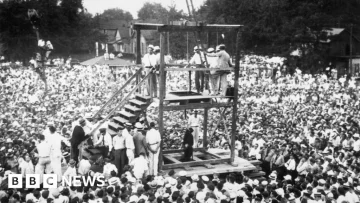
Executions in the United States were once carried out in public, but later moved largely to prisons with access restricted. State laws typically limit witnesses to authorized officials, the condemned person’s relatives and legal representatives, and a small number of journalists.
Courts have also rejected efforts to broaden public access to executions. In 2001, a judge denied a request to livestream the execution of Timothy McVeigh, who was convicted in the 1995 Oklahoma City bombing that killed 168 people. Instead, the Justice Department arranged a limited broadcast for victims and their families.
Hasan’s options in court and the U.N. position
Hasan has exhausted his direct appeal options within the military justice system. He can still challenge his conviction and sentence in federal civil courts through a habeas corpus petition. Such proceedings could delay the execution for years, even if the challenge is ultimately unsuccessful.
Legal experts have said Hasan could also file a civil rights lawsuit challenging the method of execution.
The Office of the U.N. High Commissioner for Human Rights has condemned the planned livestream. The office says broadcasting the execution would amount to a public execution and violate international human rights standards.
“Livestreaming an execution amounts to a public execution and violates the absolute prohibition of torture,” the office said in a statement.
The office also said the plan violates the 1984 Convention against Torture, which the United States ratified in 1994. However, international legal standards do not automatically provide an enforceable basis for challenging the plan in U.S. courts.