OMM Redaksiyası

After 28-year-old Darya Shipilova, who worked at a plague research institute in Siberia, died, speculation emerged that she may have succumbed to plague. Russian authorities said they had found no evidence of plague or other dangerous pathogens tested for, but the exact cause of death remains unclear.
Official statements and quarantine measures
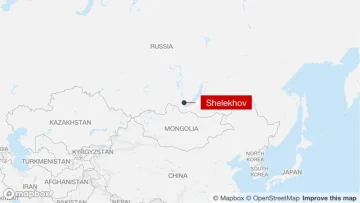
According to the World Health Organization (WHO), Shipilova was hospitalized with severe pneumonia on September 29. She worked at the Siberian and Far Eastern Scientific Research Institute for Plague Control in Irkutsk. According to Meduza, she died on October 2 in Shelekhov, near Irkutsk.
That day, the Irkutsk branch of Rospotrebnadzor, Russia’s consumer protection watchdog, announced that a special commission had been set up over the possibility of a highly dangerous pathogen. The WHO said it learned of the death from media reports.
Alexey Tsydenov, head of the Republic of Buryatia, said in early October that Shipilova may have died of plague. Media reports gave differing accounts of his remarks: the Kyiv Post said Tsydenov had stated that pneumonic plague infection was confirmed, while Reuters reported that he had raised it as a possibility. He later softened his statement.
On October 3, the WHO asked Russian officials to clarify the information and repeated its request on October 5, 6 and 7. According to the Associated Press, Rospotrebnadzor said on October 4 that Shipilova had been diagnosed with “pneumonia of unknown origin” and that extensive testing had found no microorganisms associated with her work.
Irkutsk Region Governor Igor Kobzev said on October 5 that Shipilova had died of pneumonia of unknown origin and that no new infections had been reported among institute staff. The independent outlet Liudi Baikala, citing anonymous sources, reported that she had died of pneumonic plague and that several hospitals in Irkutsk had been placed under quarantine. Russia told the WHO that no health facilities other than the hospital where she was treated had been quarantined.
Reuters reported that Rospotrebnadzor head Anna Popova traveled to Siberia for an emergency meeting over the weekend. The director of the Irkutsk Aluminium Plant in Shelekhov wrote on Telegram that he had instructed workers to wear masks as a precaution.
On October 6, Russia told the WHO that no plague cases had been recorded recently in Irkutsk Region and that about 200 people had been placed under quarantine. WHO Director-General Tedros Adhanom Ghebreyesus disclosed the information.
On October 7, Ghebreyesus said the organization had asked for clarification of media reports about a second employee whose pneumonia had no identified cause. Reuters reported that Rospotrebnadzor said there was no risk of an outbreak and preventive measures were being gradually lifted. U.S. President Donald Trump said he believed Moscow was in control of the situation and that Washington saw no possibility of biological weapons being involved.
Kobzev announced on October 8 that quarantine measures had ended. Meduza reported that he said Shipilova had been vaccinated against the pathogens she worked with and that no pathogen-related accident had been found at the institute. Al Jazeera reported that Russia had called reports of a second infection false information.
WHO assessment and unanswered questions
On October 10, the WHO published its assessment of information supplied by Russia. According to the report by Russian officials, about 200 contacts were kept under medical observation for seven days and underwent daily laboratory testing. None developed symptoms.
More than 5,500 laboratory tests submitted to the WHO found no highly dangerous pathogens, including plague. Shipilova and her contacts were tested for various microorganisms. Two independent investigations found no evidence of breaches of biosafety or biosecurity rules at the institute. No other severe pneumonia case linked to her death was identified.
Russian officials said Shipilova had not traveled outside Irkutsk Region during the two weeks before her symptoms began. They classified the cause of death as pneumonia of undetermined origin; tests did not detect plague or other dangerous pathogens included in the screening. Officials also said she had been vaccinated against the pathogens she worked with.
The WHO said the information provided by Russia showed no evidence of an ongoing chain of transmission linked to the case. On October 11, the organization said it had not yet determined the origin of the pneumonia that caused Shipilova’s death and that no plague case had been recorded.
The organization stressed that it could not independently determine whether a seven-day observation period was long enough to rule out all possible causes of illness. The WHO said a laboratory-related exposure could not be fully excluded at this stage, although the information provided by Russia contained no indication of a laboratory accident. It also noted that its biosafety recommendations were precautionary and did not imply that an incident had occurred.
The WHO said it would continue to monitor the situation as new clinical, epidemiological and laboratory information became available, and that it did not recommend travel or trade restrictions in connection with the case.
Claims circulated that Shipilova had dropped a vial containing live bacteria at work, or had fallen ill after traveling to Thailand or Moldova, or visiting an area near the Mongolian border. Liudi Baikala published the vial claim, but Russia told the WHO that the reports were untrue. Reuters said it had found no public evidence confirming the other travel claims. CNBC noted that the Mash Telegram channel had reported Shipilova returned from a work trip to Buryatia.
The WHO asked for reports to be checked that a second employee had also contracted pneumonia of unknown cause. Russian officials denied the reports. Reuters said it had found no evidence that a second person had died.
Kazakhstan, Kyrgyzstan and Uzbekistan announced they would step up precautionary measures at their borders. The WHO and the United States requested additional information from Russia. Public health experts urged caution, noting that only one case had been recorded so far.
Plague is caused by the bacterium Yersinia pestis. It circulates among rodents and other small mammals and can spread to humans through bites from infected fleas, contact with infected tissue or materials, and—in the case of pneumonic plague—by inhaling respiratory droplets. The disease has bubonic, septicemic and pneumonic forms. It can be treated with antibiotics if diagnosed promptly, but can be fatal without treatment.
Plague remains present among animals in parts of Africa, Asia and the Americas; Siberia is also among the affected areas. According to the WHO, the countries that have recorded the most human cases in recent years are the Democratic Republic of the Congo and Madagascar. Plague is rare in Russia.
The cause of Shipilova’s pneumonia and the source of infection remain unknown. Russian officials say tests found no plague and two investigations found no laboratory incident. The WHO says the diagnosis has not been confirmed, a laboratory-related infection cannot be fully ruled out, and further clinical, epidemiological and laboratory information is needed. It is also unclear whether Russia will make public the evidence underlying its conclusions.