 OMM Redaksiyası

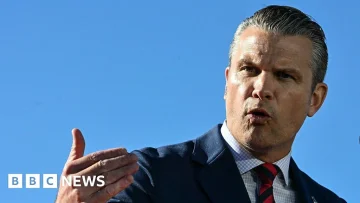
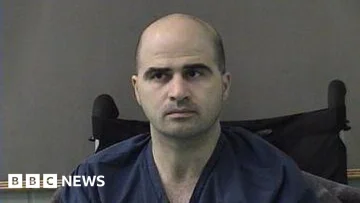
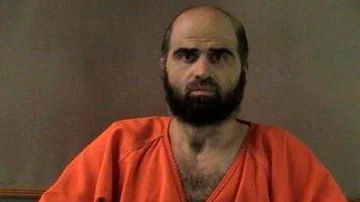
More than 90 years after the last widely attended public execution in the United States, a Pentagon announcement about livestreaming the execution of Nidal Hasan has renewed debate over whether such punishments should be made public. The BBC reported that Defence Secretary Pete Hegseth said Hasan, who killed 13 fellow soldiers at Fort Hood in Texas in 2009, would be executed by firing squad.
The Pentagon later said the execution would be livestreamed. Hegseth said people needed to understand that such acts had serious consequences.
The last high-profile public hanging in the country was that of Rainey Bethea in Owensboro, Kentucky, on 14 August 1936. An estimated 20,000 people gathered to watch Bethea, who was convicted of raping and killing 70-year-old Lischia Edwards. The spectacle drew widespread criticism, and Kentucky’s governor outlawed public executions 18 months later. A less widely known hanging attended by several hundred people in Missouri in 1937 is described as the country’s final public execution.
Michael Radelet, an emeritus professor at the University of Colorado who studies capital punishment, told the BBC he had never imagined another public execution. He said public support for the death penalty had fallen from 80% in 1994 to 52%, and was lower when people were offered life without parole as an alternative.
Sonya Lea, whose book about Bethea’s execution was published last year, said the livestream announcement filled her with horror. She described the 1936 event as a “carnival of sadism” and said modern technology could expose a much larger audience to an execution.
Ohio State University social psychology professor Kurt Gray said political polarisation and rhetoric might have helped create conditions for the announcement. Some people might welcome violence, he said, while others could be desensitised rather than actively supportive.
Garen Wintemute, who directs the Violence Prevention Research Program at the University of California, Berkeley, said survey data suggested Americans’ appetite for violence was declining. He cited the chair of the US Conference of Catholic Bishops, who called the livestream announcement “barbaric”.
President Donald Trump said he had approved the decision to livestream Hasan’s execution, adding that he did not care how Hasan died as long as he did. Vice-President JD Vance, a Catholic, has said he would not watch.