OMM Redaksiyası

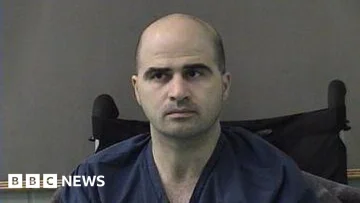
U.S. President Donald Trump has ordered the execution by firing squad of former Army psychiatrist Maj. Nidal Hasan, who killed 13 people at the Fort Hood military base in Texas in 2009.
On Nov. 5, 17 years ago, Hasan opened fire at the base’s medical facility, killing 12 active-duty soldiers and one retired service member and wounding 32 people. Police shot Hasan while taking him into custody, leaving him partially paralyzed and confined to a wheelchair.
A military court jury found Hasan guilty in August 2013 on 45 counts of premeditated murder and attempted murder and sentenced him to death.
During the trial, Hasan admitted that he was the shooter. He said he had acted to prevent U.S. soldiers from being sent to Afghanistan to kill Muslims. The attack took place several weeks before Hasan was due to be deployed to Afghanistan. Pentagon spokesperson Sean Parnell said Hasan shouted “Allahu Akbar” during the shooting.
Acting Secretary of the Army Adam Telle said Tuesday that the execution, recommended by Defense Secretary Pete Hegseth, is scheduled to take place at Fort Hood on Dec. 3.
If carried out, it would be the first execution by the U.S. military since 1961, when Pvt. John Bennett was hanged at Fort Leavenworth, Kansas. Hasan would also be the first person known to face execution by firing squad in the U.S. military since 1945.
Under the Uniform Code of Military Justice, a presidential approval is required to carry out a military court death sentence. Hasan has the right to challenge the execution in federal courts, which could delay the process.
The decision comes as execution by firing squad has returned to public debate in the United States. Several states allow the method. South Carolina carried out an execution by firing squad in 2025, the first such execution in the country in 15 years. The Trump administration has also expanded the methods available for federal executions amid difficulties obtaining lethal-injection drugs. They include firing squad, electrocution and gas asphyxiation.
Debate over execution methods intensified last week after a botched lethal-injection attempt in Tennessee. Christa Pike, who was sentenced to death, survived the attempt and was hospitalized. Her lawyers said Tuesday that Pike had regained consciousness, but that her prognosis remained unclear.