OMM Newsroom

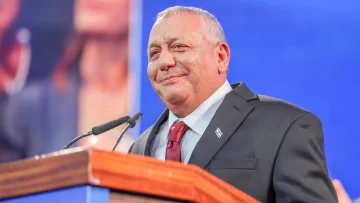
Talks are under way between Israeli caretaker Prime Minister Benjamin Netanyahu and opposition leader Gadi Eisenkot in an effort to break the deadlock left by last month’s election, according to BBC World.
Netanyahu’s bloc won 53 seats in the October election, while Eisenkot’s alliance of four parties secured 48. Neither has a majority in the 120-seat Knesset.
Netanyahu offers Eisenkot first turn as prime minister
On Saturday, Netanyahu proposed a national unity government with a rotating premiership and said he would accept Eisenkot serving as prime minister first.
In a post on “X” that day, Netanyahu said: “My responsibility as a leader obligates me to put everything aside, including the principle of the largest party.” He added that he would agree to Eisenkot serving “first as prime minister, while I will serve as alternate prime minister at the beginning of the term”.
Eisenkot, a former army chief, responded by inviting Netanyahu to “genuine and accelerated negotiations”. He said that if Netanyahu’s Likud party was ready for “genuine unity”, he was prepared to assess the seriousness of its intentions over the next 24 hours.
Eisenkot said the negotiations would be based on a “detailed proposal” sent to Netanyahu the previous Sunday, adding that he had not received a response. He has a week before the deadline to form a government expires on 6 December.
Coalition efforts face obstacles
The talks come after Eisenkot accused Likud on Friday of stalling coalition negotiations in an attempt to bring about another election.
President Isaac Herzog said he had consulted all parties during the week after the 27 October election, before tasking Eisenkot with forming a government within 28 days. Eisenkot has been seeking to assemble a coalition to oust Netanyahu and has agreed coalition deals with two parties, making some progress towards the majority he needs.
However, opposition to working with Arab parties and difficulties reaching an agreement with ultra-Orthodox parties have hampered the effort so far.
Two Arab-led alliances, the United Arab List and the Joint List, won a combined 19 seats in the election, an unprecedented total following a rise in turnout among Arab voters. They could potentially have decisive influence over who takes power, but all but one of the Jewish parties pledged before the vote not to work with them to form a government.
Netanyahu said he was proposing a unity government because of “the magnitude of the existential danger and the possibility that a government will be formed that does not have the capacity to deal with this danger”.