OMM Newsroom
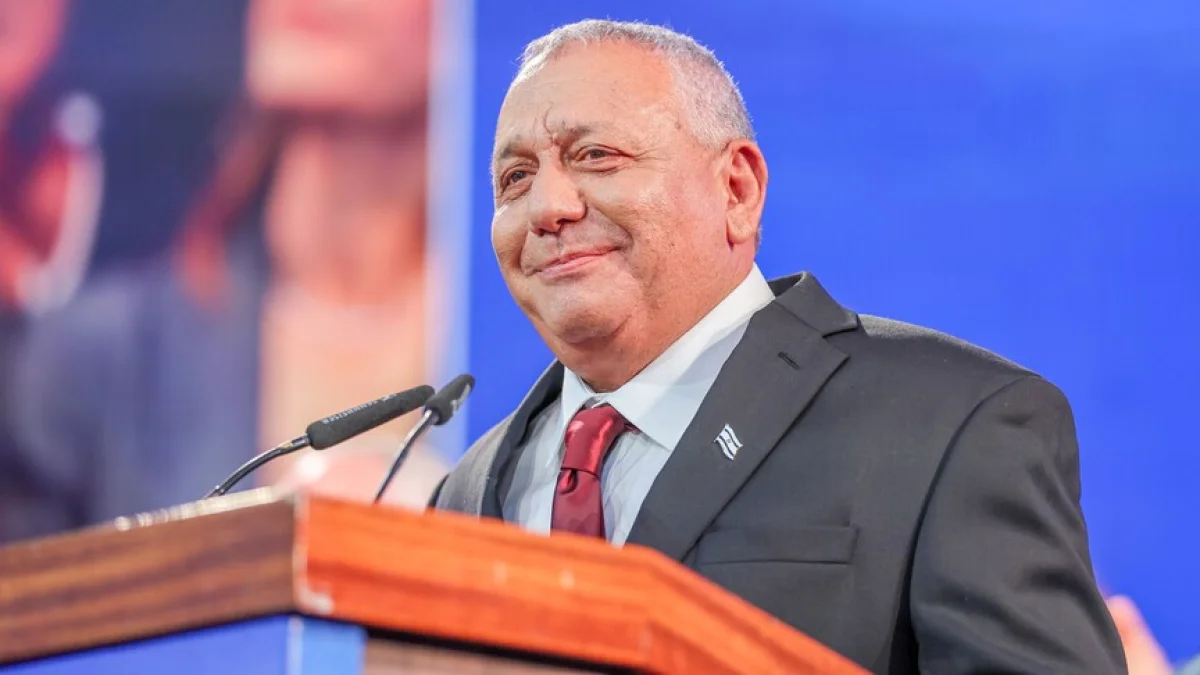
Israel’s prime minister-designate Gadi Eisenkot said Friday he was determined to form a new government within eight days, despite a deadlock in negotiations with Prime Minister Benjamin Netanyahu’s Likud party. He also announced that two coalition agreements had been signed, Anadolu Agency reported.
In a post on “X”, Eisenkot said he had identified three main routes to forming a government a week earlier and would pursue every possibility of reaching an agreement through them. Some had received positive responses and shown a willingness to cooperate, he said, leading to a coalition, formal agreements and policy guidelines for a new government.
But, Eisenkot said, there had been no comparable progress with Likud, either in public positions or in behind-the-scenes discussions. Negotiating teams from his Yashar party and Likud had met five times over the past two weeks, but Likud repeatedly rejected his party’s proposals to intensify the talks.
He said two weeks and five meetings would have been enough to reach an agreement if Likud had shown genuine willingness to do so. “Likud has shown no willingness to make progress on substantive issues,” Eisenkot said, accusing the party of limiting discussions to a power-sharing arrangement involving a rotation of the premiership while avoiding other issues affecting Israelis’ lives.
Eisenkot added that Likud had made no concessions or concrete proposals during the two weeks. He questioned whether the party would enter serious negotiations and a partnership that required concessions, or continue what he called a “political spectacle and a stalling strategy.”
He said his door would remain open to Likud if it showed a genuine willingness to change its approach and make bold decisions that could enable an agreement.
Two coalition agreements signed
Eisenkot said significant progress had been made this week, including the signing of agreements with the Yisrael Beiteinu and Democrats parties. He added that efforts were underway to reach an agreement with the Together party as soon as possible.
Differences between the parties should not prevent them from achieving the goal for which they were elected, he said: forming a new government that “preserves Israel’s Jewish, democratic and liberal character and is based on equality.”
Eisenkot reiterated that he intended to use the remaining eight days of his mandate to form a government and present it to the Knesset for a confidence vote. He also pledged to keep working to broaden the coalition after its formation and said he welcomed anyone willing to help restore stability in Israel.
He said he had repeatedly expressed a willingness to cooperate with any party or elected official who accepted the four principles he had outlined since receiving the mandate to form a government.
Israel’s public broadcaster KAN reported Thursday that negotiations between Yashar and the ultra-Orthodox United Torah Judaism alliance had advanced after preliminary understandings on legislation governing the military conscription of ultra-Orthodox Jews. It said two religious leaders of Degel HaTorah, one of the alliance’s main constituent parties, had approved continuing talks with Eisenkot.
Eisenkot’s mandate expires on Dec. 6
Eisenkot’s initial deadline to form a government expires on Dec. 6. He may request an additional, nonrenewable 14-day extension from Israeli President Isaac Herzog.
Herzog tasked Eisenkot with forming a government on Nov. 8 after he secured recommendations from 67 lawmakers, compared with 46 for Netanyahu. Seven lawmakers refrained from recommending either candidate.
The recommendations do not guarantee that Eisenkot’s government will win the Knesset’s confidence, amid disagreements between parties over participation in the next coalition.
The “change camp” comprises Eisenkot’s Yashar, Naftali Bennett’s Together, Avigdor Lieberman’s Yisrael Beiteinu and Yair Golan’s Democrats. Its leaders differ over potential coalition partners: Bennett advocates a unity government with Likud, Lieberman favours an alliance with ultra-Orthodox parties, and Golan opposes Netanyahu’s participation and supports relying on votes from Arab parties.