OMM Newsroom

The International Court of Justice’s finding that Myanmar committed genocide against the Rohingya marks the beginning, rather than the end, of their pursuit of justice, experts told Anadolu Agency. They said international pressure will be needed to ensure Myanmar complies with the ruling.
Myanmar genocide scholar Maung Zarni called the decision “very, very important” but said it would not immediately change the lives of survivors, many of whom remain displaced.
“It is not the end of the road; it is just the beginning of the road for justice,” Zarni said.
He said justice would require more than recognition by the court, including allowing Rohingya refugees to return home and rebuild their lives safely.
In its judgment on Thursday, the court found Myanmar responsible for genocide during military operations in Rakhine state in 2017. The ruling followed a case brought by The Gambia in 2019, after the operations forced more than 700,000 Rohingya to flee to neighbouring Bangladesh.
Ruling recognises Rohingya identity and suffering
Rosa Freedman, an international law professor at the University of Reading, said the ruling was particularly significant because Myanmar’s authorities have long denied the Rohingya’s ethnic identity.
“The starting point is that Myanmar deny that the Rohingya are even a group of people defined by their ethnicity. They say they're Bengalis, that they're from Bangladesh, and the court has made it very clear that the Rohingya are an ethnic group,” she said.
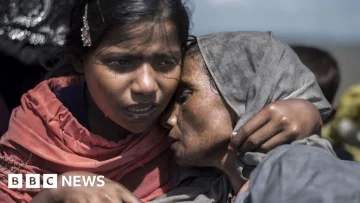
Freedman said the decision also recognised the Rohingya’s experiences after years of seeking accountability. She said images from internally displaced persons camps and other places where Rohingya live showed the importance to them of having their suffering acknowledged by the world’s highest court.
The court found that Myanmar had committed acts prohibited under the Genocide Convention, including killings, serious bodily or mental harm, and measures intended to prevent births within the Rohingya community. It also found that Myanmar had failed to comply with an earlier order to preserve evidence.
Experts discuss enforcement and other genocide cases
Zarni questioned whether the judgment would lead to changes for survivors without action from governments and international organisations. He accused Russia and China of supplying weapons to Myanmar’s military and providing diplomatic protection to its authorities.
He also accused France, Germany, the United Kingdom and other governments that intervened in The Gambia’s case of applying double standards over their positions on Israel’s military operations in Gaza.
The United Kingdom called for an urgent UN Security Council meeting after the ruling. Asked whether the meeting could lead to concrete measures, Zarni expressed doubt, citing the interests of the council’s five permanent members.
“The UN is not representing human beings, human communities in the world. It represents the commercial, strategic, military, diplomatic, and political interest of these states,” he said.
Zarni said the ruling should be used to mobilise government support, raise awareness and inform public opinion worldwide. He also raised concerns about the possibility of US sanctions against ICJ judges and the potential effect on the court’s independence.
He was referring to media reports ahead of the Myanmar judgment about possible US sanctions against judges, including Nobel Peace Prize laureate Navi Pillay, amid questions about implications for the Gaza case. Zarni predicted the court would reach a similar conclusion in the proceedings concerning Israel, saying he believed evidence of genocidal intent in Gaza was “crystal clear”. He pointed to the scale of killing and destruction and statements by Israeli leaders and officials.
Marko Milanovic, an international law professor at the University of Reading, said the ruling would have a significant effect on Rohingya survivors who had waited years for recognition.
“I am sure this finding will be enormously impactful on the Rohingya survivors, who will find in this pronouncement a measure of justice that they have long been waiting for,” he said.
The ruling was adopted by nine votes to six, reflecting differences among judges over how to assess evidence of genocidal intent. Milanovic said the court had not fundamentally changed the definition of genocide, but that the majority had taken a “more flexible approach” to evaluating the evidence than in the past.
He said the disagreement could be relevant to other genocide proceedings, including South Africa’s case against Israel over Gaza. Freedman said the Myanmar judgment showed the court had greater scope to consider acts as a whole and infer genocidal intent, even where other reasonable inferences were possible.
Freedman cautioned against assuming the court would reach the same conclusion in the Gaza case, saying each case must be assessed on its own evidence and circumstances. She noted that restrictions on information and difficulties carrying out investigations in Myanmar had meant the court relied on second- or third-hand evidence.
“This is materially different to what's happening in Gaza, where we have seen live streaming of the atrocities of the suffering since Israel entered into Gaza,” she said.
Freedman said considerably more evidence from Gaza had been documented through videos and recordings, although Israel had not allowed the UN or other investigators into the occupied territory to conduct investigations. She recalled that the ICJ had ordered Israel to preserve evidence, while noting that independent investigations in war zones remained difficult and might only become possible after the war had fully ended.
South Africa filed its case against Israel in December 2023, alleging violations of the Genocide Convention during the war in Gaza. The ICJ issued several binding provisional measures in 2024, including orders for Israel to prevent acts of genocide and facilitate humanitarian assistance. The court has yet to deliver a final judgment.
The ICJ ordered measures addressing the consequences of Myanmar’s violations, including facilitating the return of displaced Rohingya, family reunification, restitution of property and compensation. Myanmar must report to the court within two years on steps taken and compensation proposed; further proceedings will address compensation arrangements.
Freedman said the UN Security Council could consider ways to secure Myanmar’s compliance and protect Rohingya communities. She said adherence to international law depends on political and economic pressure on governments.
“What we rely on within the international legal system is political and economic pressure and coercion on states to get them to adhere to, to comply with international law,” she said.
Zarni called the ruling “unprecedented” and said it would become “the benchmark for the next case before the court”.
“Justice is not confined to just Rohingya,” he said.