OMM Newsroom

The International Court of Justice (ICJ) is due to deliver its verdict on Thursday in a seven-year case brought by The Gambia against Myanmar over the Rohingya, a ruling that could mark a first for an international court, according to the BBC.
Since the 1948 Genocide Convention was signed, individuals have been prosecuted for genocide in conflicts including those in Rwanda and the former Yugoslavia. But no state has been found guilty of committing genocide by an international court.
“It would be a judgment of landmark importance if The Gambia were to win this case,” said Arsalan Suleman, the lawyer leading the case against Myanmar. He said such a ruling would give renewed force to the convention and the principle of international legal accountability for crimes committed by states.
The mass expulsion of Rohingya from Rakhine State in August and September 2017 was a military operation marked by exceptional brutality, the report says. Its correspondent witnessed the deliberate burning of Rohingya villages and the suffering of hundreds of thousands of people who fled to neighbouring Bangladesh.
Human rights groups and a United Nations fact-finding mission documented accounts of killings, torture and mass rape by Myanmar soldiers. The report also describes hostility among ethnic Rakhine people towards the Muslim population and the systematic destruction by the Myanmar state of what remained of Rohingya villages.
The central question before the ICJ, the United Nations’ highest court, is whether these acts amounted to genocide.
Established in 1945 to settle disputes between states, the ICJ does not try international crimes. It was asked to consider the Rohingya case because victims had few other avenues for redress.
Myanmar’s authorities have denied allegations of ethnic cleansing and genocide, saying the military was responding to attacks by Rohingya militants through what they called “clearance operations”.
A 2018 UN report based on hundreds of interviews said the army’s tactics were “grossly disproportionate to actual security threats”. It called for senior Myanmar military figures to be investigated for genocide in Rakhine State and crimes against humanity elsewhere. Myanmar rejected the report.
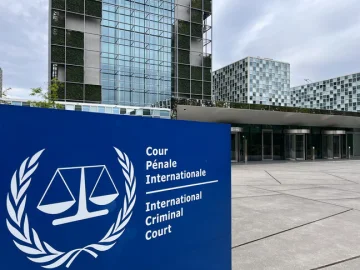
Because Myanmar was not a signatory to the International Criminal Court, a case could not be brought there against officials accused of atrocities in Rakhine State. Instead, The Gambia filed a case at the ICJ in November 2019, backed by the Organisation of Islamic Co-operation. It argued that all states are bound by the Genocide Convention and have an interest in upholding it.
The Gambia accused the Myanmar state, rather than only its military, of genocide. Myanmar challenged The Gambia’s right to bring the case, arguing that it was not directly affected. The ICJ ruled that The Gambia was eligible to file it.
The case drew wider attention when Nobel laureate Aung San Suu Kyi, then head of Myanmar’s elected government, personally led the country’s initial legal defence at The Hague. She was widely criticised for doing so.
Although Suu Kyi had limited influence over the military’s actions in Rakhine State, her refusal to condemn them dismayed many who had admired her. After she was removed in the 2021 coup and placed under arrest, a new team appointed by the military took over the defence.
Proving genocide is difficult. Where there is no explicit programme of genocide, judges generally require evidence showing that genocidal intent is the only reasonable inference from the defendants’ actions.
In a case brought by Bosnia-Herzegovina against Serbia at the ICJ in 1993, the court took 14 years to rule. It found that the 1995 Srebrenica massacre amounted to genocide, but that there was insufficient proof that Serbia had genocidal intent. Serbia was found to have failed to prevent genocide.
Myanmar’s lawyers and Suu Kyi have made a similar argument. Suu Kyi said The Gambia’s team had mischaracterised a complex conflict and military operation. She accepted that war crimes may have been committed against the Rohingya, but argued that this did not prove genocidal intent.
Suleman said his team’s evidence met the high legal threshold. He said it covered a long history of discrimination against the Rohingya and how related policies shaped the government’s language, propaganda and actions during the 2017 clearance operations.
He also cited the 1982 citizenship law and other discriminatory measures restricting access to education, healthcare, livelihoods and travel. Suleman said these policies made life “really impossible” for the Rohingya and were among several indicators of genocidal intent.
A ruling in The Gambia’s favour would mark Myanmar with responsibility for what is often called “the crime of crimes”, the report says. It could also affect the international standing of Min Aung Hlaing, the general who now runs Myanmar and was responsible for the military’s 2017 operations. He has recently sought to improve his international image.
There is no right of appeal against an ICJ ruling, but the court cannot impose a penalty. Min Aung Hlaing has focused mainly on rebuilding relations with neighbouring Asian countries, which are unlikely to pay close attention to such a verdict, and less on improving ties with Western countries that do.
For the Rohingya diaspora, however, the verdict matters greatly. “This is like formal recognition of our suffering,” said Mohammed Nowkim, a Rohingya who was driven from Buthidaung in Rakhine State in 2017 and now lives in Canada.
Nowkim said the case was an acknowledgement after years of denial, and that the Rohingya had been waiting for justice for decades. He and other activists hope a ruling for The Gambia will encourage more coordinated international action towards a safe return to Rakhine State.
More than a million Rohingya remain in camps in Bangladesh, where they are barred from employment as international funding declines. The prospects for return are hindered by conflict between Myanmar’s military and the insurgent Arakan Army, which now controls most of Rakhine State and is supported by the indigenous Rakhine population, who are strongly opposed to Rohingya return.
Many Rohingya villages have been completely destroyed, while international support for the Rohingya has declined over the years. Even an unprecedented genocide ruling by the world’s highest court would not change those conditions, the report says.