OMM Newsroom
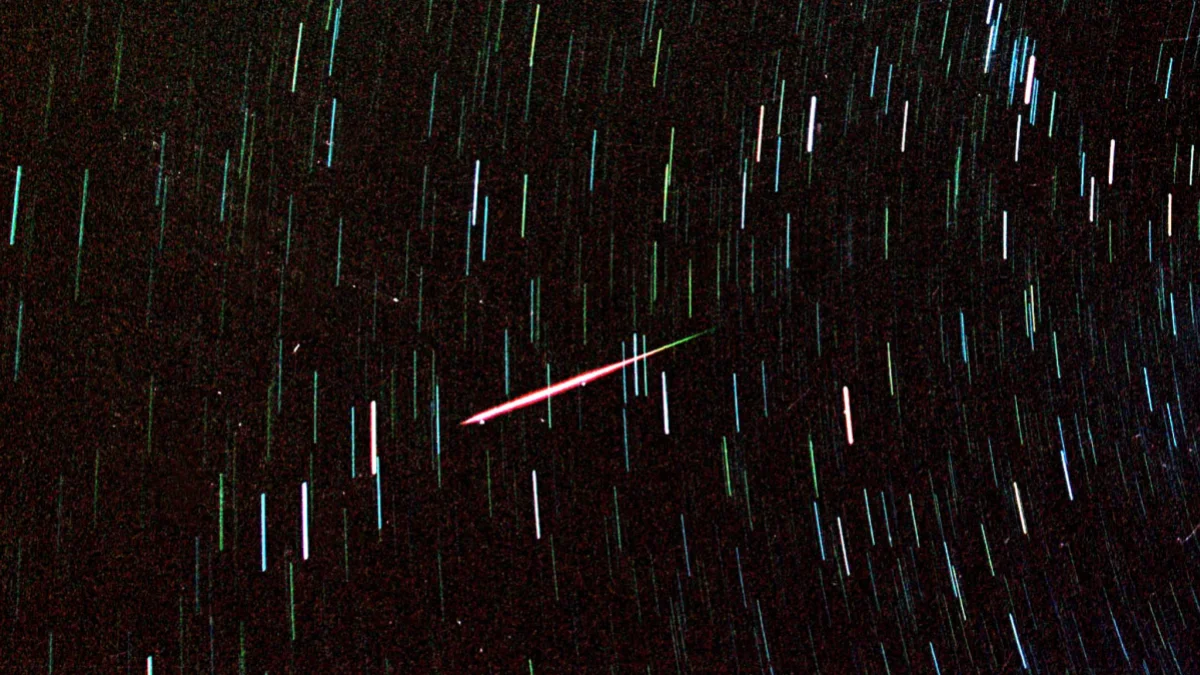
The Leonid meteor shower may be visible over Azerbaijan from Nov. 6 to 30, AnewZ reports.
According to the Department of Astrophysics at Baku State University, the shower will peak at 3:45 a.m. Baku time on Nov. 18. About 15 meteors per hour are expected to be visible at that time.
Best time to watch
The best conditions for watching the Leonids will be from 2 a.m. on Nov. 18 until dawn. Fainter meteors may be easier to see after the Moon sets and the sky darkens.
Observers are advised to move away from city lights and allow their eyes time to adjust to the dark. Although the meteors appear to radiate from the constellation Leo, they can be seen anywhere in the night sky.
How the Leonids form
The Leonid meteor shower occurs annually as Earth passes through dust and debris left behind by comet 55P/Tempel-Tuttle, which orbits the Sun every 33.2 years. German astronomer Wilhelm Tempel independently discovered the comet in 1865, followed by American astronomer Horace Tuttle in 1866.
One feature that distinguishes the Leonids is their speed: particles enter Earth’s atmosphere at about 71 kilometers per second, or roughly 255,000 kilometers per hour. Heated by friction and compression, the particles produce bright streaks of light known as “shooting stars.”
No meteor storm expected in 2026
The Leonids have produced some of the most spectacular meteor storms in history. Major displays were recorded in 1833, 1866 and 1966, as well as between 1999 and 2002.
Such rare events occur when Earth passes through especially dense clouds of comet debris, causing a sharp increase in meteor activity.
Astronomers do not expect such an event to recur in 2026. With about 15 meteors per hour forecast, this year’s Leonid shower will be more modest.